
How to Check Whether a Bedside Caddy Fits Your Bed Frame
Affiliate Disclosure: We may earn a small commission on qualifying Amazon purchases at no extra cost to you. Full disclosure →
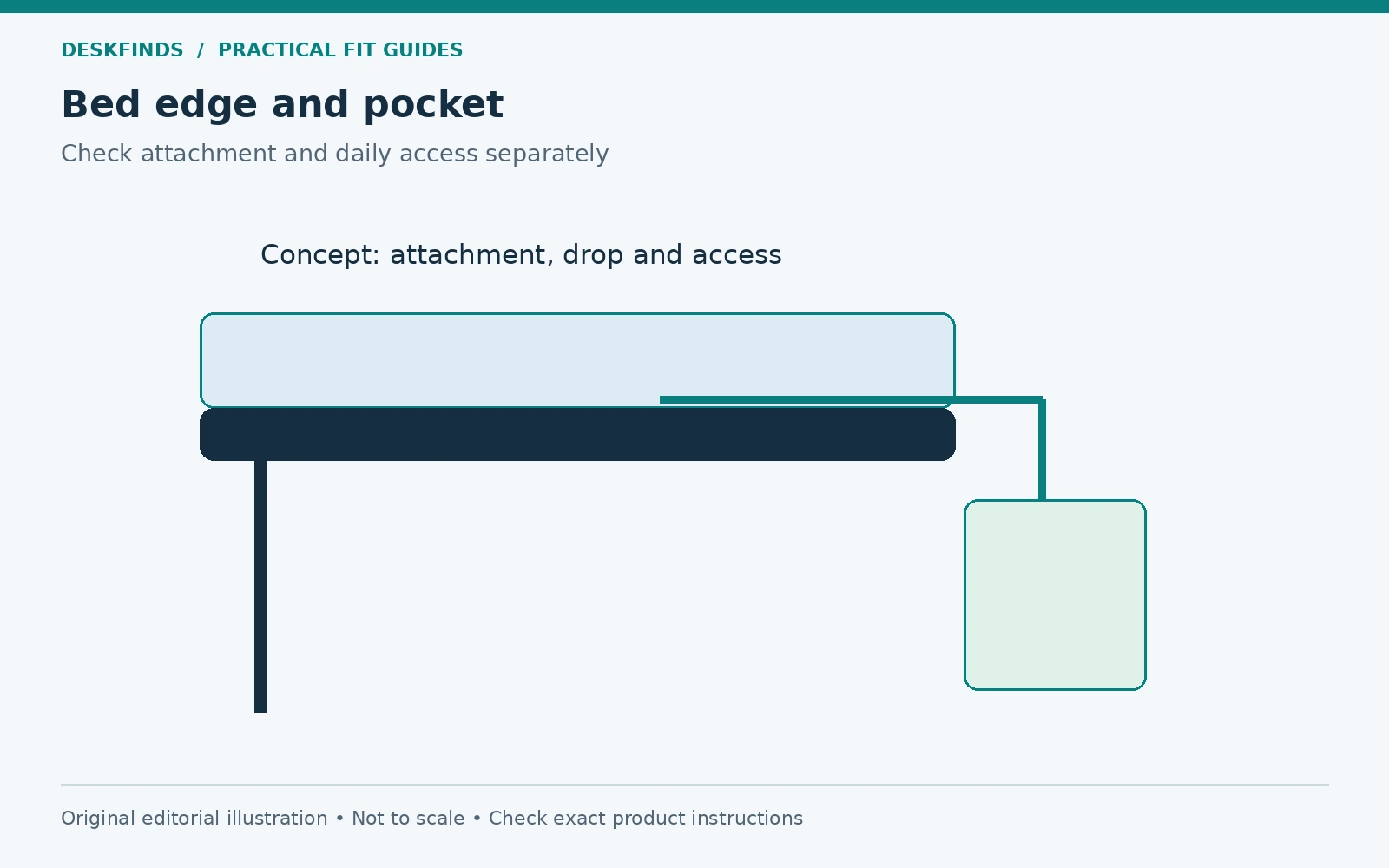
A bedside caddy can replace part of a nightstand's storage, but the bed has to provide the attachment the caddy is designed to use. A fabric flap beneath a mattress, hooks over a rail, and straps around a frame are different systems. Choosing by pocket count alone can leave a unit that slides, interferes with bedding, or hangs where it cannot be reached.
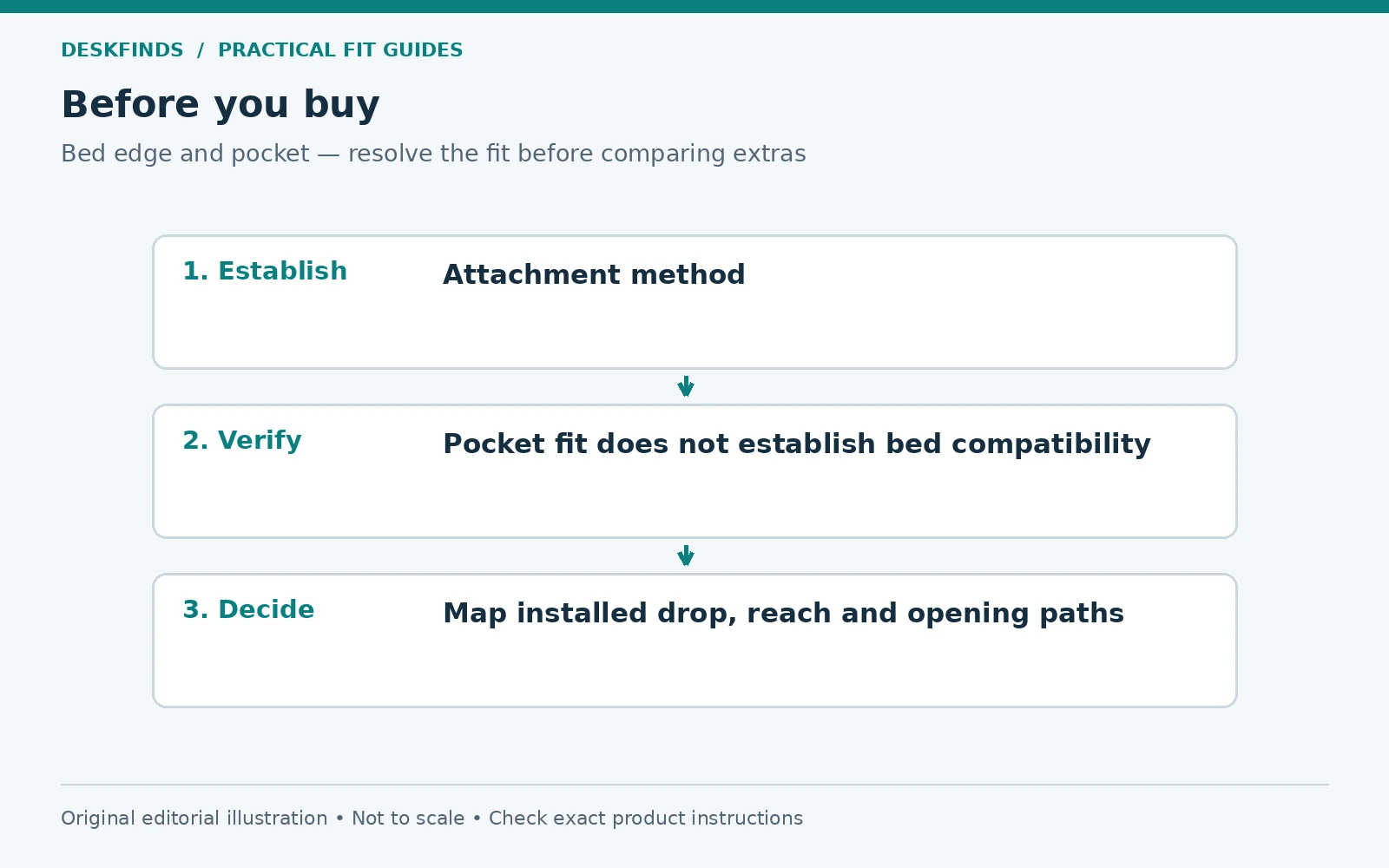
Quick answer: Identify the exact attachment method, verify compatibility with the bed and mattress arrangement, then check loaded drop, depth, reach, and nearby movement. Measure the intended contents too. A pocket that holds an item does not establish that the attachment, bed, or charging arrangement is suitable for it.
This article covers ordinary bedside storage, not medical-bed accessories or support devices. Follow the exact bed and caddy instructions. Our bedside caddy buying guide provides product context after the fit questions are resolved.
Start with the attachment method
Read how the product is intended to attach. An under-mattress flap depends on the particular supported installation, while a hook or strap needs its own compatible frame geometry. Do not transfer the requirements of one type to another. A photograph of a similar bed does not establish the correct interface.
Find the complete installed dimensions, including the flap, hooks, straps, and any stiff insert. The visible pocket body may be only part of the product. If the listing does not show the attachment clearly, ask for the instructions before buying. That information determines whether the bed can host the caddy at all.
Check whether the bed or residence rules allow the accessory. A dorm may restrict attachments to supplied furniture, and a particular bed may have moving or safety-related parts. Use only an intended installation that leaves the bed functioning normally. Storage should not require modifying the frame or removing required components.
Map the actual bed edge
Measure the frame or support at the proposed location. Note thickness, profile, gaps, trim, and the relationship between mattress and frame. A padded side, curved rail, or enclosed platform can present a different interface from a simple exposed edge. The bed's overall width says little about this local detail.
For an under-mattress design, check where the flap is intended to sit and what supports it in that exact arrangement. A recessed mattress or a frame lip can prevent the product from hanging as shown. Do not assume that pushing more fabric into any gap creates an approved installation.
For hooks or straps, verify the permitted size and contact surfaces. A soft padded edge may compress, and a sharp or irregular point can damage material. Follow the product requirements and avoid bending rigid hooks or shortening straps into an undocumented configuration. The attachment should fit naturally as designed.
Measure from the installed reference point
Determine where the pocket body begins after the attachment is seated. Measure downward to the lowest loaded part, not just the empty fabric edge. Include tall contents that project above pockets and any rigid structure. The caddy needs to hang in its intended shape without resting on another object unless explicitly designed to do so.
Check the floor, under-bed drawers, storage boxes, and nearby furniture. A long organizer can brush a rug or block a drawer even when it is secure at the top. Our under-bed storage guide helps identify the separate retrieval route below it.
Account for bedding. A duvet can cover the pockets or change access when the bed is made. Do not plan only with all blankets removed. The caddy should remain usable during the normal sleeping and room-reset routine rather than requiring the bed to be rearranged each time.
Check the contents before counting pockets
List the items you want beside the bed: a book, glasses in a case, remote, phone, notebook, or other small objects. Measure their complete shape and note their weight where relevant. The intended contents should fit the pocket opening and depth without straining the fabric or making retrieval awkward.
Keep the whole-product and compartment limits in view where specified. A large pocket is not permission to fill the unit with heavy objects. Distribute contents as directed and avoid turning the caddy into a support to pull on when entering or leaving the bed. It is storage, not a handhold.
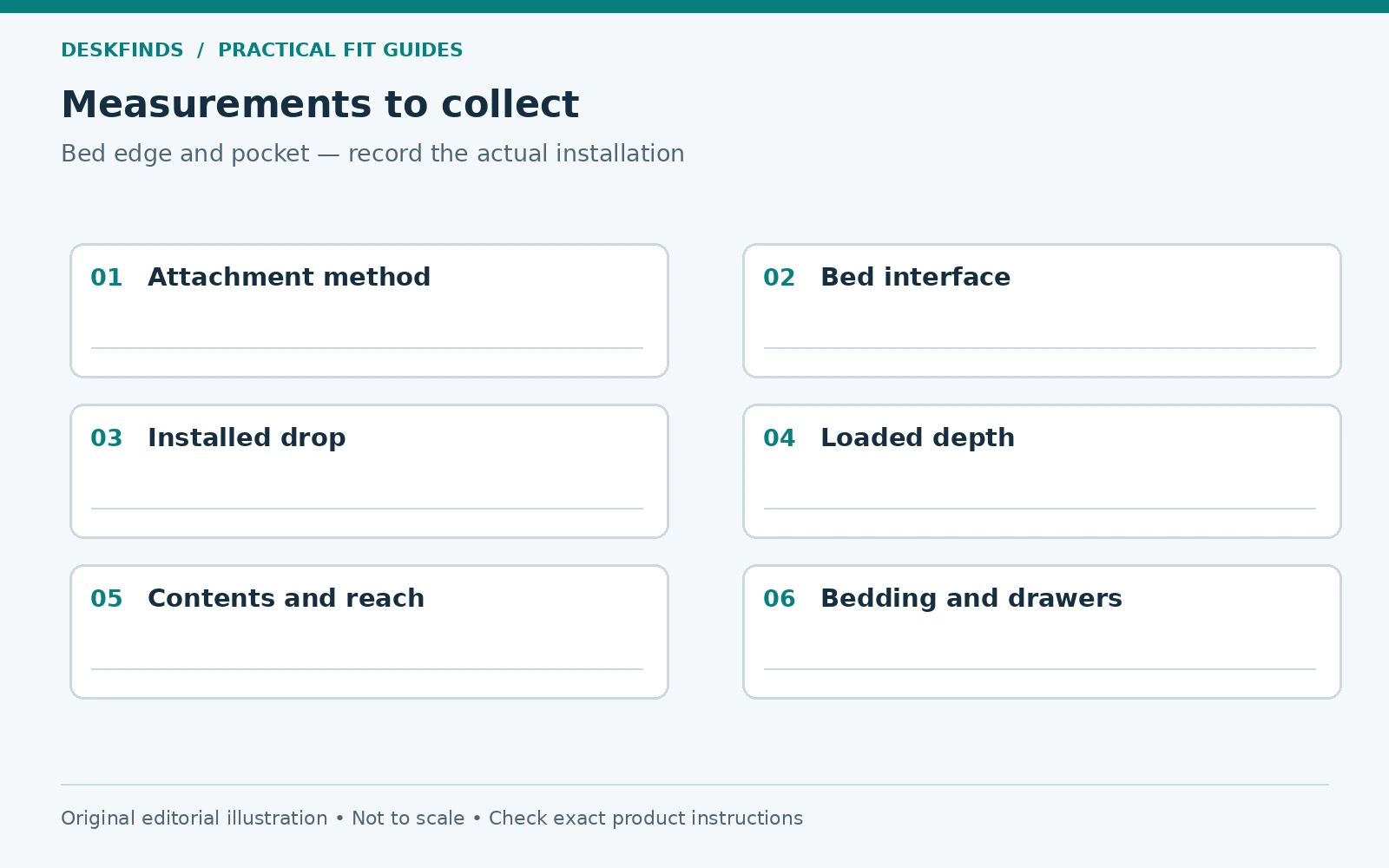
| Check | Include |
|---|---|
| Attachment | Exact method, complete parts and bed compatibility |
| Bed edge | Profile, thickness, padding and support arrangement |
| Installed drop | Lowest loaded point and floor clearance |
| Loaded projection | Items extending into the room or bedding |
| Access | Reach from normal positions and pocket openings |
| Other functions | Bed movement, drawers, bedding and room route |
Test reach from the positions you use
Sit or lie in your normal position and identify where you can reach without pulling the caddy or twisting around furniture. A pocket positioned neatly near the bed's center may be inconvenient from the pillow. The useful location depends on the person and bed, not a universal distance from the headboard.
Test the largest ordinary item, such as a book or glasses case, through the opening. A pocket can fit it internally while the bed edge or bedding blocks the removal path. Keep sharp or fragile objects stored appropriately for their own requirements. Do not use an exposed pocket where a different protective case is needed.
If more than one person uses the bed, check access and movement for both. A caddy should not occupy another person's normal entry route or be repeatedly struck while making the bed. The room-level fit is as important as the attachment fit.
Keep charging separate from fabric storage
A pocket can hold an unplugged device without necessarily being an appropriate place to charge it. Follow the device and charger instructions for ventilation, support, and operating environment. Do not conceal an active adapter in fabric merely because the pocket keeps the bedside tidy.
Plan cable routes away from bedding, feet, and moving furniture. A cable should not pull a device from a pocket or use the caddy as a restraint. Our charger cable routing guide explains the difference between guiding a lead and supporting a load.
If a suitable bedside charging point is needed, compare it as a separate function. Our shared-room charging guide uses an inventory and operating-condition check. A storage accessory does not establish charging compatibility or electrical suitability.
Example: the flap fits but the pockets are hidden
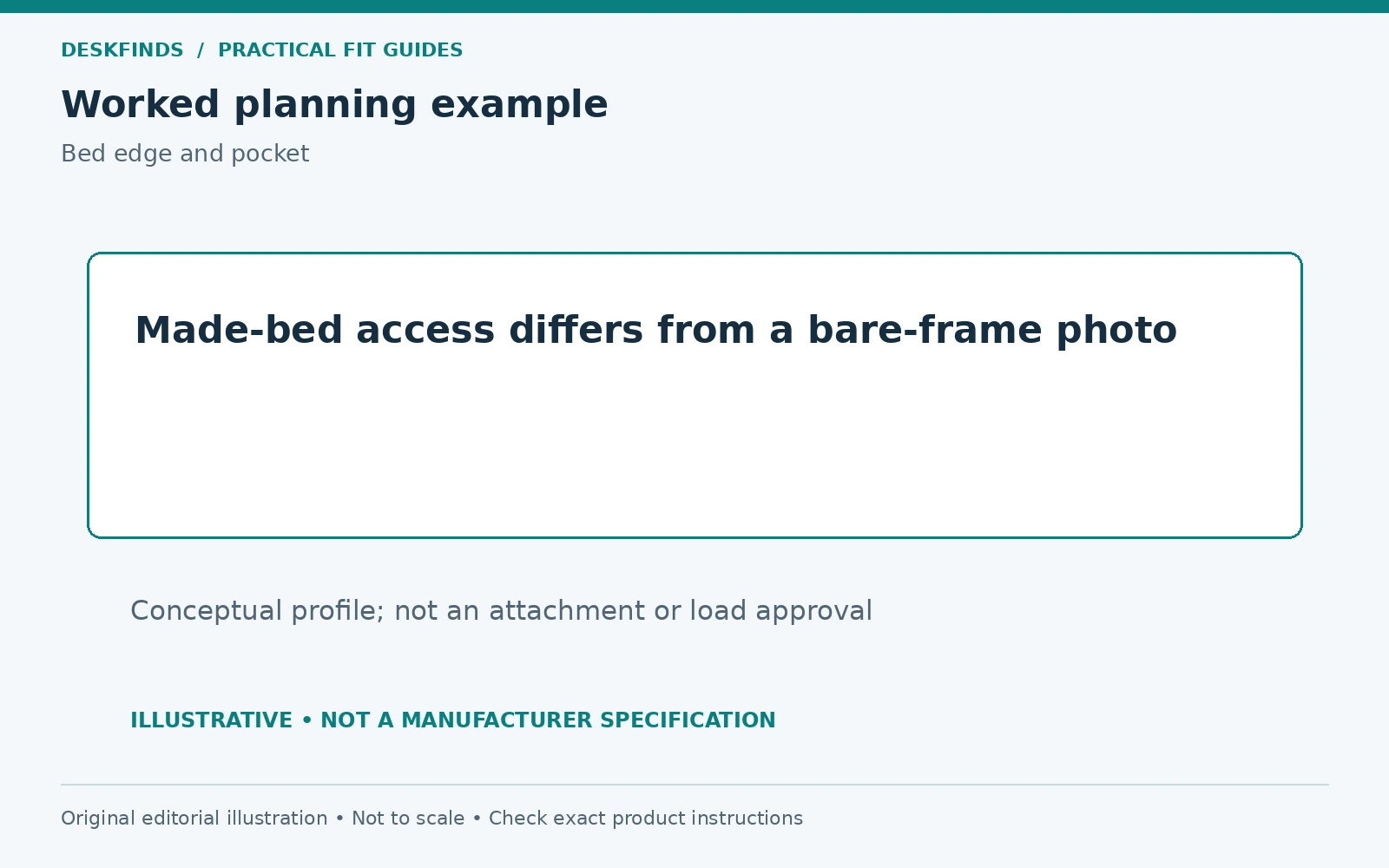
A buyer selects an under-mattress caddy whose attachment suits the bed. Once the duvet is in its normal position, the pockets are covered and difficult to reach from the pillow. The attachment passes, but the everyday access is poor. A product photo without bedding did not reveal that conflict.
The buyer tests another permitted location and checks the loaded drop and room route again. If no useful position exists, a different bedside storage form may be better. The solution is not to leave bedding permanently displaced if that makes the rest of the room inconvenient.
The case shows why a fit trial should include a made bed and the actual contents. An empty organizer hanging from a bare frame describes only one state. Useful storage has to coexist with the routine it is intended to improve.
Example: the caddy blocks an under-bed drawer
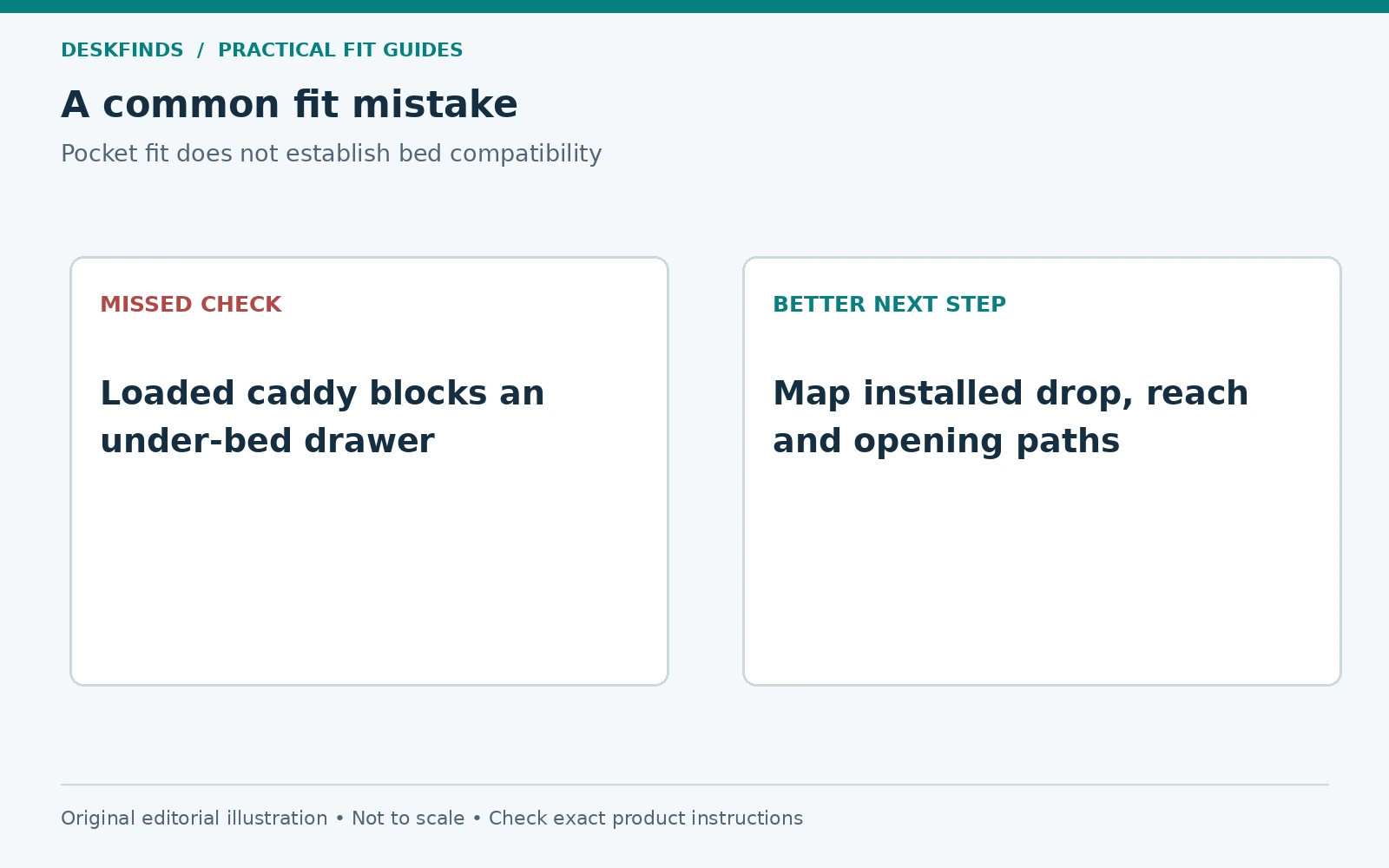
Another user has a suitable rail attachment and easy reach, but the loaded pocket projects into a drawer's pull-out path. The drawer can open only after the caddy is lifted or emptied. That may be an unacceptable repeated step for daily storage.
The user maps the drawer opening and compares another caddy position or a shorter product. The frame's structure and drawer hardware remain unchanged. If the conflict cannot be resolved within the instructions, the contents may belong on a small suitable table or another accessible location.
Do not judge the compromise only by whether the drawer can be forced past the fabric. Repeated rubbing can affect access and product condition. The useful plan leaves both storage systems functioning normally.
Use a lightweight outline before loading
Make a paper profile of the caddy's installed drop and expected loaded depth. Mark the attachment reference and pocket openings. Hold or support the outline safely at a permitted planning location without treating it as a load-bearing trial. Check reach, bedding, drawers, and the room path.
Use the exact product instructions for attachment and loading when the real unit is installed. A template cannot prove that a mattress flap or hook will support the contents. It can only identify spatial conflicts before purchase. Keep that distinction clear in the fit worksheet.
If the product is available for a permitted trial, start empty as directed and add contents within its limits. Watch for shifting, damage, or interference. Do not keep increasing the load to see when it moves. The manufacturer's intended use controls the installation, not an improvised stress test.
Compare alternatives by the function you need
A narrow nightstand offers a surface and different storage access, but needs floor, opening, and room-space checks. A bed shelf can provide another function only if its attachment and support are approved. A wall pocket needs a permitted mounting surface and method. None is a universal replacement.
Our narrow nightstand measurement guide helps compare the table option. Consider the few items that truly need immediate access. A caddy may serve a book and remote well while another item needs an appropriate hard surface or secure storage elsewhere.
Avoid buying many pockets for occasional contents if a simpler arrangement supports the daily routine. More compartments add width, drop, and temptation to overload. The useful capacity is the amount you can store, identify, and retrieve within the product's instructions.
Keep removal and cleaning manageable
Read the care instructions and plan how the unit is unloaded and removed. A product beneath a mattress may require a different handling sequence from a rail-mounted one. Do not pull on loaded pockets to detach it. Keep the bed and mattress supported as their instructions require.
Inspect the attachment, seams, and contact surfaces periodically and when moving the bed. Changes in bedding, mattress arrangement, or stored contents can change the fit. A new mattress or topper should prompt another compatibility check rather than an assumption that the old flap installation remains suitable.
For a dorm move, keep the product instructions and any small parts with it. Our desk and room move guide offers a record-based packing approach. A caddy that worked in one room still needs a new bed-edge and access check in the next.
Prepare the purchase brief
Write the bed model or relevant construction, permitted attachment method, local edge measurements, installed drop, loaded projection, intended contents, and nearby opening paths. Ask the manufacturer about missing attachment details rather than accepting a general fits-most-beds statement.
A manufacturer example such as IKEA's SILÄNG bed pocket describes one under-mattress design. Use that information only for the exact product and supported setup. It does not approve other caddies or every mattress arrangement.
The best bedside caddy fits the bed interface, serves the user's reach, and leaves bedding, drawers, and room movement usable. Pocket count and color matter after those conditions are met. A small well-placed unit can be more useful than a large organizer that is secure but difficult to use.
Use an attachment-and-access worksheet
Create one section for the bed interface and another for daily use. The first records the exact attachment, compatible frame or mattress arrangement, required parts, and installation restrictions. The second records loaded drop, projection, pocket contents, reach, bedding, and drawer movement. Both sections need to pass.
This separation helps interpret a seller's answer. A statement that a flap works beneath a particular mattress does not establish that the pockets clear your under-bed drawer. A statement that the unit is short enough does not establish that its hooks fit your frame. Keep the unanswered part visible rather than treating one reassuring detail as complete compatibility.
Use the worksheet when comparing alternatives. A rail-mounted caddy may solve one access issue while introducing another attachment requirement. An under-mattress design may suit another bed but hang differently beside a recessed platform. Compare the exact systems, not a general ranking of attachment styles.
Give the largest object a removal path
A book or tablet-sized case can fit a pocket internally while being hard to lift past the mattress or a raised frame edge. Use a lightweight outline of the object and simulate the route from its resting position to your hand. Include the protective case or sleeve that stays on the object.
Check the route from both normal use and room-cleaning positions. A pocket that is easy to reach while sitting may be awkward from the pillow, and a lower compartment may be difficult to empty without moving bedding. Choose the location by the user's actual actions rather than the neatest visible alignment.
If an item needs a stable hard surface or particular operating conditions, do not force it into the caddy because its dimensions fit. Store it appropriately elsewhere and reserve the pockets for suitable contents. A smaller well-defined inventory can make the accessory more useful and easier to keep within its limits.
Plan the bed-making transition
Make the bed with a lightweight profile of the installed caddy in place. Check whether bedding catches the pockets, covers the openings, or pulls across the attachment. Follow the bed and caddy instructions when the actual product is used. The goal is to identify an ordinary repeated action that a bare-frame photo cannot show.
If the caddy needs to be removed during cleaning, record how it is unloaded and detached. Give the contents a temporary suitable location. A routine that requires placing electronics on bedding or scattering small objects on the floor may need a different storage arrangement.
Recheck after a duvet, mattress, topper, or frame changes. The old accessory may still be intact while the interface and reach relationship have changed. A fit record is useful because it describes the actual installed combination, not because it grants permanent approval to every future bed arrangement.
Compare the caddy with a minimal bedside surface
List the functions the caddy can serve well and those it cannot. It may hold a book and remote while a lamp, drink, or active charging device needs another suitable location. A small table or shelf can complement the caddy rather than compete with it, provided its own support and room checks pass.
Compare the full routine and occupied space of each option. A caddy that frees the floor but blocks a daily drawer may offer less value than a narrow table. A table that blocks the room route may be less useful than a few well-placed pockets. The better choice follows access, attachment, and the actual contents together.
Sources and scope
- IKEA SILÄNG bed pocket - model-specific attachment and product context.
- Apple adapter and cable guidance - example of device-specific operating requirements; not approval for charging in a fabric pocket.
The installed-profile worksheet and cases are original editorial planning tools. No caddy load test, medical-bed compatibility or universal bed attachment is established.