
Dorm Desk Setup Ideas: Layouts for Tiny Rooms (2026)
Affiliate Disclosure: We may earn a small commission on qualifying Amazon purchases at no extra cost to you. Full disclosure →
A dorm desk has to be a study area, a snack counter and sometimes a vanity, all in a room that is often about 10 feet by 10 feet for two people. The setup that works is the one that respects floor clearance first and surface area second.
These ideas assume you cannot drill, may share the room and want to move out in a single trip.
Quick answer: Keep about 30 by 48 inches of clear floor at the desk so the chair can rotate and push back, use vertical storage with adhesive hooks or a hutch, and keep the desk surface for the laptop, lamp and one organiser. A twin XL bed is typically 38 by 83 inches, so measure the gap between bed and desk before you buy.
Start with the room and the rules
A standard dorm double is about 10 by 10 feet, according to a dorm furniture guide, and many schools prohibit nails, screws and wall damage. Check the housing page for what is allowed, then measure the space around the bed, the window and the door.
| Check | Why it matters |
|---|---|
| Provided desk size | You may be able to keep and add to it |
| Bed height setting | Raising it can make room for a desk underneath |
| Window and radiator | Heat and glare affect where a monitor can sit |
| Outlet position | Decides where the lamp and charger go |
Layout ideas that work
| Layout | Best when | Trade-off |
|---|---|---|
| Desk along the window wall | Window gives daylight | Glare on screens |
| Desk at the foot of the bed | Room is long and narrow | Less walk-around space |
| Corner desk | Two rooms share a corner | Chair swing is tight |
| Use the supplied desk plus a small table | School forbids removing furniture | More surface, more clutter |
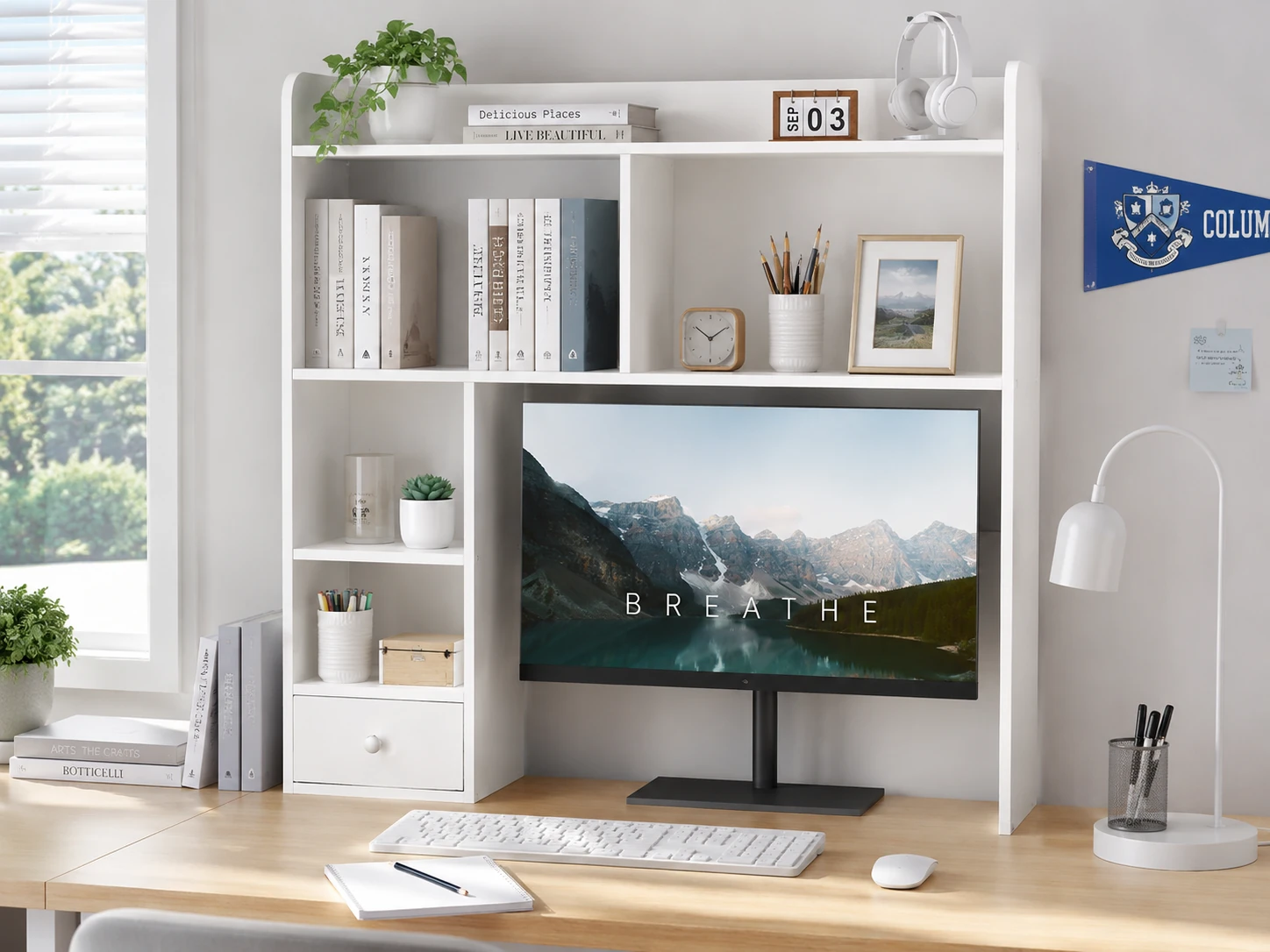
Our best dorm desks guide compares models by size, and a dorm desk hutch adds shelves without a larger footprint.
Vertical storage without drilling
Adhesive strips and wall hooks carry light loads. One guide says standard picture strips hold about 4 lbs per pair and large strips about 7.5 lbs per pair, so spread heavier items across several pairs and read the pack's limits. Clean the wall first and let the strips cure as directed. A desk topper or a hutch carries the heavier items instead.
See the no-drilling dorm desk setup guide for a deeper method, and small desk hutches for add-on shelving.
Light and a sleeping roommate
A clamp or small desk lamp with a warm setting keeps the rest of the room dark during late sessions. A lamp on a flexible neck can be aimed away from the other bed. Our sleeping roommate lamp guide covers positioning in detail.
Move in, move out
Keep flat-pack boxes and the screws in a labelled bag. Use removable hooks and clips so you can restore the wall. Photograph the room before you start so you can show the original condition.
Frequently asked questions
How do I set up a desk in a dorm room?
Measure clear floor space first, then place the desk where the chair can rotate, add vertical storage with removable hooks or a hutch, and keep the surface for daily items.
How much space does a dorm desk need?
One dorm guide recommends about 30 by 48 inches of clear space at the desk so the chair can rotate and push back.
Can I use the school's desk and add my own?
Many students do. Use the provided desk for storage and a second desk or topper for working, as long as your school allows it.
Do I need a hutch for a dorm desk?
Not required, but a hutch adds shelves without extra floor space. It helps most when the desk is small.
What size is a twin XL bed?
A twin XL is typically 38 by 83 inches, which is useful for planning how much room is left for a desk.
How do I avoid wall damage in a dorm?
Use adhesive strips within their weight limits, or choose free-standing shelves and a hutch.
Sources and scope
- Unfnshed dorm desk guide: room sizes and clear floor space
- mymove dorm storage ideas: wall storage and desk topper ideas
- University Parent dorm room ideas: general layout suggestions for dorm rooms
Dorm sizes and rules differ by school. Confirm what your housing office allows before you buy furniture or use adhesives.