
How to Keep a Desk Lamp From Disturbing a Sleeping Roommate
Affiliate Disclosure: We may earn a small commission on qualifying Amazon purchases at no extra cost to you. Full disclosure →
A desk lamp can light a notebook while also throwing a bright patch onto a bed, reflecting in a mirror, or shining into someone’s eyes when they turn over. Lowering brightness helps only if the light still supports the work. Plan both the task area and the sleeper’s view.
Quick answer: Use a suitable adjustable task light, direct it toward the work, reduce unnecessary spill, and test from the bed at the time the lamp is used. Check reflected paths and the lamp’s visible bright surface, not just the lit patch on the desk. Keep manufacturer clearances and do not cover a lamp with fabric or homemade shielding.
Define the nighttime task
Reading a printed page, writing, and using a monitor have different lighting needs. List what actually happens after the roommate sleeps. Avoid illuminating the whole room by default when only a small task area is needed.
Set a realistic household agreement about late work. Lighting changes cannot eliminate typing, movement, or conversation. If the task regularly disturbs sleep despite reasonable adjustments, another location or schedule may be the more effective solution.
Find the direct view from the bed
Sit or lie in the normal sleeping position and inspect what is visible. Include the pillow’s alternate side and ordinary turning. The bright LED surface may be visible even when the beam points away from the bed.
Keep this a practical observation rather than claiming a universal sleep-safe brightness. Individual sensitivity and room layout differ. Ask the affected person which path is intrusive and test changes with their cooperation.
Map reflected light
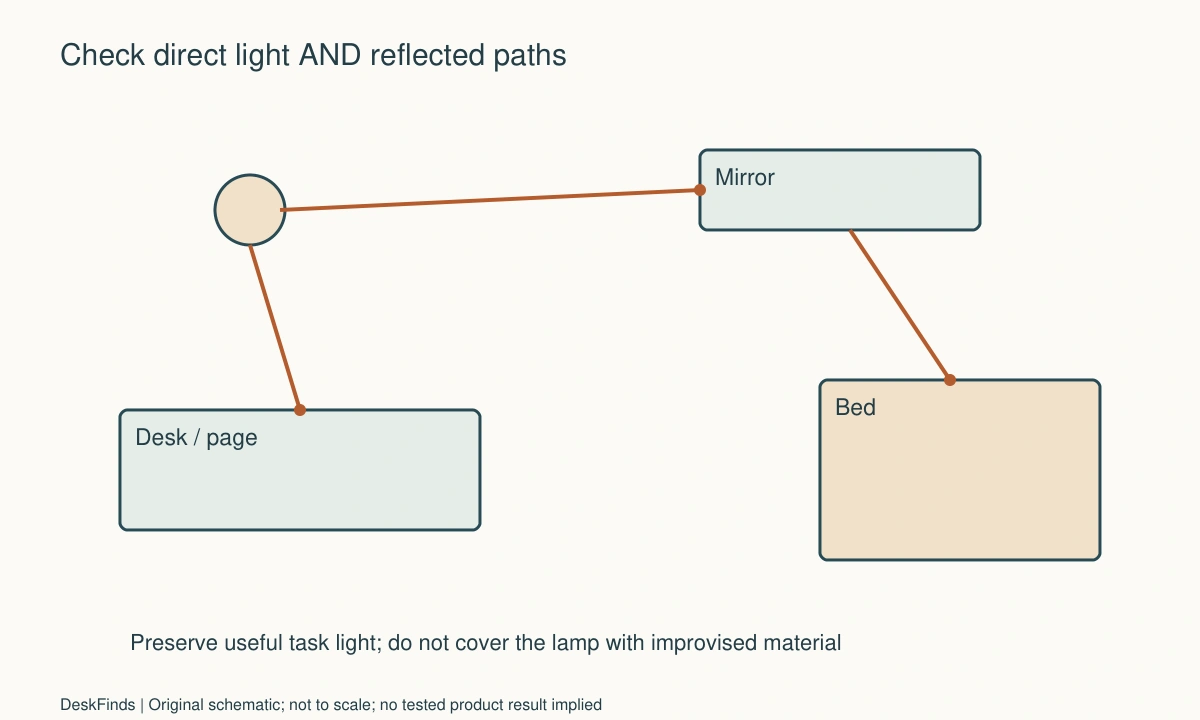
Mirrors, glossy wardrobes, pale walls, and shiny desk surfaces can redirect light. A lamp that does not point toward the bed can still produce an obvious reflection there. Move the head or base within its supported range and check again.
Inspect the monitor as well. A lighting position that protects the bed but creates strong screen glare is not a complete solution. Compare task readability, screen visibility, and spill together.
Choose useful adjustment
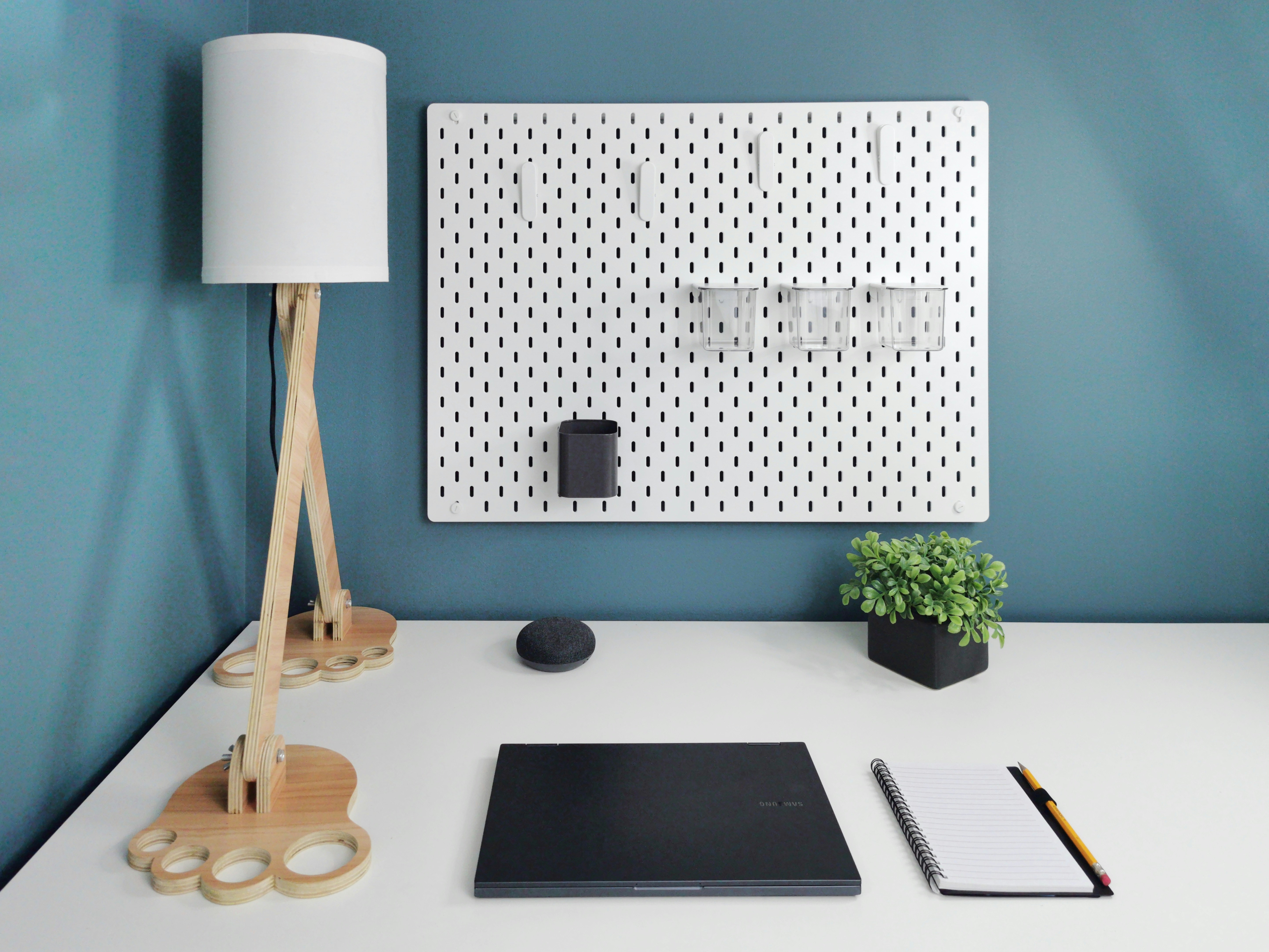
Look for a shade and arm that can position the light over the work without placing the base in the keyboard or notebook area. Verify actual reach, tilt, and stable placement. A flexible-looking product photo does not establish every permitted angle.
A clamp lamp can save base area but needs an approved desk edge and compatible construction. Do not clamp it onto a fragile shelf or curtain rail simply to move it farther from the bed. Installation fit remains a separate requirement.
Use dimming carefully
Set brightness to support the actual task without unnecessary spill. Do not deliberately work in insufficient light to avoid a household conflict. A dimmer is most useful when it provides a usable range and preserves the required placement.
Check controls in darkness. A bright status indicator or illuminated switch can remain visible after the lamp is dimmed. Do not tape over safety information or modify electronics; compare a product or placement that suits the room.
Keep color-temperature claims modest
Different color settings can change appearance and preference, but a warm setting does not guarantee that a sleeper will be undisturbed. The direction, visible brightness, duration, and room context still matter.
See desk-lamp color temperature for terminology. Do not turn that information into a medical promise about sleep. Solve the observable spill path first and keep the household’s experience central.
Avoid improvised covers
Do not drape clothing, paper, or a towel over a lamp to narrow the beam. Follow the maker’s ventilation, surface, and clearance instructions. A low-power or cool-looking light still needs to be used as designed.
If a supplied shade or approved accessory is available, assess it with the exact model. A separate visual divider also needs stability and clearance checks. Neither should be pressed against the light source without explicit approval.

Test the full nighttime setup
Use the lamp with the monitor, other status lights, and normal room conditions. Check the route into bed and the placement of switches. A lamp with a good beam can still be inconvenient if reaching its control requires crossing the room or moving equipment.
Record the useful head and brightness positions if several people use the desk. A simple reference can make the arrangement repeatable. Avoid a fragile setup that works only when everyone remembers an exact unmarked angle.
Example: a reflection is the main disturbance
Imagine a desk beside a bed with a lamp aimed at a notebook. The direct beam misses the bed, but a wardrobe mirror reflects the bright shade toward the pillow. Dimming enough to remove the disturbance makes handwriting difficult.
The user first changes the lamp’s position and angle within its instructions, then adjusts the page location. The reflected path is reduced while the task remains readable. Buying a warmer bulb alone would not have resolved the geometry.
The user tests ordinary chair movement and the roommate’s alternate sleeping position. A final arrangement leaves the shade outside the main sight line and preserves desk space. Late heavy typing is still scheduled elsewhere because lighting was only one part of the shared-room problem.
Choose by observed need
| Observation | Next comparison |
|---|---|
| Light source visible from pillow | Shade position and supported lamp geometry |
| Bright patch reaches bedding | Beam direction and task location |
| Mirror redirects light | Reflected path and lamp relocation |
| Writing becomes difficult when dimmed | More targeted task lighting or another work location |
| Controls or indicators remain intrusive | Model features and placement |
The task-versus-ambient lighting guide helps distinguish the job of a localized lamp. Choose a solution that supports work and the shared routine without relying on unsafe covers or universal claims about a harmless light color.
Make a light-path record instead of choosing by color alone
Draw the task surface, lamp, monitor, bed, and reflective furniture from above. Mark the sleeper’s normal head positions. Then sketch direct light and the strongest observed reflected paths. You do not need to calculate illumination to identify a visible bright shade in a mirror. Label what was actually seen and the conditions, so a later lamp or furniture move can be checked against the same problem.
Keep task readability as a separate result. If dimming reduces spill but makes the notebook difficult to use, the arrangement is incomplete. A more targeted supported lamp position or another work location may be needed. Avoid treating the sleeper’s comfort and the worker’s ability to read as opposing goals solved only by extreme dimming. Better geometry can sometimes improve both, but it must be tested rather than promised.
Compare the lamp’s actual useful adjustment with the desk. The head needs to reach the page while the base or clamp remains supported and clear of input devices. A long arm can help in one layout and create collisions in another. Include the shade’s width and the path through normal adjustment, not just maximum reach. The installed product must remain stable at the settings used.
Look at the whole nighttime scene. A monitor, charger indicator, illuminated keyboard, or light through the doorway can remain intrusive after the task lamp is improved. Identify each source rather than repeatedly adjusting the lamp for a reflection originating elsewhere. Do not modify electrical devices or cover required indicators and ventilation as an improvised fix; consider appropriate settings, placement, or another supported product.
Keep household agreements concrete. Decide the kinds of late task the room can accommodate, the usual light position, and the alternative when more illumination or activity is needed. That might be a different study location for long sessions, while short quiet reading remains at the desk. A targeted lamp can be useful without making the bedroom suitable for every form of work throughout the night.
After a trial, describe the outcome as this arrangement reduced the observed spill for the people using this room. Do not convert it into a medical claim about a safe color, brightness, or exposure for everyone. Individual experience and the full room routine remain relevant.
For the support choice, compare clamp and base lamps.
Worked trial: dimming is not enough
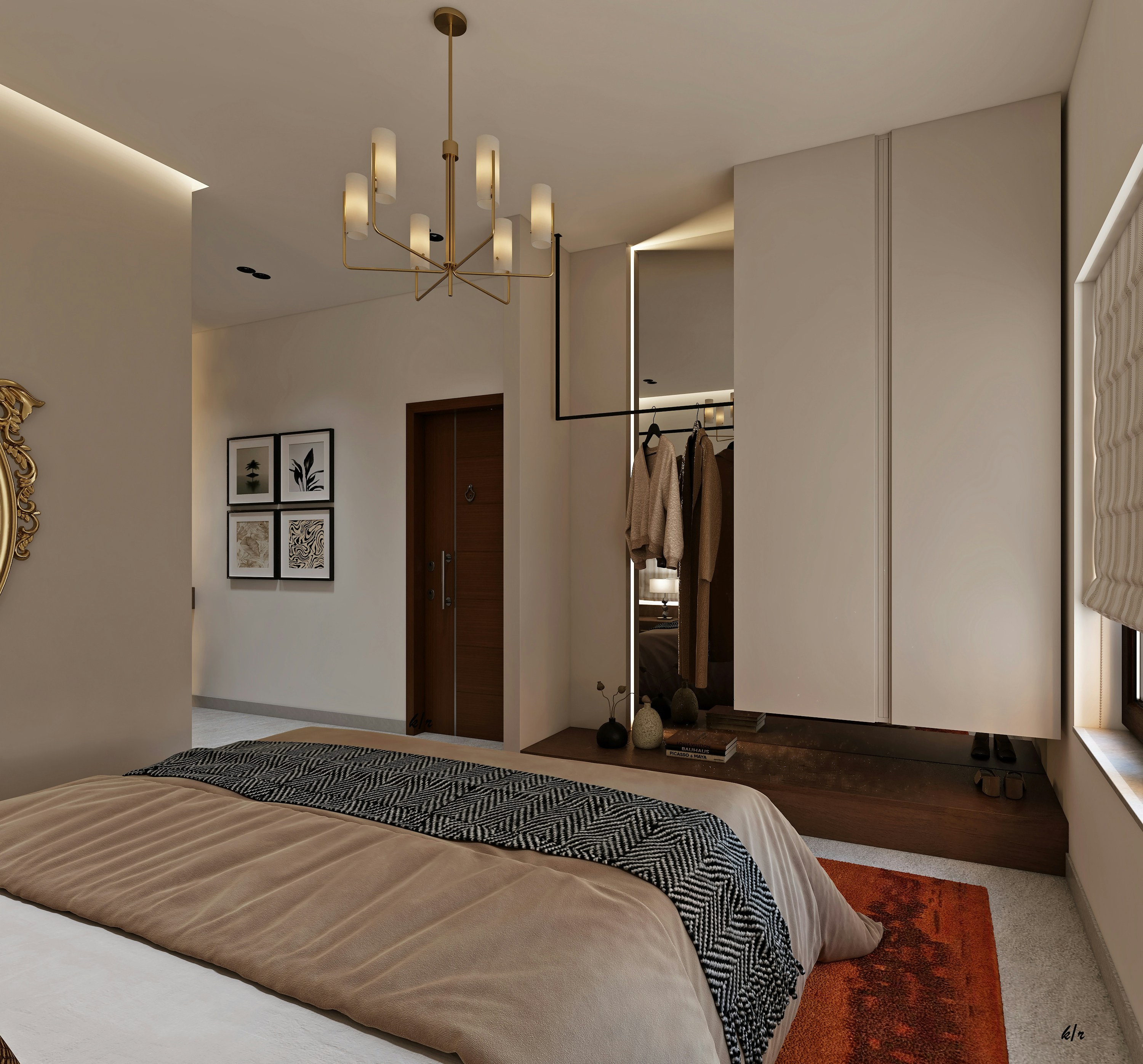
Imagine a user writing at a small desk beside a sleeping roommate. The lamp is already warm in color and aimed down at the notebook. The roommate still sees a bright patch when turning toward the wardrobe mirror. The user assumes the remaining answer is the dimmest possible setting.
The task test shows that extreme dimming makes the page difficult to read. The user therefore maps the direct shade view and reflected path instead of choosing between inadequate task light and disturbance. With the roommate’s cooperation, the lamp is moved within its supported range and the notebook shifts to a useful writing position.
The reflected patch decreases, but the shade itself becomes visible from the other side of the pillow. A second check includes both normal head positions. The final lamp position is chosen from both views, with the base remaining on a stable suitable surface. No towel or paper is added over the light to narrow the beam.
The monitor is then turned on in the ordinary nighttime configuration. Its reflection creates a separate bright area. Suitable device settings and a different orientation are assessed without making the screen hard to use. The lamp is no longer blamed for a source it did not create.
A call test is unnecessary for this particular handwriting task, but the user checks that the light does not block the camera or microphone if they are used during the day. The position is noted so another desk user can restore it. The arrangement has enough practical tolerance that a small normal chair movement does not destroy the result.
During a longer late session, typing and movement still disturb the roommate. The household uses another study location for that work. The lighting improvement remains worthwhile for short quiet tasks but is not advertised as a complete sleep or acoustic solution.
This trial produces a repeatable light position, a useful task surface, and an explicit household limit. The important evidence is the observed path and ordinary routine. A warmer color alone would not have fixed the mirror geometry, and a homemade cover would have introduced an unsupported way of using the lamp.
Keep the adjustment repeatable
A useful nighttime position should be easy to restore after daytime work. Record the general lamp head location, page position, and usable brightness setting. Use an appropriate reference that does not modify hardware or cover instructions. The aim is a practical starting point, not an exact angle everyone must maintain without ordinary movement.
If the desk is shared, let the other user test the reset. A setting obvious to the person who created it may be difficult for someone else to reproduce. Compare a lamp with easier supported adjustment or controls if that is the recurring problem. Do not buy extra lights before identifying whether placement, reach, or operation is actually missing.
Check the bed and room under realistic conditions. Bedding, curtains, and reflective objects can move, and an open wardrobe door can introduce another light path. A solution that has some tolerance is more useful than one tested with every surface in an unusually perfect state. When the room changes materially, repeat the direct and reflected-view observations.
For prolonged work, assess the entire routine rather than expecting one lamp to solve every disturbance. The monitor, typing, movement, and conversation remain separate. An agreed alternative location for late demanding tasks can preserve both useful desk lighting and the roommate’s ordinary use of the room.
Finally, keep product claims and personal outcomes distinct. Dimming range, color settings, reach, and documented mounting describe the product. Whether the installed light disturbs a particular sleeper is an observation to test respectfully. Do not replace that observation with a universal statement that a particular warm setting or lamp style guarantees undisturbed sleep.
For product brightness terminology, use desk-lamp lumens.
Your practical comparison worksheet
Use the following checks with the actual people, objects, and room in your plan. Record a measured value, an observed task result, or the exact product information that answers each point. Keep unresolved details separate from confirmed ones. A result about one feature should not silently establish another: physical fit, ordinary use, support, and care may require different evidence. Work through the checks before ordering, then repeat the relevant actions with the delivered item while the return terms apply. The worksheet is a planning aid rather than a product test or approval for an improvised installation.
1. Task
List the late work actually performed, including page size, handwriting, reading, and screen use; separate short quiet tasks from long active sessions.
Choose lighting for those tasks rather than illuminating the whole room by default. Use another location when the room cannot support the required activity reasonably.
2. Pillow viewpoint
Inspect the lamp from both normal head positions and ordinary turning, not only from the desk or doorway.
Identify the visible bright surface as well as illuminated bedding. A down-pointing beam can still leave the shade directly visible to the sleeper.
3. Reflections
Check mirrors, glossy furniture, pale surfaces, the monitor, and glasses for paths that redirect light toward the bed.
Adjust source, page, and orientation within supported use. Dimming or changing color alone may not resolve a geometric reflection problem.
4. Useful adjustment
Measure the head’s required reach and angle with the base or clamp correctly supported and input devices arranged normally.
Include shade size, movement, and stability. A lamp that reaches the notebook only in an unstable or obstructive position is not a complete fit.
5. Dimming
Test task readability and spill at the settings actually available on the exact product, including any visible control indicators.
Retain enough useful task light. If acceptable spill requires an unusable working surface, compare more targeted placement or another work location.
6. Safe use
Check ventilation, shade, surface, and clearance instructions for the exact lamp and approved accessories.
Do not drape clothing, paper, or fabric over the light. A low-power appearance is not permission to invent a cover or press it against other materials.
7. Whole scene
Repeat the observation with monitor, keyboard lights, chargers, doorway light, and ordinary room conditions present.
Separate sources before changing equipment. Solving the task lamp path does not guarantee that all nighttime light or activity becomes unobtrusive.
8. Shared routine
Agree the useful lamp position, permitted task window, and alternative for work the room cannot accommodate.
Record practical settings if the desk is shared. Describe the outcome personally rather than making a universal promise about sleep-safe color or brightness.
Sources and scope
- OSHA workstation environment - General lighting and reflection context, not a medical claim about sleep or a universal nighttime setting.
Editorial note: This is a research-based planning guide, not a hands-on product review. Worked examples are hypothetical. Follow the exact product instructions and resolve compatibility, installation, and care questions before relying on the arrangement.