
How to Fit a Walking Pad Under Your Desk-and Store It After Work
Affiliate Disclosure: We may earn a small commission on qualifying Amazon purchases at no extra cost to you. Full disclosure →
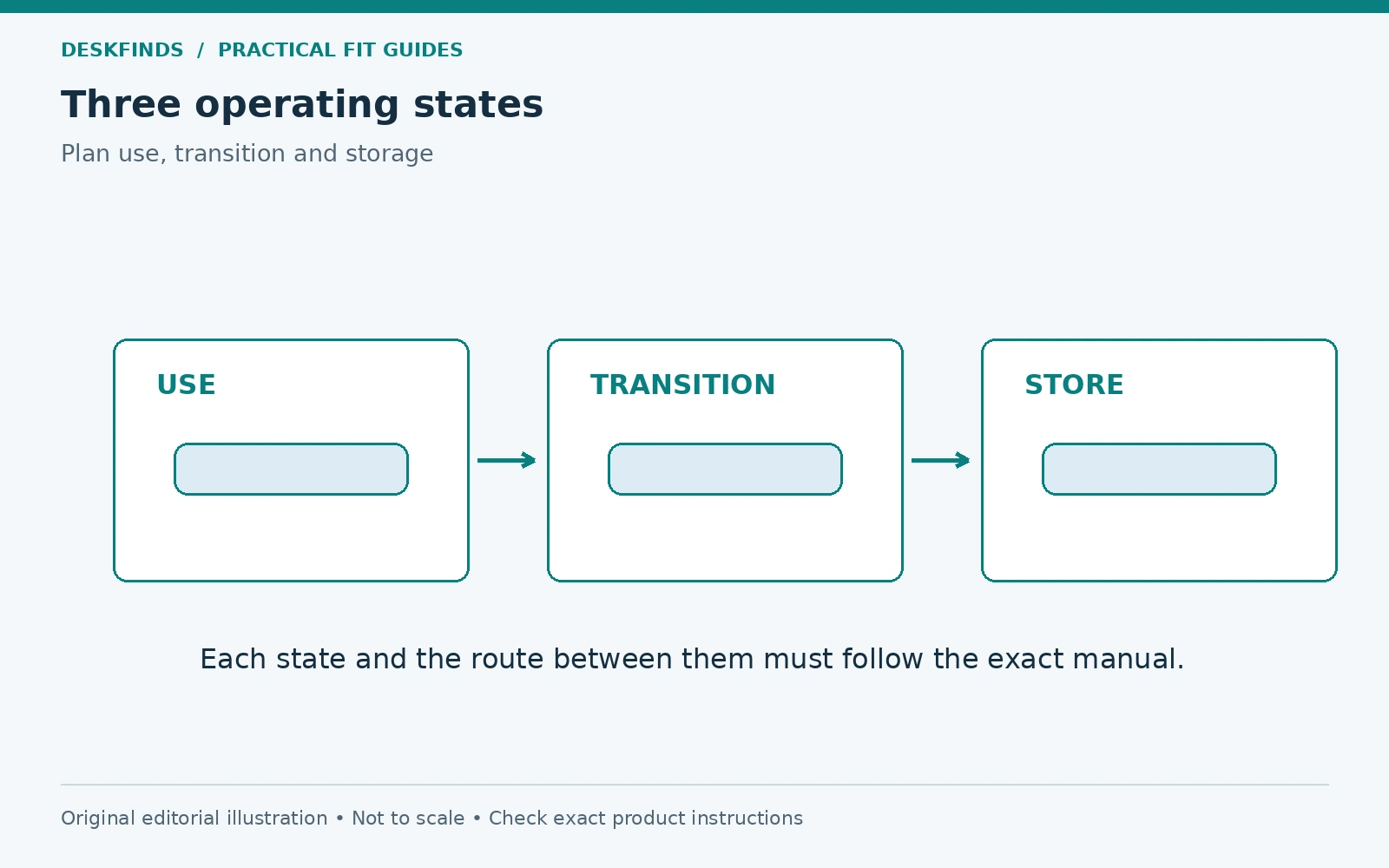
A walking pad has at least three footprints: the machine when operating, the clear area required around it, and the space needed to move and store it. A model that slides under the desk may still leave too little room to step off, put the chair back, or maneuver the machine into its storage position.
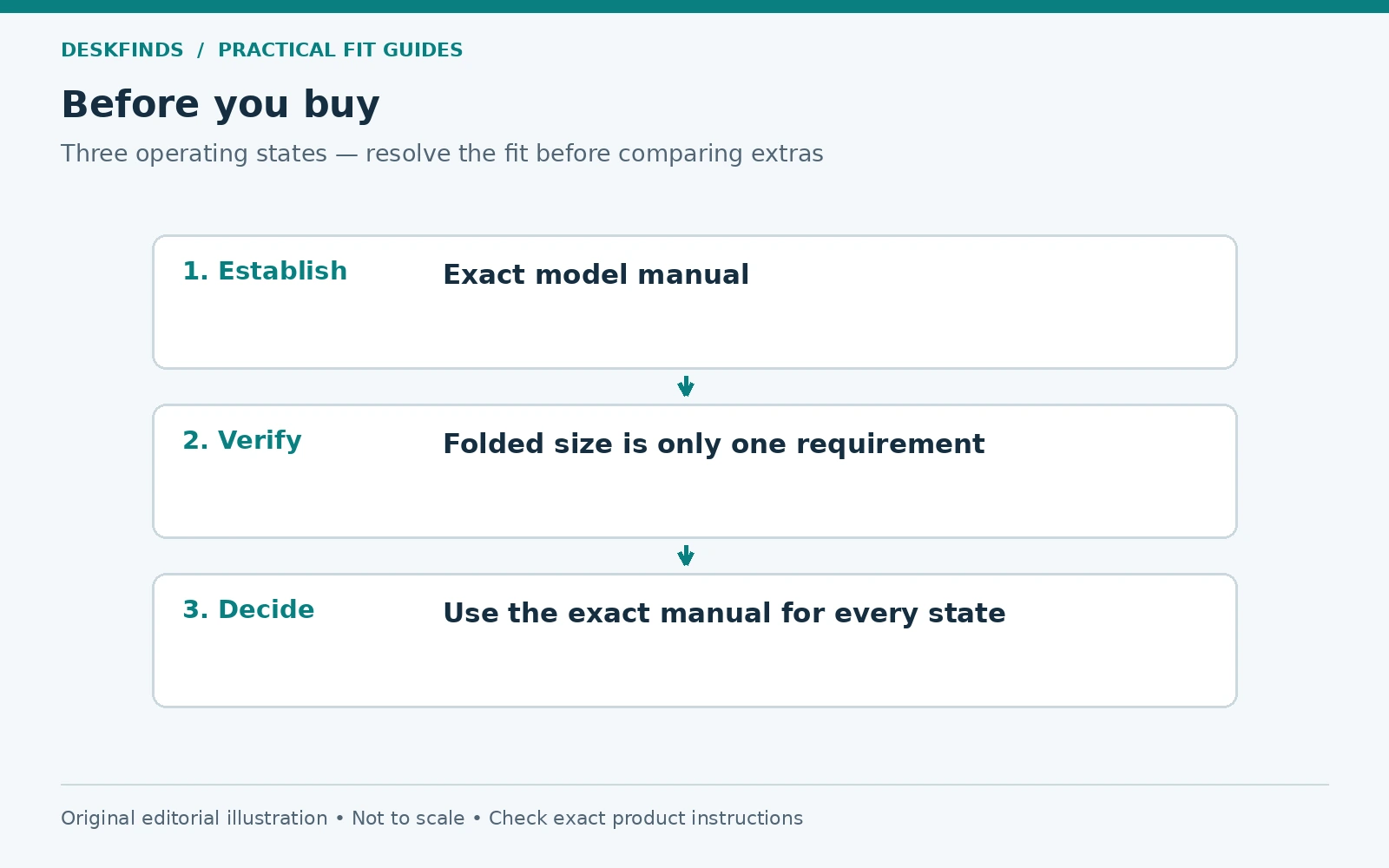
Quick answer: Check the exact manual for operating clearances, desk compatibility, permitted storage orientation, folding procedure, weight, and moving instructions. Map the walking setup, seated setup, and transition between them. Do not assume that a machine can be stored upright, used close to a wall, or powered through a desk strip simply because it is marketed for small spaces.
This guide covers space planning, not medical suitability or exercise programming. Use equipment within its instructions and your capabilities. For broader equipment differences, see our standing desk treadmill guide.
Begin with the exact model manual
Product families can include flat, folding, walking-only, and walk-run machines with different requirements. Find the manual for the full model name and revision, not a visually similar unit. Check the market version too, because power and supplied components can differ. Save the manual before ordering if possible.
Extract operating dimensions, required surrounding clearances, maximum user specifications, permitted speed and use conditions, and the moving and storage instructions. If a crucial detail is missing, ask the manufacturer. Do not replace an unknown clearance with a small number from a generic buying guide.
Confirm whether the product is intended for the desk use you plan. Some machines require a handle or other configuration in particular modes. A photograph showing a treadmill beneath a desk does not override its operating instructions. Treat the intended configuration as a qualifying condition before comparing fold size or price.
Draw the complete operating zone
Start with the machine's external footprint, then add the clear area required by its manual. Include the route for stepping on and off and access to controls or an emergency stop where provided. The belt dimensions are not the total machine dimensions, and the machine dimensions are not the total room requirement.
Mark nearby walls, furniture, doors, chair storage, and cables. Check the area behind the machine carefully against the model's instructions. Do not place an obstruction there merely because it leaves the belt visually clear. Keep other people and pets out of the operating area as directed by the manufacturer.
A floor outline can make the space easier to judge. Use removable markers only where suitable for the finish. Open nearby doors and drawers during the planning check. If the required operating zone blocks an essential route, choose another location or reconsider whether the equipment suits the room.
Check the desk from the walking surface upward
Standing on the machine raises your feet above the floor. Measure the height of the walking surface and account for that when assessing keyboard and screen positions. A desk that reaches a suitable height for standing on the floor may not reach the position you need while on the pad.
Check the clear width between desk legs and the location of feet, crossbars, and control boxes. The machine needs its intended placement without contact that interferes with operation. Do not assume the advertised desk width equals the opening between its supports. Measure the narrowest relevant point along the machine's route.
Consider reach and balance during actual work. Start only as the equipment instructions permit, and choose tasks that you can manage without compromising safe use. Do not treat typing performance or calories as guaranteed outcomes. If the desk cannot provide a usable position, changing the machine's location may not solve the height mismatch.
Plan the seated workstation separately
Decide where the pad goes when you sit. Some users move it fully away; others have a model and layout that permit a documented alternative. Do not assume rolling an office chair onto the machine is acceptable. Check the equipment instructions and protect both the machine and the chair's intended support.
Mark a clear place for the chair while walking. It should not obstruct the machine's required clearance or a route through the room. A chair pushed directly behind the belt can defeat the operating-space plan. The storage position needs to work while the equipment is in use, not only after it is switched off.
Repeat the seated desk check once the pad is stored. Ensure the machine has not forced cables, a mat, or another object into the chair's rolling path. Our chair clearance guide helps map that second operating state. A workable setup supports both modes without improvised obstacles.
Verify storage orientation explicitly
A thin machine is not automatically suitable for vertical storage. Follow the exact manufacturer's permitted orientation and any locking, support, or environmental requirements. Some designs fold for a specific resting position; others do not. A seller photograph leaning a unit against furniture is not enough evidence.
For under-bed or sofa storage, measure the lowest opening and the complete folded or unfolded height, including feet, wheels, handles, and cable storage. Check the route, not just the final cavity. Our under-bed measurement guide explains how rails and supports can limit entry.
Keep the storage environment within the product's requirements. Avoid blocking ventilation, storing in damp conditions, or placing loads on the machine unless specifically permitted. Do not assume a folded treadmill can become a shelf. The storage state is still a controlled equipment configuration, not an unused object with no restrictions.
Measure the transition route
Trace the path from the working position to storage. Include turns, narrow doorways, thresholds, rugs, and the space needed to hold the machine as instructed. Wheels may assist movement in one direction without making the unit easy to turn in a tight corridor. Check how the manual says to lift or tilt it.
Compare the machine's weight with what you can move using the specified method. A low folded height does not make a heavy unit manageable. If assistance is required, plan for it rather than assuming you can improvise after each session. Avoid dragging the machine by cables, controls, or parts not intended as handles.
Make a lightweight full-size floor template for the transition path. For a folding model, represent both shapes and the space needed to fold it safely. Keep hands clear of hinges and follow the sequence in the manual when using the real equipment. A product that fits both endpoints can still fail the journey between them.
| State | Required check |
|---|---|
| Walking | Machine plus manual-specified clear area |
| Desk use | Keyboard height from walking surface and usable reach |
| Chair mode | Pad removed or configured only as permitted |
| Folding or moving | Safe handling space and prescribed method |
| Storage | Allowed orientation, full dimensions and environment |
| Return to use | Setup and inspection sequence can be completed |
Example: it fits under the desk but blocks the room
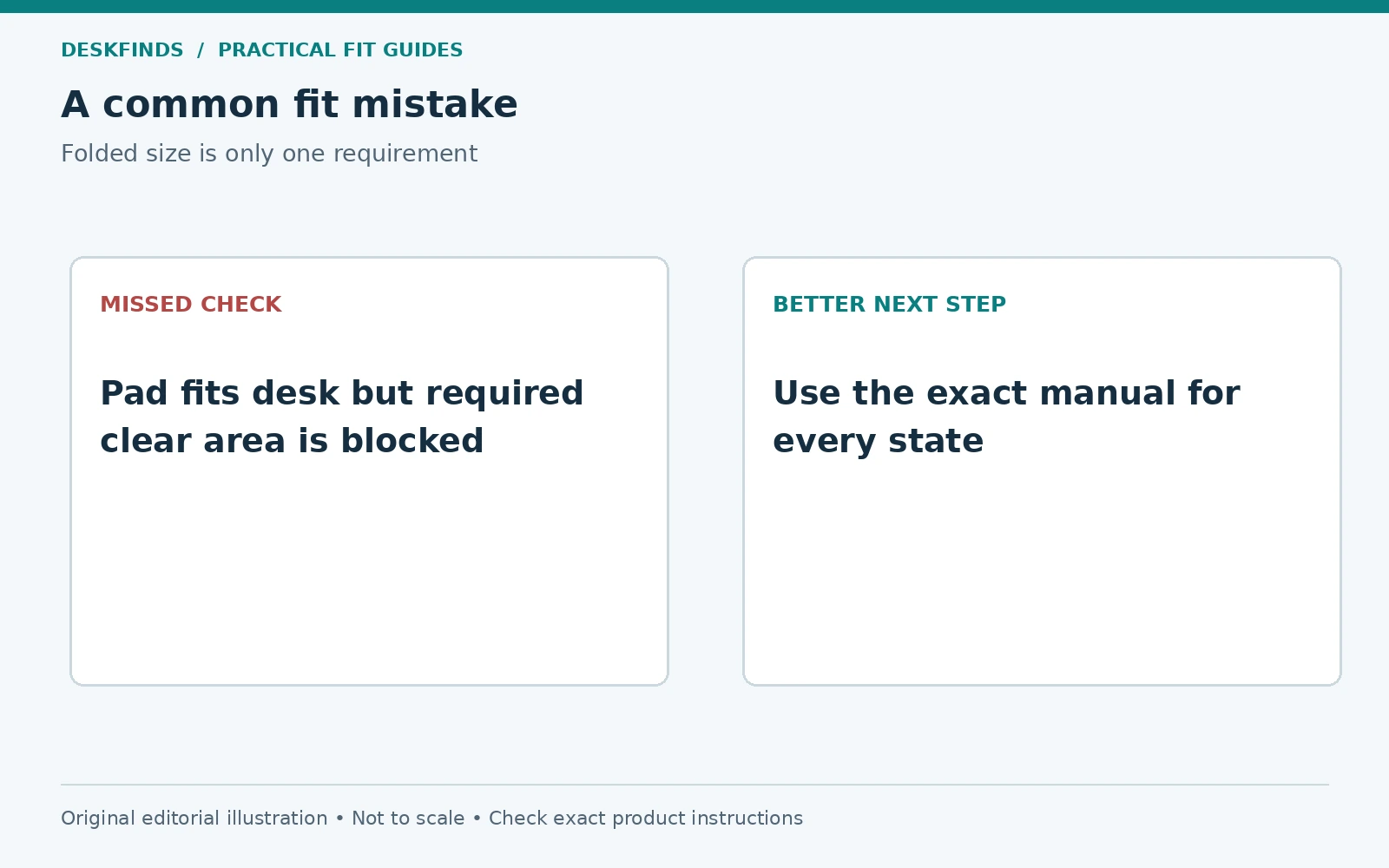
A buyer measures the opening between desk legs and finds a pad narrow enough to enter. The desk sits near a bed, however, and the required rear operating area overlaps the only route through the room. The belt itself fits; the complete use zone does not.
Moving the desk slightly forward does not solve the route conflict. A different room or furniture orientation may be necessary. Choosing a shorter-looking machine without checking its manual could repeat the same mistake. The relevant comparison is documented operating space, not only overall length.
This is a reason to decide against a purchase before delivery if the room cannot support it. A walking pad is not an essential component of every standing desk. Keeping the workstation clear and usable may be more valuable than forcing exercise equipment into a room with no suitable operating zone.
Example: storage works but the daily move does not
Another buyer finds a machine that can be stored in the permitted orientation beneath a sofa. The opening is high enough and the resting footprint fits. Between desk and sofa, a narrow turn and thick rug make the prescribed moving method difficult. The machine is heavier than the buyer expected.
A paper route test reveals the turn, while checking the product weight highlights the handling issue. The buyer compares a different approved storage location nearer the desk. If no practical route exists, a more manageable model or no purchase may be the better decision. Foldability alone does not solve handling.
Include the time and effort of the transition in the decision. A setup that requires several awkward moves is less likely to be used consistently. The storage plan should be simple enough for the actual user and household, not merely possible with help during initial installation.
Keep power and cables outside the movement problem
Follow the machine's power-supply requirements. Do not assume a desk-mounted power strip, extension lead, or shared circuit arrangement is appropriate. Position the machine so the permitted supply can be reached without a stretched cord, a cable under the belt, or a route across a walkway.
Keep the desk's moving cables separate from the machine's moving parts. Check the standing desk through its intended height range with the machine correctly positioned and not operating during setup checks. Make sure neither device pulls the other's cable. A tidy bundle should not create a shared strain point.
Store the cord and controls as the manual directs when moving the unit. Avoid trapping them in a fold or under a wheel. If a cable is damaged, stop using the equipment and use the manufacturer's service route. A storage routine should make inspection easier rather than conceal the parts most likely to be caught.
Consider floor protection and household effects
Use a mat only if it is suitable for the equipment and permitted by its instructions. A mat changes the height, friction, and floor interface; a thick soft surface is not automatically better. Check that the machine remains stable and that required ventilation is not blocked.
Noise and vibration depend on the machine, floor, use, and building. Do not infer quiet operation from a single marketing figure or an empty-room demonstration. Consider neighbors and household routines before choosing a location. A mat may help in some conditions but is not a guarantee of sound isolation.
Keep the area free from loose objects, fabric, and items that could enter moving parts. Store the chair and bags deliberately. If children or pets are present, follow the manufacturer's access and supervision instructions. The workspace remains an exercise-equipment area while the pad is operating.
Make a purchase decision with all states visible
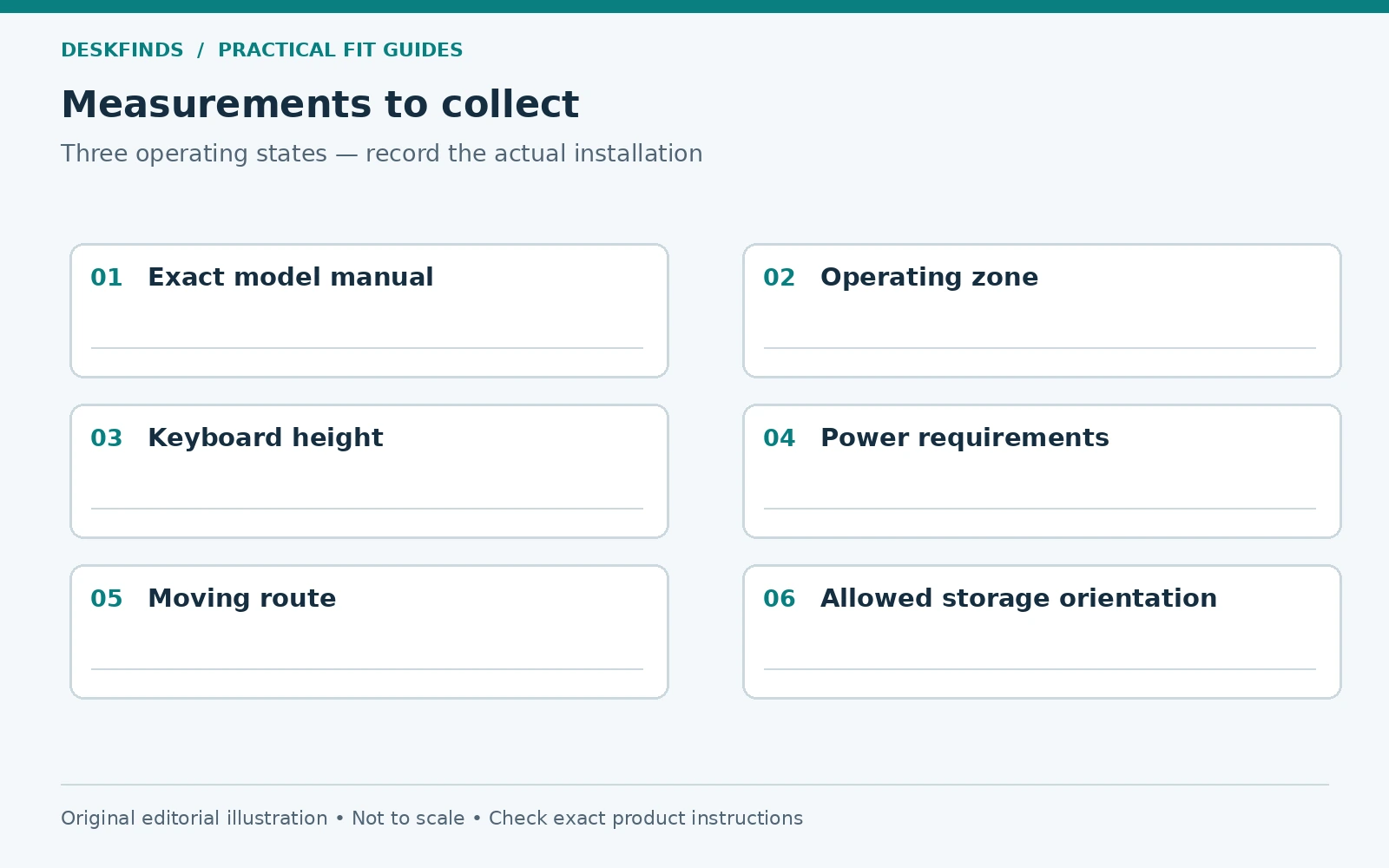
Create one worksheet containing the model manual, operating footprint, required clearances, desk-height check, storage orientation, route, weight, power requirements, and chair location. Mark unknowns and resolve them with the manufacturer before ordering. Do not let an attractive folded-size figure substitute for the rest of the plan.
Once those conditions pass, compare our walking pads for standing desks and compact walking pads. Features matter within a workable layout. A machine that supports a straightforward walking-to-seated transition is more useful than one that technically fits but is difficult to deploy.
After installation, review the routine after normal use. If moving the pad is awkward, controls are hard to reach, or the room becomes blocked, reassess the setup rather than normalizing the inconvenience. The goal is a workstation that remains practical before, during, and after the walking session.
Create a transition checklist you can actually follow
Write the walking-to-seated sequence in the order you will perform it. Include stopping and powering down as instructed, managing the cord and controls, folding or moving the unit by the specified method, parking it in the permitted orientation, and returning the chair. Do not add steps that depend on balancing the machine or holding a door open with your body.
Then reverse the sequence for setup. Confirm that the operating area can be cleared, the machine can be positioned correctly, and the required pre-use checks can be completed. A storage plan is incomplete if returning the equipment to use is awkward. The easiest endpoint photograph can conceal a difficult daily transition.
Try the sequence without operating the machine, following the manual and obtaining help where required. Note which action takes the most effort or creates the tightest clearance. That is the point to improve before making the routine habitual. A different parking location can be more useful than a slightly smaller folded dimension.
Compare portability claims with the actual route
A handle and wheels can make movement easier in the conditions the manufacturer describes, but they do not make a machine universally portable. Check whether the wheels contact the floor at a particular tilt and whether there is room to achieve that angle. A narrow gap may allow the unit to rest flat but not to be tilted for movement.
Check thresholds and rugs along the route. Do not lift or pull the machine using a component not intended for handling. If the manual requires two people, build that into the ownership decision. Equipment that can only be moved safely with help may not suit a routine that requires storage after every short session.
Keep the return route free of temporary storage. A bag placed beside the sofa can eliminate the space needed to turn the unit. Marking the parking area on a room plan can help a shared household understand why that space must remain available. Mobility depends on the room continuing to support the route.
Check the complete desk-height calculation
Write the floor-to-walking-surface height beside the desk's usable keyboard-height range. Include the keyboard or tray surface actually used, rather than the desktop alone. The screen position should then be assessed independently. An adjustable desk may offer enough lift for the keyboard but still need a different monitor position.
Do not assume that raising the top by the machine's deck height creates a suitable workstation automatically. The user, footwear, task, and equipment all affect the final position. Test the arrangement within the instructions and adjust supported components deliberately. If a useful position cannot be reached, choose another setup rather than compensating by reaching or leaning.
If the desk is shared, record the seated and walking configurations separately for each user. Memory settings can simplify transitions where provided, but they do not replace clearance checks. The chair, cart, cables, and surrounding furniture still need to be outside the desk's movement path before it changes height.
Keep the purchase decision reversible while assessing fit
Understand the seller's delivery, assembly, and return conditions before ordering heavy equipment. Keep packaging as appropriate during the initial assessment and inspect for shipping damage according to the supplied instructions. A clear return route is especially useful when the room's handling constraints are difficult to model fully.
This does not replace research into dimensions and manuals. It reduces the consequence of a remaining uncertainty after reasonable planning. Do not operate a machine in an unsuitable space just to see whether the compromise feels acceptable. Resolve the operating zone, power, and storage requirements before normal use.
Sources and scope
- WalkingPad manuals and guides - obtain the exact model manual for operating, moving and storage requirements.
- WalkingPad vertical-fold range - example of designs with explicitly described storage features, not permission for other models.
The layout states and cases are original editorial analysis. No universal rear clearance, storage orientation or power arrangement is prescribed.