
How to Organize a Shared Bathroom With a Portable Shower Caddy

Affiliate Disclosure: We may earn a small commission on qualifying Amazon purchases at no extra cost to you. Full disclosure →
A portable shower caddy needs to carry toiletries, sit or hang as designed during use, drain or dry appropriately afterward, and return to a storage place outside the shared bathroom. Choosing only by pocket count can miss the most inconvenient parts of that cycle.
Quick answer: Pack the actual bottles and tools, check the loaded handle and base, and plan separate wet and dry states. Choose a caddy whose intended support method, drainage, cleaning, and storage fit the bathroom rules and route. A portable basket is not automatically suitable for hanging from a shower pipe, door, or adhesive hook.
Inventory the real shower kit
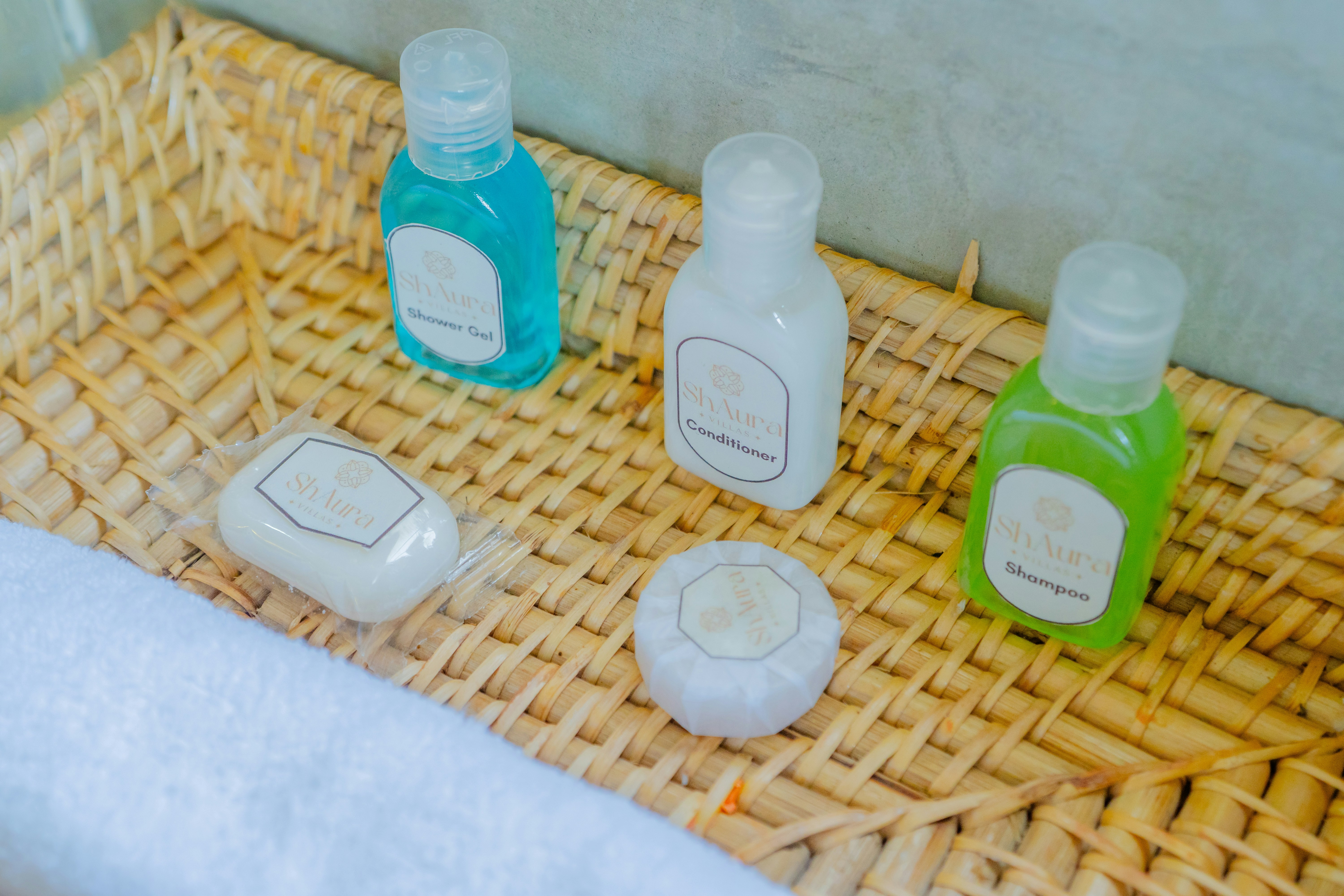
List bottles by height, base size, and filled weight. Include soap, razor with appropriate protection, toothbrush if carried, and other personal items. Do not assume every slim pocket supports a tall full bottle upright.
Reduce duplicate or unused products before buying a larger caddy. Smaller containers can simplify carrying when appropriate, but labeling and product-transfer guidance still matter. Do not decant substances into unsuitable or unidentified bottles merely to fit a pocket.
Choose a use position
Will the caddy stand on a suitable shelf, sit in an approved floor location, or hang from a specific support? Read the product’s intended arrangement. A handle for carrying may not be rated for continuous hanging with a full load.
Check the bathroom’s available surfaces and rules. Keep routes clear and avoid placing the kit where it can be kicked, contaminated by an unsuitable surface, or block someone else’s use. Shared access should remain practical.
Compare rigid and soft designs
A rigid basket can provide a defined shape and stable compartments, while a soft caddy may pack differently and use pockets. Actual drainage, drying, and handling depend on the design, not the category name alone.
Check how the base behaves when loaded. A flexible kit may sag or tip with tall bottles. A rigid one can be bulky in a dorm cupboard. Test the complete kit in the actual destination rather than comparing empty product dimensions only.
Check carrying comfort and retention
Lift only within the product’s intended use and a manageable personal load. Check handle position, grip, and whether bottles can spill or fall while walking. Include stairs and the need to carry a towel or clothing separately.
Caps should close appropriately for their contents. A caddy is usually not a leakproof suitcase. Keep electrical devices and dry belongings outside any area where leaking toiletries or residual water can reach them.
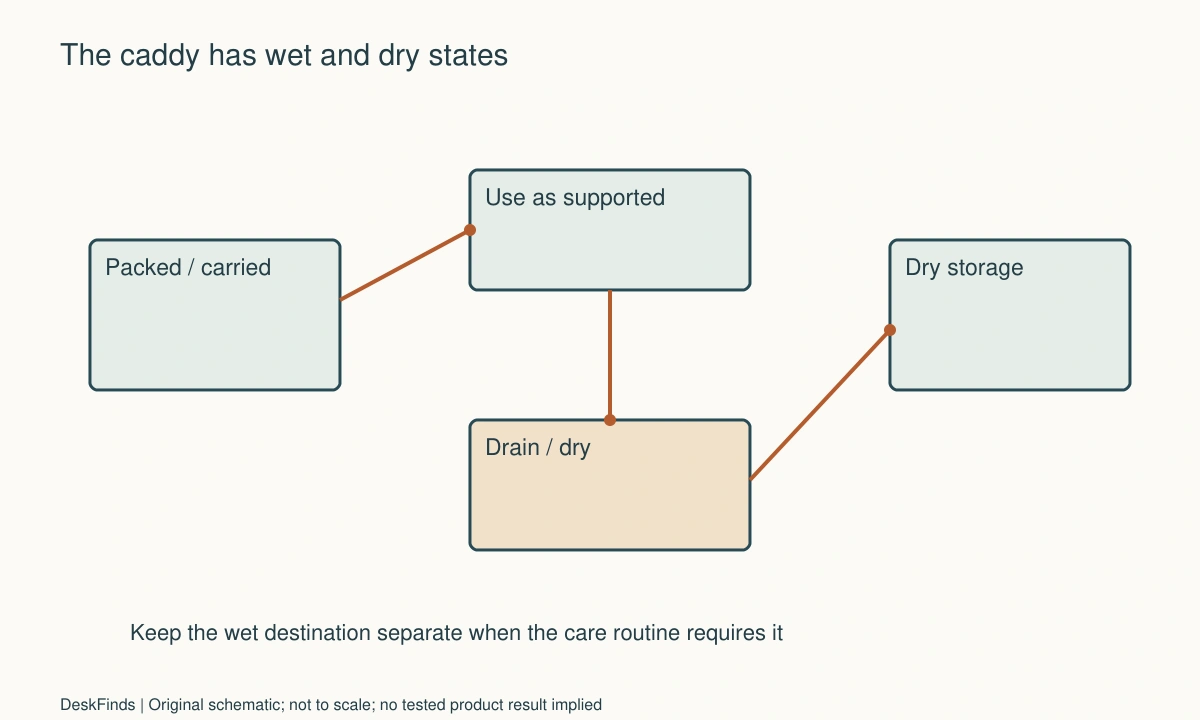
Plan wet and dry states
After use, water may remain on the basket and containers. Follow the caddy and product care instructions, allowing appropriate draining and drying before enclosed storage. Do not assume mesh or drain holes eliminate the need to dry and clean the kit.
Give the wet state a real destination. Putting a dripping caddy directly into a wardrobe or on papers transfers the problem to the bedroom. A suitable temporary drying location may be needed before the final storage shelf.
Keep ownership clear
Use a simple identifier on the personal caddy or compatible label area. Do not place private items loose on a shared shelf unless the arrangement permits it. Keep shared consumables distinct from personal products.
A color or label helps recognition but does not create security. If loss or unauthorized use is a concern, choose storage consistent with the residence rules and the product’s intended use. A small lock or sealed bag may not be appropriate around wet contents.
Clean according to the materials
Check whether parts remove and what cleaners or washing methods are permitted. Fabric, coated metal, plastic, and suction components differ. Do not assume a whole caddy can be machine washed because one removable liner can.
Inspect crevices, pockets, and seams as directed. Replace or address damaged parts through the maker’s guidance. Avoid unsupported claims that a material is automatically hygienic or that a drainage design prevents every cleaning issue.

Treat hanging hardware as another product
If a hook or mount is used, check its bathroom suitability, supported surface, load, installation, and required waiting or removal process. A general indoor adhesive hook may not suit the intended wet location.
Do not hang a heavy kit from plumbing, a showerhead, or a curtain rod without documented permission for that arrangement. The caddy, hook, and supporting fixture each need to be suitable. Physical convenience is not the same as supported installation.
Example: good carrying, poor return storage
Imagine a student choosing a soft pocket caddy that carries the bottles well. After showering, the kit goes straight into a closed cupboard and leaves the shelf wet. The carrying requirement passed, but the return routine did not.
The student adds an appropriate draining and drying step and checks whether the material can be cleaned as intended. A rigid basket is also compared for the available bathroom support and cupboard shape. The final decision includes the wet-state destination rather than simply choosing the smallest folded kit.
The student labels personal products and keeps a separate bag for dry clothing. A test trip confirms the handle, caps, and route work with an ordinary load. No claim is made that the caddy itself guarantees cleanliness or leak protection.
Choose for the whole cycle
| Stage | Required check |
|---|---|
| Packed | Real bottle shapes, closures, and loaded balance |
| Carried | Grip, manageable weight, and route |
| In use | Approved standing or hanging support |
| After use | Draining, cleaning, and drying |
| Stored | Dry-state fit and separation from sensitive belongings |
See shared dorm closet organization for the bedroom destination. The useful caddy makes personal items easy to carry and return without claiming permanent ownership of shared bathroom space or moving moisture into unsuitable storage.
For the bedroom storage destination, use shared-room closet planning.
Separate capacity from wet-state handling
Lay out the actual shower products before choosing pocket count. Measure the tallest bottle, broadest base, and the weight of the normal filled kit. Add the appropriate protected razor or other tools without assuming every narrow pocket is suitable. Removing duplicates can improve carrying more than buying a larger caddy. If containers are changed, follow suitable transfer and labeling practices for their contents rather than making unidentified travel bottles simply to match the organizer.
Choose the support used during the shower. A basket standing on a suitable shelf, a floor arrangement, and a hanging kit are different products and routines. Check residence rules and available space. A carrying handle is not automatically intended for continuous suspension with the full contents. Likewise, an adhesive hook or suction support needs its own exact surface, wet-location, installation, and loading checks. Avoid treating convenient plumbing or a curtain rail as a general storage anchor.
The wet state deserves a destination before the dry cupboard is measured. Water can remain on bottles, pockets, handles, and the base. The caddy’s instructions and material determine suitable draining, cleaning, and drying. A mesh label or drain-hole photograph does not guarantee that enclosed storage immediately after use is appropriate. Keep water away from documents, clothing, electrical devices, and finishes that are not intended for it.
Compare soft and rigid designs with the loaded kit. Flexible pockets may adapt to contents but sag or tip; a rigid basket may support the shape but occupy more cupboard space. Neither category alone establishes hygiene, durability, drainage, or carrying comfort. Read the exact product information and test the routine. A stable empty basket is not a complete assessment of tall full bottles under ordinary movement.
Ownership should stay simple. A clear personal identifier and an agreed storage location can reduce accidental mixing. A color is not a security measure, and a lock or seal may be unsuitable around wet contents or the residence’s rules. Address any loss or unauthorized-use concern through appropriate storage and communication rather than assuming an accessory can solve every shared-bathroom issue.
Finally, rehearse the trip with the towel and dry clothing arrangement. The caddy may be only one item carried. Door operation, stairs, and the available hand can change what is practical. The useful product supports the whole route and return, not only a well-styled shelf during the shower.

Worked trial: the caddy works in the shower but not afterward
Imagine a student using a soft pocket kit in a shared bathroom. The normal bottles fit, and the handle is convenient for the walk. The student returns the wet kit directly to a closed wardrobe shelf, where residual water reaches nearby belongings.
The trial identifies a missing state rather than a simple capacity problem. The student reviews the caddy’s care instructions and assigns a suitable draining and drying location before final enclosed storage. The storage shelf is then measured for the appropriately dry loaded kit instead of being treated as the wet-state destination.
The in-shower position is also checked. The student had planned to hang the full kit from a convenient fixture, but neither the support nor the caddy documents that arrangement. A supported standing location or a different properly installed product is compared. No assumption is made that a handle designed for carrying can hang indefinitely from any hook.
A rigid basket is trialed with the same bottles. It offers a defined shape but occupies more cupboard depth. A tall bottle changes the balance, so the student tests ordinary carrying and removal rather than judging the empty basket. Caps and contents receive their own appropriate closure checks; the caddy is not called leakproof.
Personal products are labeled and kept distinct from genuinely shared supplies. A separate appropriate bag holds dry clothing. The student avoids placing electronics or papers beneath the wet kit and keeps the shared bathroom route available for other users.
The whole journey is repeated: collect, carry, set down or support as directed, use, drain, clean or dry as needed, and store. The chosen kit may have fewer pockets than the original candidate but supports this complete cycle more reliably.
The result does not certify that one material prevents every cleaning issue or that portable storage guarantees privacy. It demonstrates a manageable routine based on the actual products, room rules, wet-state handling, and destination. Those factors are more useful than a pocket count alone.
Compare an ordinary week, not one shower
Include repeated carrying, cleaning, drying, and return. A caddy that works once while carefully packed may become awkward when one bottle is partly empty, another is replaced by a taller product, or the user also carries clothes. The kit should have useful tolerance without being so oversized that it blocks shared space.
Keep replacement products within the plan. A bottle’s advertised volume does not describe its base, height, or cap. Check the new shape and balance rather than assuming the same amount of liquid makes it interchangeable. Suitable closures and product labeling remain the contents’ requirements, independent of organizer fit.
If the bathroom layout changes, revisit support. A basket that stood on a shelf cannot automatically hang from a hook in another room. A wet-location adhesive or suction product may have specific surface and loading requirements. Use the appropriate exact instructions and residence rules before relying on a new arrangement.
Choose a care routine that can be performed. A design with many inaccessible pockets or seams may be inconvenient for the cleaning method you need. Do not infer that one material is always more hygienic; inspect the product’s actual care information and your ability to drain and dry it appropriately.
Keep personal and shared products recognizable. A simple identifier and a defined storage location can reduce mix-ups. If unauthorized use is the issue, address access and residence arrangements directly rather than assuming a color or extra zip pocket creates security.
At the final check, put the kit in its dry storage destination and retrieve it again without moving unrelated clothes, papers, or electronics. The route from shelf to bathroom and back should remain practical in both states. A good portable caddy does not just carry toiletries; it prevents their wet-state handling and return from becoming another small-room storage problem.
For separating clothing collection and return, review hamper planning.
Your practical comparison worksheet
Use the following checks with the actual people, objects, and room in your plan. Record a measured value, an observed task result, or the exact product information that answers each point. Keep unresolved details separate from confirmed ones. A result about one feature should not silently establish another: physical fit, ordinary use, support, and care may require different evidence. Work through the checks before ordering, then repeat the relevant actions with the delivered item while the return terms apply. The worksheet is a planning aid rather than a product test or approval for an improvised installation.
1. Contents
List the real filled bottles and tools, including height, base, closure, weight, and suitable protection for sharp items.
Choose compartments from the actual kit. Avoid changing to unidentified or unsuitable containers solely to match a pocket shape.
2. Carrying
Test the intended handle and manageable loaded balance along the route, with towel or dry clothing carried as normally needed.
Include doors and stairs. A caddy convenient in an empty hand may be awkward when it is only one part of the trip.
3. Use support
Identify the exact standing surface or documented hanging system available under the bathroom’s rules.
Do not suspend a full kit from plumbing, a curtain rod, or an arbitrary hook without support for that arrangement from the relevant products.
4. Loaded structure
Compare flexible sag, rigid footprint, bottle stability, and the actual retrieval direction while the caddy is supported as intended.
Empty dimensions and pocket count do not establish working fit. A tall full bottle can change balance or access significantly.
5. Wet state
Follow drainage, cleaning, and appropriate drying instructions and give the used kit a suitable temporary destination.
Do not transfer residual water into a wardrobe or onto sensitive belongings. Mesh and holes do not remove the need for material-specific care.
6. Dry storage
Measure the final loaded kit at its suitable storage state, including handles, protruding bottles, and removal access.
Keep wet and dry destinations distinct where the routine requires them. A cupboard fit is not automatically a suitable place for a dripping kit.
7. Ownership
Use a simple personal identifier and agreed location while distinguishing shared consumables from private products.
Do not treat color as security or add a lock or sealed enclosure without considering moisture, product use, and residence rules.
8. Maintenance
Check permitted cleaners, removable parts, washing methods, drying, and damaged seams or hardware according to the maker.
Avoid unsupported hygiene claims. Choose a product whose routine care you can actually perform rather than assuming all bathroom materials are interchangeable.
Sources and scope
- IKEA shower accessories guidance - Portable-caddy use context; actual support, drainage, and care must follow the selected model.
Editorial note: This is a research-based planning guide, not a hands-on product review. Worked examples are hypothetical. Follow the exact product instructions and resolve compatibility, installation, and care questions before relying on the arrangement.