
Small Desk Organization Ideas: 7 Methods That Actually Keep a Tiny Desk Clean
7 proven small desk organization ideas - from vertical stacking to under-desk drawers - that keep compact workspaces clutter-free. Includes product picks, scoring, and a step-by-step setup checklist.
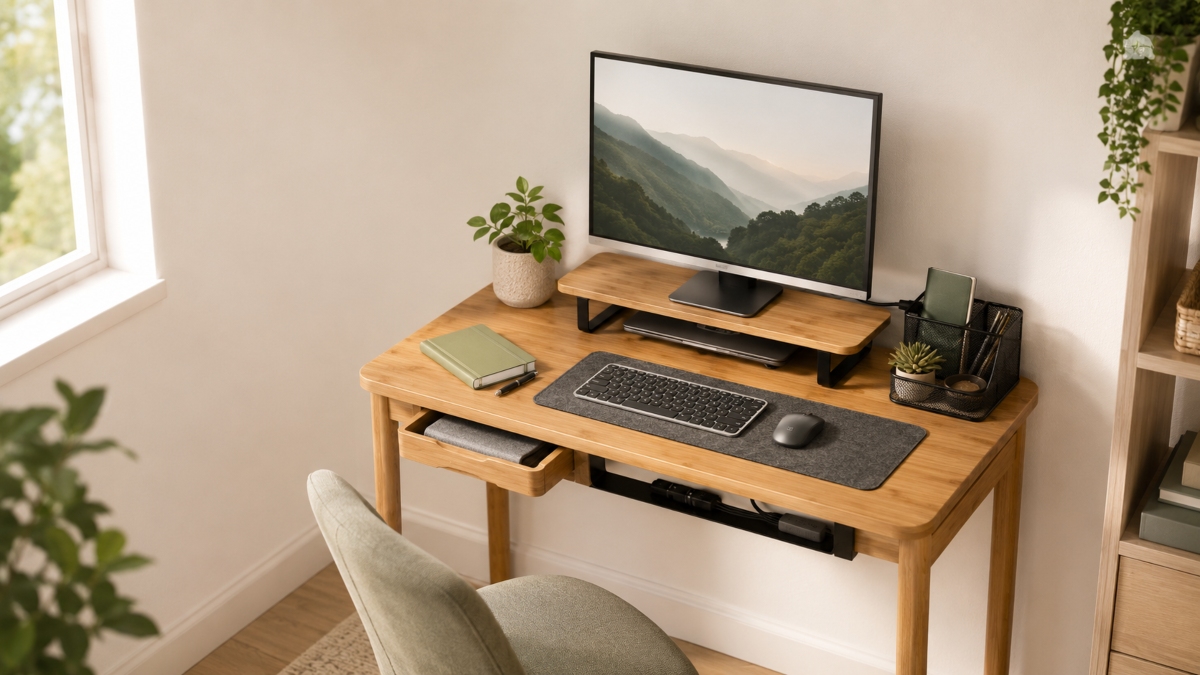
A small desk doesn't need more organization products - it needs the right method. Most desk organization guides throw 20 products at you and hope something sticks. That's how you end up with an organizer caddy sitting on top of another organizer caddy, both full of things you don't use.
We've evaluated organization approaches across dozens of compact desk setups - dorm desks, bedroom desks, home office desks under 48 inches - and found that the best small desk organization ideas aren't products. They're systems. Products just support the system. Here are seven methods that actually work, with specific product picks scored on how well they earn their footprint.
The Golden Rule: Declutter Before You Organize
Every organization expert agrees on one thing: don't buy storage until you've removed what you don't need. The single biggest mistake people make with small desks is buying a cute organizer, filling it with things they barely use, and ending up with less desk space plus an organizer to manage.
The 5-minute desk audit - pull everything off your desk, then sort into three groups:
Daily use
Keyboard, mouse, laptop, one pen, phone charger. These earn desktop space.
Weekly use
Notebooks, headphones, extra cables, sticky notes. These go near the desk, not on it.
Rarely use
Spare pens, old papers, random cables, decorative items. These leave the desk area entirely.
Most people discover that 60–70% of their desk clutter falls into the weekly or rarely category. That's your real problem - not a lack of organizers.
The 7 Small Desk Organization Methods
Each method is a system first. The product picks below each method support the system - they don't replace it.
The Vertical Stack - Go Up, Not Out
Best for: Desks under 40 inches with wall space behind them
Core idea:Your desk surface is limited. The air above it isn't. Every inch of vertical space you use is an inch of desktop you reclaim.
Instead of spreading supplies horizontally across the desk, stack them vertically using risers, shelves, or wall-mounted storage. The goal is a desk surface that holds only your active work tools - laptop, keyboard, mouse - while everything else lives above or beside. For a full comparison of riser and organizer options by footprint, see our guide to desk shelves for small desks.

Desktop Shelf Riser
Footprint: 16–24 x 8 in
Why it works
- ✓Adds storage without consuming new surface area
- ✓Adjustable width fits desks from 30 to 48 inches
- ✓Creates a visual back wall that frames the workspace
Tradeoffs
- ⚠Adds visual height - can feel cramped in very tight spaces
- ⚠Cheaper models wobble under weight

Wall-Mounted Pegboard
Footprint: 0 (wall mounted)
Why it works
- ✓Zero desktop footprint
- ✓Fully customizable layout with hooks and shelves
- ✓Modular - add or remove hooks as needs change
Tradeoffs
- ⚠Requires wall mounting (screws or heavy-duty adhesive)
- ⚠Can look cluttered if overloaded - edit ruthlessly
Pro tip: The Reddit decluttering community consistently recommends pegboards as the single best wall storage for small desks. The key is restraint - hang only what you use weekly, not everything you own.
The Under-Desk System - Hidden Storage Below
Best for: Desks with no drawers (the most common small desk problem)
Core idea: The space under your desk is usually wasted. Reclaim it with mounted drawers, trays, and storage that stays invisible from above.
If your desk has no built-in drawers - and most budget IKEA desks, folding desks, and dorm desks don't - you create your own drawer system underneath. This is the method that transforms a basic tabletop into a functional workstation.

Adhesive Under-Desk Drawer
Footprint: 0 (mounted under desk)
Why it works
- ✓Adds drawer storage to any flat surface
- ✓Completely invisible when closed
- ✓No tools required for adhesive models
Tradeoffs
- ⚠Adhesive can fail on textured wood - screw-in versions are more reliable
- ⚠Limited depth means bulkier items won't fit

Stackable Plastic Drawer Units
Footprint: Under-desk floor space
Why it works
- ✓Scales to any height - stack 2, 3, or 4 units
- ✓Clear drawers mean no rummaging
- ✓Portable - easy to rearrange or move
Tradeoffs
- ⚠Plastic construction feels less premium
- ⚠Taller stacks become wobbly

Under-Desk Cable Management Tray
Footprint: 0 (mounted under desk)
Why it works
- ✓Removes the power strip from your desktop entirely
- ✓Hides 6–8 cables in one tray
- ✓Clamp-on design - no permanent modifications
Tradeoffs
- ⚠Installation takes 15–20 minutes
- ⚠Desk thickness must be under 1.5 inches for most clamps
The One-Bin Rule - Contain, Don't Spread
Best for: People who accumulate desk clutter throughout the day
Core idea:Give yourself exactly one container for loose items. When it's full, it's time to sort - not time to buy a second container.
This method comes from Dana K. White's “container concept,” frequently cited in decluttering communities. The container is the limit. For a small desk, this means one compact organizer - a mesh caddy, pen cup, or small tray - that holds your daily-use items. If it overflows, you declutter. You don't add another organizer.

Compact Mesh Desk Organizer
Footprint: 4 x 6 in
Why it works
- ✓Small enough to enforce the one-bin rule
- ✓Mesh visibility prevents junk-drawer syndrome
- ✓Sub-$20 - low commitment
Tradeoffs
- ⚠Small items (paper clips, pins) fall through mesh gaps
- ⚠Not the most aesthetic option for design-conscious setups

Bamboo Desktop Tray
Footprint: 6 x 8 in
Why it works
- ✓Looks intentional, not utilitarian
- ✓Bamboo is durable and easy to clean
- ✓Natural material blends with most desk setups
Tradeoffs
- ⚠No visibility into contents - you'll forget what's inside
- ⚠Bamboo stains if wet items sit in it
The Monitor Riser Strategy - Storage You Sit In Front Of
Best for: Setups with an external monitor (not laptop-only)
Core idea: A monitor riser elevates your screen to ergonomic height while creating a storage shelf underneath - the most efficient use of desk real estate available.
Your monitor's base takes up 8–12 inches of desk depth. A riser lifts the monitor 4–5 inches and turns that dead zone into a shelf or drawer. Slide your keyboard underneath when not in use, store notebooks flat, or add a small drawer for supplies.

Bamboo Monitor Riser with Drawer
Footprint: 22 x 9 in
Why it works
- ✓Dual function: ergonomic lift + hidden storage in one
- ✓22-inch width fits desks as narrow as 36 inches
- ✓Drawer keeps small items out of sight but within reach
Tradeoffs
- ⚠Fixed height - not adjustable
- ⚠Drawer depth is shallow at 1.5 inches

Monitor Arm (Clamp-On)
Footprint: 0 (clamped to desk edge)
Why it works
- ✓Reclaims the full footprint of the monitor stand (8x10 in)
- ✓Adjustable height, angle, and distance from the desk
- ✓Works with most VESA-compatible monitors
Tradeoffs
- ⚠Not all monitors are VESA-compatible - check first
- ⚠Clamp requires a sturdy desk edge (skip for glass desks)
The Zone System - Divide the Desk Into Territories
Best for: Desks between 40–48 inches where you do multiple types of work
Core idea: Assign each section of the desk a specific job. Nothing crosses zones. When something is in the wrong zone, it goes back.
Divide your desk into three zones. The zone system prevents the “creep” - where items slowly migrate from the edges to the center of your desk until you're working in a 12-inch gap surrounded by clutter. When each item has a zone, putting things back is automatic, not a decision.
Zone 3: Reference
Shelf riser, pegboard, or wall storage - items you see but don't touch constantly
Zone 2: Supplies
One organizer caddy, 6-inch strip on one side
Zone 1: Active Work
Laptop or monitor + keyboard + mouse. Nothing else lives here permanently.

Felt and Cork Desk Mat
Footprint: 24 x 12 in
Why it works
- ✓Visually marks the active work zone - nothing outside it belongs in Zone 1
- ✓Felt side feels premium under hands during extended use
- ✓Cork backing prevents any sliding on smooth desk surfaces
Tradeoffs
- ⚠Felt collects dust and shows pet hair visibly
- ⚠Spills can stain the felt side - not water-resistant
The Paper Elimination - Go Digital or Go Away
Best for: Desks drowning in papers, notes, and printouts
Core idea: Paper is the single largest space thief on a small desk. Every paper you digitize is surface area you reclaim.
Audit every piece of paper on or near your desk. For each one, ask: can this exist as a file on my computer instead? Most receipts, notes, reference sheets, and forms can be photographed, scanned, or replaced with a digital version.
Digitize these
- ✓Receipts (photo + cloud folder)
- ✓Notes (Notion, Apple Notes, Google Keep)
- ✓Reference sheets (bookmarked PDF)
- ✓Bills and statements (online portals)
Keep physical
- ●Legal documents requiring original signatures
- ●Tax forms you're actively filing
- ●One notebook for daily handwritten notes

Stackable Letter Trays (2-Pack)
Footprint: 10 x 13 in
Why it works
- ✓Forces a limit on paper accumulation
- ✓Vertical stacking minimizes surface use
- ✓Clear inbox/outbox system prevents random piles
Tradeoffs
- ⚠Standard letter size may not fit desks under 36 inches
- ⚠Paper piles up if you don't process regularly

Compact Vertical File Sorter
Footprint: 5 x 10 in
Why it works
- ✓Keeps multiple paper categories separated without a filing cabinet
- ✓Vertical orientation uses minimal surface area
- ✓Works on desk shelf riser or beside the desk
Tradeoffs
- ⚠Only works if you commit to filing - random papers still pile up
- ⚠3–5 slot versions fill quickly for heavy paper users
The End-of-Day Reset - The Habit That Keeps Everything Working
Best for: Everyone - this is the method that makes all other methods sustainable
Core idea: No organization system survives daily use without a reset habit. Spend 2 minutes at the end of each workday returning everything to its assigned place.
Desktop check
Anything on the desk that doesn't belong in Zone 1? Move it back.
Drawer check
Are under-desk drawers still organized, or did something get tossed in randomly?
Paper check
Any new papers? File, scan, or recycle. Don't leave them for tomorrow.
Cable check
Are chargers and cables back in their clips or tray?
The entire reset takes 90 seconds to 2 minutes. The top-voted advice in every Reddit thread about desk organization is some version of “don't buy storage - declutter first.” The end-of-day reset is the ongoing version of that advice. No product can replace this habit. But with this habit, even basic products work exceptionally well.
Complete Product Comparison
| # | Product | Method | Footprint | Score | |
|---|---|---|---|---|---|
| 1 | Bamboo Monitor Riser w/ Drawer | 4 | 22×9 in | 9.2 | View |
| 2 | Under-Desk Cable Tray | 2 | 0 (mounted) | 9.0 | View |
| 3 | Felt and Cork Desk Mat | 5 | 24×12 in | 8.9 | View |
| 4 | Desktop Shelf Riser | 1 | 16–24×8 in | 8.8 | View |
| 5 | Compact Mesh Organizer | 3 | 4×6 in | 8.7 | View |
| 6 | Adhesive Under-Desk Drawer | 2 | 0 (mounted) | 8.6 | View |
| 7 | Monitor Arm (Clamp-On) | 4 | 0 (clamped) | 8.5 | View |
| 8 | Wall-Mounted Pegboard | 1 | 0 (wall) | 8.5 | View |
| 9 | Stackable Plastic Drawers | 2 | Under-desk | 8.4 | View |
| 10 | Stackable Letter Trays | 6 | 10×13 in | 8.3 | View |
| 11 | Bamboo Desktop Tray | 3 | 6×8 in | 8.3 | View |
| 12 | Vertical File Sorter | 6 | 5×10 in | 8.1 | View |
Small Desk Organization by Situation
Not every desk problem is the same. Here's which methods to prioritize based on your specific setup:
How to organize a small desk without drawers
The most common pain point - a basic tabletop or folding desk with zero built-in storage.
- 1.Method 2 (Under-Desk System) - Add adhesive drawers and stackable units below
- 2.Method 1 (Vertical Stack) - Shelf riser or pegboard above
- 3.Method 3 (One-Bin Rule) - One compact organizer on the surface
Budget: ~$50–$70 for a functional drawer + riser + organizer combo
How to organize a small desk with two monitors
Dual monitors eat surface space. The desk mat you're working on shrinks to almost nothing.
- 1.Method 4 (Monitor Riser/Arm) - Mount both monitors on arms to reclaim base footprint
- 2.Method 2 (Under-Desk System) - All storage goes below since the surface is monitor territory
- 3.Method 5 (Zone System) - Define narrow supply zone on one side
Budget: ~$70–$110 for dual monitor arms + under-desk storage
How to organize a small desk in a dorm room
Dorm desks are usually 40–48 inches, shared spaces, and you can't drill into walls.
- 1.Method 1 (Vertical Stack) - Desktop shelf riser (no wall mounting needed)
- 2.Method 3 (One-Bin Rule) - One organizer, enforced limit
- 3.Method 6 (Paper Elimination) - Digitize aggressively to minimize physical storage
- 4.Method 7 (End-of-Day Reset) - Essential in shared spaces
Budget: ~$40–$60 for riser + organizer + cable clips
Cute ways to organize your desk
If aesthetics matter as much as function, focus on materials and color coordination.
- 1.Bamboo monitor riser (warm, natural look)
- 2.Felt and cork desk mat (textured, minimal)
- 3.Bamboo desktop tray (matches the riser)
- 4.Pick one material family and stick to it - matching materials make a small desk look intentional
Budget: ~$60–$80 for a coordinated bamboo + felt setup
Step-by-Step Setup Checklist
The exact order to organize a small desk from scratch:
Phase 1: Clear and Audit
15 minutes
- Remove everything from the desk surface
- Sort into Daily / Weekly / Rarely piles
- Remove Rarely items from the desk area entirely
- Move Weekly items to nearby shelves, closet, or storage bin
- Only Daily items return to the desk
Phase 2: Add Infrastructure
30 minutes
- Install under-desk cable tray (hides power strip and cables)
- Add under-desk drawers if desk has none (adhesive or stackable)
- Place monitor riser or mount monitor arm
- Mount pegboard or shelf riser if wall space allows
Phase 3: Organize the Surface
10 minutes
- Place desk mat to define active work zone
- Position one organizer caddy in the supply zone
- Return only daily-use items to the desk
- Route all cables through tray or clips
Phase 4: Build the Habit
Ongoing
- Set a daily 2-minute end-of-day reset
- Review and declutter monthly - remove anything unused in 30 days
- Resist adding new organizers - if you need more storage, declutter first
Frequently Asked Questions
What is the best way to organize a small desk?
Start by removing everything and keeping only daily-use items on the surface. Add vertical storage (shelf riser or pegboard) above and hidden storage (under-desk drawers, cable tray) below. Finish with a 2-minute daily reset habit to prevent clutter from returning.
How do you organize a small desk with no drawers?
Create your own drawer system using adhesive under-desk drawers ($12–$22) or stackable plastic drawer units placed under the desk. Pair with a cable management tray to remove the power strip from the surface. This combination gives a basic tabletop the storage of a full desk.
How do I keep a small desk clean?
The end-of-day reset is the most effective method: spend 2 minutes before closing your laptop returning every item to its assigned place. This single habit prevents clutter from accumulating and makes every other organization method sustainable.
What should I put on a small desk?
Only items you use daily: laptop or monitor, keyboard, mouse, one pen or pen cup, and your phone. Everything else should live near the desk (on shelves, in drawers, on the wall) - not on the surface. A desk mat and one compact organizer are the only accessories that earn permanent surface placement.
How can I organize a small desk for studying?
Use a monitor riser to create shelf space for textbooks, a desk mat to define your active study zone, and a compact organizer for pens and highlighters. Keep only the current subject's materials on the desk - store everything else on a nearby shelf. A flip Pomodoro timer ($18–$28) helps maintain focus sessions.
How to organize a small office desk at work?
Apply the zone system: active work in the center, one organizer on the side, reference materials above or behind. Add stackable paper trays (inbox/outbox) if your job involves physical documents. Keep personal items to one small area and enforce the one-bin rule for supplies.
Final Verdict
The best small desk organization idea isn't a product - it's a system. Declutter first, add vertical and under-desk storage second, and build a daily reset habit third. Products support the system, but they don't replace it.
If you're starting from zero, these three purchases cover 80% of what a small desk needs:
Total: ~$83. A complete small desk organization system for less than a mediocre office chair.
The rest - pegboards, desk mats, paper trays - are situational upgrades. Add them only when you have a specific problem they solve.
Browse all desk organization products on Amazon
See current prices, deals, and Prime shipping options
Shop Desk Organization on Amazon