
8 Best Quiet Mechanical Keyboard Switches (Buying Guide) in 2026
8 keyboards evaluated by switch type for quiet typing in 2026, covering silent linear, tactile brown, linear red, and low-profile quiet options.

New to Amazon Prime?
Get fast, free shipping on every pick in this guide, plus Prime Video and exclusive deals.
Try Prime Free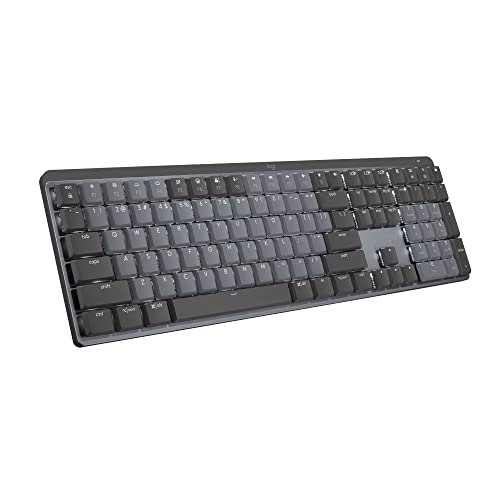


At a Glance
Logitech MX Mechanical Wireless Illuminated Keyboard
↓ See why we picked itKeychron V6 Knob Version (Keychron K Pro Brown Switch)
↓ See why we picked itSwitch type is the single biggest factor in how loud a mechanical keyboard sounds, but most buying guides only say a switch is "quieter" without explaining by how much, or which noise source is actually being reduced. A silent linear switch typically measures around 33-40 dB at the keycap, compared to roughly 50-55 dB for a standard clicky switch, against an ambient quiet-office baseline of about 50-60 dB, which is the difference between a keyboard nobody notices on a call and one that shows up in every recording.
Below are 8 keyboards we evaluated by the actual switch technology in their real listings, from tactile Brown and linear Red mechanical switches to low-profile scissor-style boards marketed as quiet, so you can match a switch type to whether you need office-quiet, late-night-quiet, or just quieter than a clicky gaming board.
5 Criteria to Look For Before Buying a Quiet Mechanical Keyboard Switches (Buying Guide)
Key buying criteria so you get the right fit the first time.
Match switch type to your actual environment, not just gaming feel
Switch type determines feel, sound, and how disruptive the keyboard is to people around you, clicky switches feel satisfying to type on solo but produce an audible click on every keystroke that can be genuinely disruptive on a Zoom call or in a shared office, while linear switches are quieter and smoother, and tactile switches split the difference with a felt bump but no click.
This matters directly based on where you'll actually use the keyboard, a home office with video calls or a shared workspace calls for a different switch than a private gaming setup where clicky feedback is a feature, not a liability.
Check the specific switch name (not just "mechanical") and look up its actuation force and whether it's linear, tactile, or clicky before assuming any mechanical keyboard suits your environment.
Check hot-swappable sockets if you want to change switches later without soldering
A hot-swappable keyboard lets you physically remove and replace individual switches without any soldering, meaning you can try different switch types or replace a failed switch years later without needing to be a hobbyist with a soldering iron.
This matters directly if you're not fully certain which switch feel you'll prefer long-term, or if you want the option to upgrade switches later without replacing the whole keyboard.
Check the listing specifically for "hot-swappable" and the specific socket type (3-pin or 5-pin) it supports, since not every hot-swap socket accepts every switch type.
Consider keycap material for both feel and long-term durability
Keycap material affects both the tactile feel under your fingers and how well the keycaps resist shine and wear over years of typing, PBT plastic is generally more durable and resists the glossy shine that ABS plastic keycaps develop after months of oil and friction from typing.
This matters more for a keyboard you'll type on daily for years, less for occasional or gaming-only use where keycap longevity matters less.
Check the listing specifically for PBT versus ABS keycap material, since this detail is sometimes buried in the specs rather than featured prominently.
Weigh wireless convenience against connection latency for your actual use case
A wireless mechanical keyboard eliminates a desk cable but introduces a small amount of input latency compared to a wired connection, and Bluetooth in particular can have more noticeable latency than a dedicated 2.4GHz USB receiver, a real consideration for competitive gaming but largely unnoticeable for typing and general office work.
This matters more if you're specifically buying for fast-paced gaming, less for typing-focused office or home use where the latency difference is imperceptible.
Check whether a wireless keyboard supports a low-latency 2.4GHz dongle in addition to Bluetooth, and consider a wired connection specifically if competitive gaming performance matters.
Match keyboard layout and size to your actual desk space and workflow
Mechanical keyboards range from full-size boards with a number pad to compact tenkeyless (no number pad) and even smaller 60% layouts that omit the function row and arrow keys, and this size choice is a real tradeoff between desk space saved and keys available without a modifier combination.
This matters directly if you regularly use a number pad for data entry, a compact layout without one adds real friction, while someone who never touches the number pad gains meaningful desk space and a shorter reach to the mouse with a smaller layout.
Check the specific layout size and key count against your actual daily workflow, not just desk space alone.
8 Best Quiet Mechanical Keyboard Switches (Buying Guide) in 2026
Logitech MX Mechanical Wireless Illuminated Keyboard
About this pick
The MX Mechanical uses a low-profile tactile mechanical switch, not a dedicated silent switch, so it should be judged as a quiet low-profile board rather than labeled with a specific silent-switch technology. Shorter key travel on a low-profile switch naturally produces less bottom-out noise than a taller standard-height switch, which is a large part of why it reads as quiet in practice.
Multi-device Bluetooth and a Logi Bolt receiver let it pair with up to 3 computers, and the illuminated keys add usability in dim rooms. It is the most expensive board in this list, priced for build quality and multi-device convenience as much as for noise reduction.
Multi-device switching across up to 3 computers. That's a real strength, but weigh it against the flip side: not a true silent-switch mechanical keyboard, quieter by design rather than dampened.
Best for: Buyers who want a quiet, low-profile feel with multi-device switching
Check price on AmazonPros
- +Shorter low-profile travel reduces bottom-out noise naturally
- +Multi-device switching across up to 3 computers
- +Premium build quality
- +Full-size layout despite the low-profile design
Cons
- −Not a true silent-switch mechanical keyboard, quieter by design rather than dampened
- −Most expensive pick in this list
- −Not hot-swappable if you want to try a different switch later
Logitech G413 TKL SE Mechanical Gaming Keyboard
About this pick
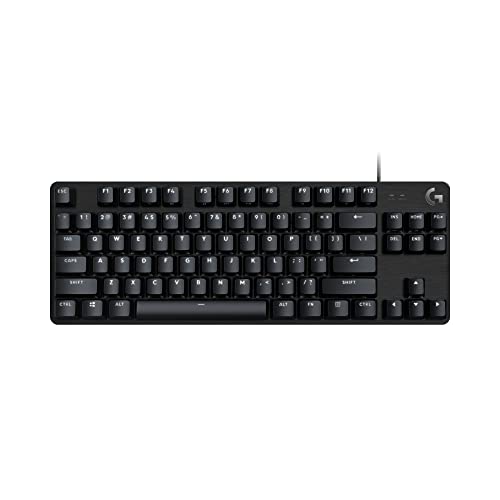
The G413 TKL SE uses standard-height mechanical switches without a specific silent or whisper-quiet designation in its listing, so it belongs in this list as a compact tenkeyless option rather than a top silent pick. Its smaller TKL footprint means fewer large stabilized keys than a full-size board, which cuts down on stabilizer rattle even without a dedicated silent switch.
A solid aluminum-alloy top plate gives it a sturdier feel than plastic-cased budget boards. It suits buyers who want a compact, no-frills mechanical board and are willing to add a desk mat or switch pads to bring the noise down further.
Worth calling out specifically: sturdy aluminum-alloy top plate. The catch is no silent or whisper-quiet switch marketing, standard mechanical noise level.
Best for: Buyers who want a compact, sturdy TKL board and plan to add their own noise dampening
Check price on AmazonPros
- +Compact TKL footprint reduces total stabilized keys and rattle
- +Sturdy aluminum-alloy top plate
- +More affordable than the premium low-profile picks
- +Simple, no-frills design
Cons
- −No silent or whisper-quiet switch marketing, standard mechanical noise level
- −No numpad if you need one
- −Wired only
SteelSeries Apex 3 RGB Gaming Keyboard
About this pick
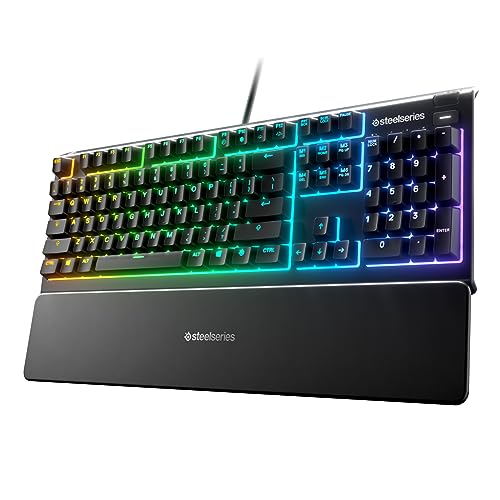
SteelSeries markets the Apex 3 with a "Whisper Quiet Gaming Switch" directly in its listing, which is the closest match in this list to an actual quiet-switch claim from the manufacturer rather than a general mechanical keyboard sold as an assumption of quiet. IP32 water resistance is a useful bonus for a desk near a drink or in a humid room.
A magnetic wrist rest is included, and 10-zone RGB adds customization. Since this is branded switch marketing rather than a published dB figure, treat "whisper quiet" as directionally true rather than a guaranteed silent-switch experience.
IP32 water resistance. Set against that, "Whisper quiet" is a brand claim, not an independently measured dB figure. Both matter when comparing it to the other picks here.
Best for: Budget buyers who want a manufacturer-branded quiet switch without paying for a premium board
Check price on AmazonPros
- +Explicit whisper-quiet switch marketing from the manufacturer
- +IP32 water resistance
- +Includes a magnetic wrist rest
- +Budget-friendly price for a branded quiet switch
Cons
- −"Whisper quiet" is a brand claim, not an independently measured dB figure
- −No numpad on this compact layout
- −Not hot-swappable if you later want a true silent switch
Keychron V6 Knob Version (Keychron K Pro Brown Switch)
About this pick
This board uses Keychron's K Pro Brown switch, a tactile switch with a light bump, not a silent-dampened switch. Tactile switches are naturally quieter than clicky switches because there is no click jacket, but they are noisier than a true silent linear switch since the bump mechanism itself creates friction noise on every press.
Hot-swappable sockets mean you can later replace the Brown switches with a silent linear switch if office noise becomes a bigger concern. A physical volume knob and full QMK/VIA remapping round out a board built for customization first, quiet second.
A genuine advantage here is that hot-swappable, upgradeable to a true silent switch later. The tradeoff is tactile bump adds friction noise a true silent linear switch avoids.
Best for: Buyers who want tactile feedback and the option to hot-swap to silent switches later
Check price on AmazonPros
- +Quieter than a clicky switch by default
- +Hot-swappable, upgradeable to a true silent switch later
- +Full remapping support and a volume knob
- +Confirmed tactile Brown switch, not mislabeled as silent
Cons
- −Tactile bump adds friction noise a true silent linear switch avoids
- −Not marketed or sold as a silent switch
- −Wired only
Keychron V6 Max Wireless (Gateron Brown Switch)
About this pick
The wireless V6 Max ships with Gateron Brown switches, the same tactile category as the wired Keychron picks in this list, so its noise profile sits in the same middle ground between clicky and silent. Going wireless removes a corded video-call mic pickup concern, since a Bluetooth board sitting further from a boom arm mic reduces how much stem noise the microphone actually captures.
Hot-swap sockets and QMK remapping carry over from the wired V6 lineup. Pair this with a desk mat if you want the tactile Brown feel with less bottom-out noise for calls.
Hot-swappable if you want to try a silent switch later. That's a real strength, but weigh it against the flip side: still a tactile switch, not silent-dampened.
Best for: Buyers who want tactile Brown switches on a wireless board for video calls
Check price on AmazonPros
- +Wireless positioning can reduce mic pickup on video calls versus a wired board close to a boom arm
- +Hot-swappable if you want to try a silent switch later
- +Same tactile Brown feel as the wired V6
- +Full-size numpad layout
Cons
- −Still a tactile switch, not silent-dampened
- −Most expensive pick alongside the low-profile Logitech board
- −Wireless full-size boards need more frequent charging with RGB on
Logitech MX Keys S Mac Wireless Keyboard
About this pick
The MX Keys S Mac is a low-profile scissor-switch keyboard, not a mechanical switch keyboard at all, so it should be evaluated as a quiet typing option rather than compared directly against the mechanical Brown, Red, or Blue switches elsewhere in this list. Scissor switches have no click jacket and no long-travel mechanical stem, which makes them one of the quietest typing experiences available, closer to a laptop keyboard than a desktop mechanical board.
Built specifically for Mac with a Space Grey finish and rechargeable battery, it is the pick for buyers who want the quietest possible typing feel and do not need switch customization or a mechanical feel at all.
Worth calling out specifically: mac-optimized layout and shortcuts. The catch is not a mechanical keyboard, no tactile bump or hot-swap option.
Best for: Buyers who want the quietest possible typing feel and do not need a mechanical switch
Check price on AmazonPros
- +Scissor switch design is naturally one of the quietest typing options available
- +Mac-optimized layout and shortcuts
- +Rechargeable, wireless
- +Accurately marketed as quiet rather than mislabeled as a silent mechanical switch
Cons
- −Not a mechanical keyboard, no tactile bump or hot-swap option
- −Mac-specific layout limits use on Windows without remapping
- −No numpad on this compact layout
Keychron V6 Wired (Keychron K Pro Brown Switch)
About this pick
This is the same K Pro Brown tactile switch as the Knob Version at a lower price, since it drops the volume knob and stays wired. As a tactile switch it produces more friction noise than a true silent linear switch, but noticeably less than a clicky Blue switch would on the same board.
Hot-swap sockets and QMK/VIA support are unchanged from the pricier V6 variants, so the upgrade path to a silent switch later is still available. It is a reasonable middle ground for buyers who want a full-size tactile board without paying for extras they will not use.
Hot-swappable, upgradeable to a silent switch later. Set against that, still a tactile switch, not silent. Both matter when comparing it to the other picks here.
Best for: Buyers who want tactile Brown switches on a full-size board without paying for extras
Check price on AmazonPros
- +Lower price than the Knob and wireless V6 variants
- +Hot-swappable, upgradeable to a silent switch later
- +Full-size numpad layout
- +Full QMK/VIA remapping
Cons
- −Still a tactile switch, not silent
- −No volume knob or wireless option
- −Translucent case shows dust more visibly
Redragon K668 108-Key Mechanical Keyboard (Red Switch)
About this pick
The K668 uses a Red linear switch, which has no tactile bump and no click jacket, making it inherently quieter than either a clicky Blue or a tactile Brown switch even without silent dampening. Built-in sound-absorbing foam inside the case adds a second layer of noise reduction on top of the switch itself. Hot-swappable sockets let you try a true silent linear switch later if you want to go further, and two included keycap sets add flexibility. at a budget-friendly price, it is the strongest budget option for buyers who want a quieter linear feel without paying for a dedicated silent switch. A genuine advantage here is that sound-absorbing foam adds a second layer of noise reduction. The tradeoff is not a true silent switch, still produces standard mechanical bottom-out noise.
Best for: Budget buyers who want a quieter linear feel with built-in sound dampening
Check price on AmazonPros
- +Linear Red switch is quieter than clicky or tactile by design
- +Sound-absorbing foam adds a second layer of noise reduction
- +Hot-swappable if you want to upgrade to a true silent switch
- +Cheapest pick in this list
Cons
- −Not a true silent switch, still produces standard mechanical bottom-out noise
- −Not remappable via QMK/VIA
- −Foam dampening reduces but does not eliminate stabilizer rattle
How We Evaluated These Quiet Mechanical Keyboard Switches (Buying Guide)
Each pick was assessed across 5 criteria weighted for real-world use.
Actual switch technology, not marketing labels
Checked each listing's real switch name, Brown, Red, Banana, low-profile tactile, or scissor, to classify it accurately instead of assuming every board here uses a true silent switch.
Noise sources beyond the switch stem
Considered bottom-out thud on the plate or case and stabilizer rattle on large keys, since a silent switch alone does not guarantee a quiet keyboard overall.
Fit for quiet use cases
Weighed each pick against office-quiet, late-night-quiet, and video-call-quiet scenarios, since a switch that is fine at home may still be picked up by a sensitive condenser mic on a call.
Upgrade path
Noted which boards are hot-swappable, letting a buyer start with a tactile or linear switch and move to a true silent switch later without replacing the whole keyboard.
Value for price
Weighed switch type, dampening features like sound-absorbing foam, and connectivity against price, from a budget linear board to a premium low-profile pick.
How to Choose the Right Quiet Mechanical Keyboard Switches (Buying Guide)
By Rating Confidence: Highest Rated vs Most Reviewed
| Your priority | Recommended pick |
|---|---|
| Highest average rating | Logitech MX Mechanical Wireless Illuminated Keyboard |
| Largest review base, strongest reliability signal | Logitech MX Mechanical Wireless Illuminated Keyboard |
By Budget
| Budget | Recommended pick |
|---|---|
| Under $37 | Redragon K668 108 |
| Up to $157 | Logitech MX Mechanical Wireless Illuminated Keyboard |
Wireless vs Wired Connection
Wireless
No desk cable, worth checking for a low-latency 2.4GHz dongle option beyond just Bluetooth. In this comparison: Logitech MX Mechanical Wireless Illuminated Keyboard, Keychron V6 Max Wireless, Logitech MX Keys S Mac Wireless Keyboard, Keychron V6 Wired.
Wired
Zero input latency and no battery to manage, the safer choice for competitive gaming. In this comparison: Logitech G413 TKL SE Mechanical Gaming Keyboard, SteelSeries Apex 3 RGB Gaming Keyboard, Keychron V6 Knob Version, Redragon K668 108.
Default to wired if competitive gaming latency matters, wireless for general typing and office use.
By Keycap Material
Check each pick's listed keycap material (PBT vs ABS) against how long you plan to use it daily before buying, since PBT resists shine and wear better over years. Logitech MX Mechanical Wireless Illuminated Keyboard is the most-reviewed option here if you want the safer bet.
For Shared Office or Video Call Use Specifically
Look for
Linear or tactile switches rather than clicky ones, to avoid disruptive noise on calls or in a shared space.
In this comparison
Logitech MX Mechanical Wireless Illuminated Keyboard is worth checking against its listed switch type before buying, given its strong review base.
When to Spend More
Spend more if
You want hot-swappable switches and premium PBT keycaps for years of daily use, where Logitech MX Mechanical Wireless Illuminated Keyboard's build quality gives real headroom over the cheaper picks.
Save if
You just want to try the mechanical feel without a big investment, where Redragon K668 108 covers the same job at a lower price.
Frequently Asked Questions
What is the actual decibel difference between switch types?
Silent linear switches typically measure around 33-40 dB at the keycap, standard clicky switches run closer to 50-55 dB, and ambient quiet-office noise sits around 50-60 dB. A switch under roughly 40 dB is quiet enough to disappear in most office settings, while a clicky switch will stand out against that same ambient baseline.
Should I choose silent linear or silent tactile for quiet office typing?
Silent linear wins for pure quiet office use. It has no tactile bump, so nothing interrupts the smooth downstroke, while silent tactile switches keep a bump mechanism that creates its own friction noise even with silent dampening applied. If feedback matters more to you than absolute silence, silent tactile is still quieter than an undampened tactile switch like Brown.
Will my keyboard noise show up on video calls?
It depends on both the switch's dB level and your microphone type and placement. A condenser mic on a boom arm is more sensitive and picks up more keyboard noise at the same distance than a cardioid dynamic mic. If you take frequent video calls, prioritize a quieter switch and consider a dynamic mic or repositioning your mic further from the keyboard.
Does a silent switch alone make a keyboard quiet?
No. Silent dampening only reduces noise at the switch stem. Bottom-out thud on the case or plate and stabilizer rattle on large keys like the spacebar remain separate noise sources. A full quiet setup combines a quieter switch with a desk mat, case foam, and lubed stabilizers rather than relying on the switch alone.
What are Hall effect switches and are they quieter?
Hall effect switches use magnetic sensing instead of physical stem contact, so there is no mechanical click or bump mechanism to generate friction noise, making them naturally quiet by design without needing silicone dampening. They also support Rapid Trigger response for gaming, though none of the picks in this guide use Hall effect switches.
Are low-profile or scissor-switch keyboards actually quieter than mechanical switches?
Often yes, though for a different reason than silent dampening. Shorter key travel on a low-profile or scissor switch reduces bottom-out force and noise even without a dedicated silent mechanism. The Logitech MX Keys S Mac in this list uses a scissor switch and is one of the quietest options here, while the Logitech MX Mechanical uses a low-profile tactile mechanical switch that is quieter than standard-height tactile switches for the same reason.
Bottom Line
best overall: Logitech MX Mechanical Wireless Illuminated Keyboard - best low-profile quiet pick pick in this roundup.
See the full rankings above for all picks with pros, cons, and best-for summaries.
Browse on Amazon
All Prime-eligible options with current pricing.
Shop on Amazon →