
8 Best Quiet Desk Fans in 2026
We compared desk fan quiet models by verified specs and real-world tradeoffs, not marketing claims alone. Every pick is checked against a real usage floor.

New to Amazon Prime?
Get fast, free shipping on every pick in this guide, plus Prime Video and exclusive deals.
Try Prime Free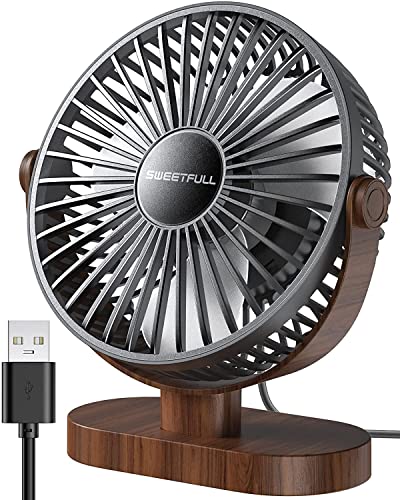


At a Glance
Best Quiet Desk Fans differ more than titles suggest, so price alone misses what matters.
Every pick here was judged on real airflow and noise level, because these separate real capability from claims.
5 Criteria to Look For Before Buying a Quiet Desk Fan
Key buying criteria so you get the right fit the first time.
CFM (Airflow) vs Your Actual Desk Distance
CFM (cubic feet per minute) measures how much air a fan actually moves, and for a fan sitting at typical desk distance, roughly 100 to 300 CFM is enough to feel a real, comfortable breeze without turning your desk into a wind tunnel; a fan pushing well over that at close range can scatter papers and dry out your eyes rather than just cooling you. Larger pedestal or tower fans built for whole-room circulation often exceed 600 CFM, but that's the wrong comparison for a fan that'll sit two to three feet from your face all day.
Noise Level in dB at Working Speeds
Decibel ratings only tell the real story if you check them at the speed you'll actually run the fan at: many listings quote the noise level for the lowest, weakest setting, which isn't useful if you need medium or high speed to feel any real airflow. As a benchmark, below 25 dB is genuinely quiet enough for calls or focus work, 30-45 dB is noticeable but tolerable for most people, and above 45 dB will compete with conversation in a quiet room.
Blade Size vs Portability Tradeoff
For desk use specifically, a 6 to 8 inch blade diameter tends to hit the best balance: noticeably more airflow than a 3 to 4 inch USB mini fan, while still compact enough to sit on a desk without eating into your workspace. A USB mini fan is genuinely portable and fine for a brief personal cooling boost, but its airflow drops off sharply as fan size shrinks, so don't expect whole-desk cooling from something that fits in a bag.
Oscillation Range and Desk Placement
Oscillation range determines coverage area, not just airflow strength: a fan that sweeps 90 to 120 degrees spreads cooling across a wider desk or shared space, while a fixed or narrow-oscillation fan concentrates all its airflow on one spot. Match this to your actual desk layout, a single small desk usually doesn't need wide oscillation, while a shared table or an L-shaped setup benefits from it.
Power Source: USB, AC Plug, or Rechargeable Battery
A USB-powered fan is convenient for a laptop-only setup with no nearby outlet, but it's limited to whatever power a USB port supplies, generally producing less airflow than an AC-powered fan plugged directly into a wall outlet. A rechargeable battery fan adds portability for moving between rooms or desks but needs periodic recharging and will eventually lose battery capacity over repeated charge cycles, the same tradeoff as any rechargeable device. Match the power source to where the fan will actually live, not just which sounds most convenient on paper.
8 Best Quiet Desk Fans in 2026
SWEETFULL Small USB Desk Fan
About this pick
SWEETFULL Small USB Desk Fan is the strongest all-around choice here. Wide 5.8-inch airflow area delivers broader cooling at under 25 dB. 360° To direct airflow exactly where you need it.
Side by side with Honeywell TurboForce Air Circulator, the real difference worth noting is choose low, medium, or high with simple one-button control for personalized comfort.
This one is the right call if you want the strongest all-around pick in this comparison and would rather not keep shopping around. Many listings only quote the dB rating at the lowest speed, so check the noise level at the speed you'll actually run daily before assuming it stays that quiet.
Best for: buyers who want the strongest all-around pick in this comparison and would rather not keep shopping around
Check price on AmazonPros
- +Large airflow & quiet
- +360° To direct airflow exactly where you need
- +3-Speed cooling
- +USB powered
Cons
- −Noise rating usually reflects the lowest speed, not daily use
- −USB-powered models cap out at lower airflow than AC-plugged fans
Honeywell TurboForce Air Circulator
About this pick
Honeywell TurboForce Air Circulator is a strong alternative worth comparing directly against the top pick. Honeywell turboforce air circulator fan is a cooling fan that is 25% quieter than comparable fans.** it’s sized to be a table or desk fan or wall-mounted, and provides cooling in small to medium-sized rooms. Honeywell turboforce fans have an aerodynamic turbo design to maximize air movement and power for intense cooling or energy-saving air circulation.
Held up against SWEETFULL Small USB Desk Fan, both cover the basics equally well, what actually separates them is with 3 speeds and a 90° pivoting adjustable head, you’ll always be comfortable and cool!.
Reach for this pick if you want a genuine alternative to the top pick with a different tradeoff worth comparing directly. USB-powered fans are convenient for a laptop-only desk but cap out at lower airflow than an AC-plugged model, so match the power source to how much cooling you actually need.
Best for: buyers who want a genuine alternative to the top pick with a different tradeoff worth comparing directly
Check price on AmazonPros
- +Small floor or tabletop fan
- +Feel the power
- +Customize your comfort
- +Quiet fans for bedroom and home are an easy
Cons
- −USB-powered models cap out at lower airflow than AC-plugged fans
- −Noise rating usually reflects the lowest speed, not daily use
Honeywell QuietSet Personal Table Fan
About this pick
Honeywell QuietSet Personal Table Fan is a strong alternative worth comparing directly against the top pick. Help improve cooling and energy savings* throughout the indoors from living room to bedroom with a Honeywell tower fan; choose from tower fans to personal portable fans and whole room fans that are all a great choice. The #1 selling tower fan* is not just a personal fan.
Set next to SWEETFULL Small USB Desk Fan, the two land close enough on paper that it's worth comparing both listings directly on the spec that matters most for your setup.
This one is the right call if you want a genuine alternative to the top pick with a different tradeoff worth comparing directly. Many listings only quote the dB rating at the lowest speed, so check the noise level at the speed you'll actually run daily before assuming it stays that quiet.
Best for: buyers who want a genuine alternative to the top pick with a different tradeoff worth comparing directly
Check price on AmazonPros
- +Honeywell quality
- +Quiet cooling bedroom fan
- +Cooling oscillating fan savings
- +Oscillating table fan
Cons
- −Noise rating usually reflects the lowest speed, not daily use
- −USB-powered models cap out at lower airflow than AC-plugged fans
KONSIDEN Desk Fan Bladeless
About this pick
KONSIDEN Desk Fan Bladeless is the top-tier pick in this comparison. Compared to traditional fan, this small desk fan adopts turbine technology, which is a perfect combination of functionality and design. This table fan is small and light, its compact design doesn't take much space, you could easily take it to anywhere you like.
Held up against SWEETFULL Small USB Desk Fan, both cover the basics equally well, what actually separates them is this bladeless desk fan adopts intelligent touch control, fashionable and convenient.
Go with this pick if you are willing to spend the most in this comparison for the fuller feature set that comes with it. USB-powered fans are convenient for a laptop-only desk but cap out at lower airflow than an AC-plugged model, so match the power source to how much cooling you actually need.
Best for: buyers who are willing to spend the most in this comparison for the fuller feature set that comes with it
Check price on AmazonPros
- +Futuristic bladeless design
- +Small quiet desk fan
- +Touch control & 3 speed airflow
- +Ideal companion in summer
Cons
- −USB-powered models cap out at lower airflow than AC-plugged fans
- −Noise rating usually reflects the lowest speed, not daily use
TriPole USB Desk Fan Small Portable
About this pick
TriPole USB Desk Fan Small Portable is the best-value option in this roundup, priced lowest without a real capability gap. With the three speed wind modes, you have the flexibility to choose the airflow intensity that suits your needs. Diameter in 4.5 inch, this mini fan is space-saving on desktop or nightstand and portable enough to carry for trip.
SWEETFULL Small USB Desk Fan is a reasonable point of comparison here, close enough that the actual listing details are worth checking before deciding between them.
This makes sense for anyone who want a genuinely capable pick without paying for headroom you won't use. Many listings only quote the dB rating at the lowest speed, so check the noise level at the speed you'll actually run daily before assuming it stays that quiet.
Best for: buyers who want a genuinely capable pick without paying for headroom you won't use
Check price on AmazonPros
- +Personalized cooling
- +Compact size
- +USB powered fan
- +Stable base
Cons
- −Noise rating usually reflects the lowest speed, not daily use
- −USB-powered models cap out at lower airflow than AC-plugged fans
Levoit Tower Fan for Bedroom
About this pick
Levoit Tower Fan for Bedroom is a strong alternative worth comparing directly against the top pick. With an efficient dc motor and vortexair technology, this fan produces high-performance airflow and a strong, focused breeze for consistent comfort. Our upgraded dc motor maintains low noise output, from 20 to 43db across all speed levels, with optional sound and display-off functions, creating a peaceful environment for work, rest, or distraction-free sleep.
SWEETFULL Small USB Desk Fan covers similar ground, though with 5 fan speeds and an additional turbo speed, this fan delivers personalized comfort is what tips the choice one way or the other.
Reach for this pick if you want a genuine alternative to the top pick with a different tradeoff worth comparing directly. USB-powered fans are convenient for a laptop-only desk but cap out at lower airflow than an AC-plugged model, so match the power source to how much cooling you actually need.
Best for: buyers who want a genuine alternative to the top pick with a different tradeoff worth comparing directly
Check price on AmazonPros
- +Comfort without compromise
- +Quiet without disruption
- +Portable without being a burden
- +Efficient cooling
Cons
- −USB-powered models cap out at lower airflow than AC-plugged fans
- −Noise rating usually reflects the lowest speed, not daily use
Amazon Basics Air Circulator Desk Fan for Bedroom
About this pick
Amazon Basics Air Circulator Desk Fan for Bedroom is a strong alternative worth comparing directly against the top pick. Measuring just 6.3 x 11.1 x 10.9 inches (lxwxh) with three 7-inch blades, this fan occupies minimal space on floors or tables, perfect for various room types such as bedrooms, living rooms, home offices, and kitchens. Enjoy personalized airflow with a 90-degree variable tilt feature, allowing you to direct the airflow precisely where you need it.
Side by side with SWEETFULL Small USB Desk Fan, the real difference worth noting is save energy without sacrificing performance.
Go with this pick if you want a genuine alternative to the top pick with a different tradeoff worth comparing directly. Many listings only quote the dB rating at the lowest speed, so check the noise level at the speed you'll actually run daily before assuming it stays that quiet.
Best for: buyers who want a genuine alternative to the top pick with a different tradeoff worth comparing directly
Check price on AmazonPros
- +Compact design
- +Adjustable tilt
- +3 Speed settings
- +Portable convenience
Cons
- −Noise rating usually reflects the lowest speed, not daily use
- −USB-powered models cap out at lower airflow than AC-plugged fans
DREO Fan for Bedroom
About this pick
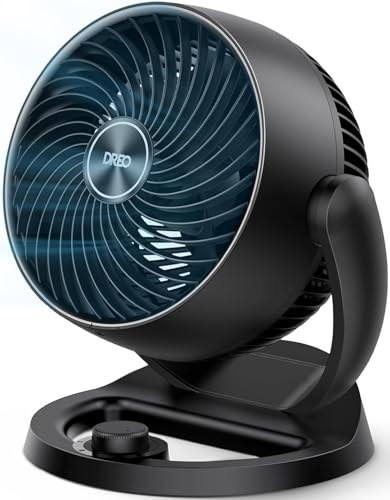
DREO Fan for Bedroom is a strong alternative worth comparing directly against the top pick. Dreo's wingboost system combines deep-pitched blades and aerodynamic design to propel air as far as 70 ft, helping your desk fan to circulate strong air throughout your whole room. Pair it with multiple appliances to increase efficiency and reduce your energy bills.
SWEETFULL Small USB Desk Fan is a reasonable point of comparison here, close enough that the actual listing details are worth checking before deciding between them.
This fits best if you want a genuine alternative to the top pick with a different tradeoff worth comparing directly. USB-powered fans are convenient for a laptop-only desk but cap out at lower airflow than an AC-plugged model, so match the power source to how much cooling you actually need.
Best for: buyers who want a genuine alternative to the top pick with a different tradeoff worth comparing directly
Check price on AmazonPros
- +Dreo's wingboost system combines deep-pitched blades and aerodynamic design
- +Feel wind without noise
- +Save energy every season
- +Functional than traditional fans
Cons
- −USB-powered models cap out at lower airflow than AC-plugged fans
- −Noise rating usually reflects the lowest speed, not daily use
How We Evaluated These Quiet Desk Fans
Each pick was assessed across 5 criteria weighted for real-world use.
CFM (Airflow) vs Your Actual Desk Distance
CFM (cubic feet per minute) measures how much air a fan actually moves, and for a fan sitting at typical desk distance, roughly 100 to 300 CFM is enough to feel a real, comfortable breeze without turning your desk into a wind tunnel; a fan pushing well over that at close range can scatter papers and dry out your eyes rather than just cooling you.
Noise Level in dB at Working Speeds
Decibel ratings only tell the real story if you check them at the speed you'll actually run the fan at: many listings quote the noise level for the lowest, weakest setting, which isn't useful if you need medium or high speed to feel any real airflow.
Blade Size vs Portability Tradeoff
For desk use specifically, a 6 to 8 inch blade diameter tends to hit the best balance: noticeably more airflow than a 3 to 4 inch USB mini fan, while still compact enough to sit on a desk without eating into your workspace.
Oscillation Range and Desk Placement
Oscillation range determines coverage area, not just airflow strength: a fan that sweeps 90 to 120 degrees spreads cooling across a wider desk or shared space, while a fixed or narrow-oscillation fan concentrates all its airflow on one spot.
Power Source: USB, AC Plug, or Rechargeable Battery
A USB-powered fan is convenient for a laptop-only setup with no nearby outlet, but it's limited to whatever power a USB port supplies, generally producing less airflow than an AC-powered fan plugged directly into a wall outlet.
How to Choose the Right Quiet Desk Fans
By Desk Setup
| Your setup | Recommended pick |
|---|---|
| Small or shared desk | TriPole USB Desk Fan Small Portable |
| Standard desk | SWEETFULL Small USB Desk Fan |
| Large desk, need real airflow | KONSIDEN Desk Fan Bladeless |
By Budget
| Budget | Recommended pick |
|---|---|
| Lowest price in this lineup | TriPole USB Desk Fan Small Portable |
| Mid-range pick | Honeywell TurboForce Air Circulator |
| Higher budget | KONSIDEN Desk Fan Bladeless |
USB vs AC-Plugged
USB-powered (e.g. TriPole USB Desk Fan Small Portable)
Convenient for a laptop-only setup, but capped at lower airflow than AC power.
AC-plugged
More consistent, stronger airflow, but ties the fan to one spot near an outlet.
Match this to whether portability or raw airflow matters more for your setup.
By Noise Sensitivity
| Your priority | Recommended pick |
|---|---|
| Calls or focus work, need it quiet | Check the dB rating at your actual daily speed, not just the lowest setting |
| Noise isn't a concern | SWEETFULL Small USB Desk Fan |
For a Shared Desk or Office Specifically
Look for
A wider oscillation range (90 to 120 degrees) to spread airflow across more of the surface.
In this comparison
SWEETFULL Small USB Desk Fan is worth checking against its specific oscillation range before assuming any 'wide coverage' label performs the same.
When to Spend More
Spend more if
You want stronger airflow, lower noise, and extra features like a remote or timer, where KONSIDEN Desk Fan Bladeless justifies the extra cost.
Save if
You just want a straightforward personal cooling boost, where TriPole USB Desk Fan Small Portable already covers the job at the lowest price here.
Frequently Asked Questions
What CFM should a desk fan have?
For typical desk distance (two to three feet from your face), 100 to 300 CFM delivers a comfortable breeze without becoming an uncomfortable draft; don't compare this directly to a whole-room pedestal or tower fan's CFM rating, which is built for a much larger area and commonly exceeds 600 CFM.
How quiet is a quiet desk fan?
Below 25 dB is genuinely whisper-quiet and won't intrude on calls, 30-45 dB is noticeable but tolerable for most people during regular work, and above 45 dB becomes the dominant sound in a quiet room; check the dB rating at the speed you'll actually use daily, since many listings only quote their quietest setting.
Is a bigger desk fan always better?
Not for desk use specifically: a 6 to 8 inch blade diameter tends to be the sweet spot between real airflow and staying compact, while a fan built for whole-room circulation takes up more desk space and pushes more air than a close-range desk setup actually needs.
USB, battery, or plug-in desk fan, which is best?
USB fans are convenient for a laptop-only setup but cap out at lower airflow than an AC-plugged fan, rechargeable battery fans add portability between rooms but lose runtime and capacity over repeated charges, and a standard AC plug delivers the most consistent power if you're staying at one desk.
Does oscillation matter for a desk fan?
It depends on your desk layout: a wide oscillation range (90 to 120 degrees) spreads airflow across a wider desk or shared workspace, while a fixed or narrow-oscillation fan is better for cooling one specific spot, like directly at your hands or face, without wasting airflow elsewhere.
Can a desk fan replace air conditioning in summer?
No, a fan only moves existing air rather than cooling it, so it helps with comfort through evaporative cooling on your skin but won't lower the actual room temperature the way AC does; it's most effective in a room that's already at a reasonable temperature, not as a substitute for cooling a genuinely hot space.
Bottom Line
best overall: SWEETFULL Small USB Desk Fan - best overall pick in this roundup.
See the full rankings above for all picks with pros, cons, and best-for summaries.
Browse on Amazon
All Prime-eligible options with current pricing.
Shop on Amazon →