
4 Best PoE Injectors for UniFi and Wi-Fi 7 Access Points in 2026
We compared PoE injectors for UniFi and Wi-Fi 7 access points by real power class and link speed, since newer U7 models draw more power than older U6 hardware.

New to Amazon Prime?
Get fast, free shipping on every pick in this guide, plus Prime Video and exclusive deals.
Try Prime Free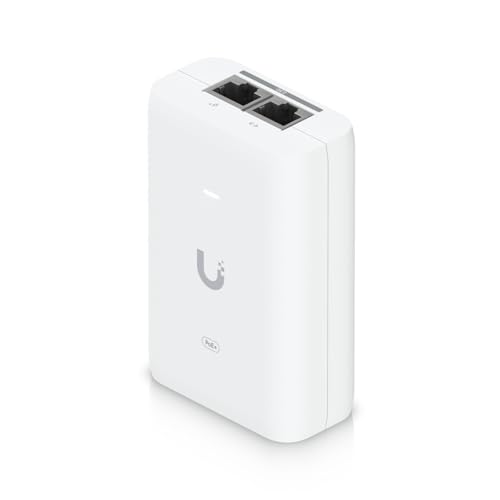


At a Glance
UniFi access points span a wide power range, from the U6-Lite's modest 802.3af draw up to the U7 Pro Max and E7 Campus models that need full 802.3bt PoE++ power at multi-gigabit link speeds, so matching the right injector to your specific UniFi model matters more here than in most PoE categories.
We compared this lineup on real power class and link speed, since the newest Wi-Fi 7 access points from Ubiquiti specifically push past what a basic 802.3at 30W injector can deliver, requiring either a 2.5G-capable or full 60W 802.3bt unit instead.
5 Criteria to Look For Before Buying a PoE Injectors for UniFi and Wi-Fi 7 Access Point
Key buying criteria so you get the right fit the first time.
UniFi's Wi-Fi 7 Lineup Spans a Wide Power Range, So One Injector Doesn't Fit Every U7 Model
Unlike a simpler product category where one wattage tier covers most devices, Ubiquiti's Wi-Fi 7 access point lineup ranges from standard 2.5G models to the significantly higher-draw E7 Campus and U7 Pro XG, meaning an injector correctly matched to a standard U7 model may not deliver enough power for the higher-end models. This matters because underpowering a high-draw access point can cause it to fail to boot fully-featured radios or throttle performance rather than failing cleanly. Check your exact UniFi model's power class on Ubiquiti's own specification page before assuming any 2.5G-rated injector covers your specific device.
Link Speed Bottlenecks Are a Real Concern With Modern UniFi Access Points in a Way They Weren't With Older Wi-Fi 6 Models
Many Wi-Fi 6 UniFi models like the U6-Lite operate fine on a standard Gigabit injector since their real aggregate throughput rarely exceeds 1Gbps, but newer Wi-Fi 7 access points can push past Gigabit under heavy multi-client load, meaning a Gigabit-only injector becomes a genuine bottleneck rather than just an unused capability. This matters significantly if you're deploying a Wi-Fi 7 access point specifically to take advantage of its higher real-world throughput, and matters less if your actual network usage rarely approaches Gigabit speeds regardless of the access point's theoretical ceiling. Match your injector's port speed to your access point's actual expected throughput, not just its PoE power class.
First-Party Ubiquiti Accessories Reduce Support Complexity if You Ever Need to Troubleshoot a Power Issue
If a UniFi access point experiences an unexplained connectivity or performance issue, ruling out the power source is a common early troubleshooting step, and a first-party Ubiquiti injector removes one potential variable from that process since it's validated by the same company that builds the access point's PoE negotiation logic. This matters more if you're managing a business network where downtime has a real cost, and matters less for a low-stakes home setup where troubleshooting time is less critical. Consider a first-party accessory specifically for a mission-critical deployment where minimizing troubleshooting variables has real value.
An Active Device-Detection Chip Provides Real Protection When Deploying Injectors Across a Network With Mixed Equipment
A PoE injector with an active detecting chip, like the PROCET pick specifically states, identifies and classifies a connected device before applying power, meaning it won't send PoE voltage to a non-PoE device that could otherwise be damaged by an unexpected power injection. This matters more in a larger network deployment where injectors might occasionally get connected to the wrong port during setup or reconfiguration, and matters less for a single, permanently wired access point that's never moved once installed. Consider this feature specifically if you're managing multiple injectors across a growing or frequently reconfigured network.
A Higher-Speed or Higher-Wattage Injector Than Your Specific UniFi Model Needs Isn't Free Insurance, It's Wasted Cost
Buying the PROCET 60W 10Gbps injector for a standard U6-Lite access point that only needs 30W at Gigabit speed doesn't provide any performance benefit, since the access point itself simply won't draw or transmit beyond its own actual capability, meaning the extra cost buys nothing but unused headroom. This matters for keeping a multi-access-point deployment cost-efficient, where matching each injector correctly to each access point model avoids overspending across the whole network. Check your specific UniFi model's actual power and speed rating rather than defaulting to the highest-spec injector as a safety margin.
4 Best PoE Injectors for UniFi and Wi-Fi 7 Access Points in 2026
Ubiquiti UACC-POE+-2.5G Adapter
About this pick
This adapter is a first-party Ubiquiti accessory built specifically to power UniFi PoE+ devices that require 2.5G link speed, matching the throughput ceiling of newer Wi-Fi 7 access points that a standard Gigabit injector would bottleneck. As a Ubiquiti-branded product, it's validated directly against the company's own PoE negotiation behavior rather than a third-party implementation.
Compared to the PROCET pick below, this one is purpose-built and priced specifically for Ubiquiti's own 2.5G PoE+ device class rather than aiming for the broader 10Gbps multi-brand market.
Best for buyers with a newer UniFi Wi-Fi 7 access point that specifically requires 2.5G PoE+ link speed.
Best for: buyers with a newer UniFi Wi-Fi 7 access point requiring 2.5G PoE+ link speed
Check price on AmazonPros
- +First-party Ubiquiti compatibility removes negotiation guesswork
- +2.5G speed matches newer Wi-Fi 7 access point throughput
- +Purpose-built specifically for the UniFi ecosystem
Cons
- −Limited public spec detail compared to third-party listings
- −Not rated for the highest-draw U7 Pro Max or E7 Campus models
PROCET 10 Gigabit PoE Injector 60W
About this pick
This injector's listing specifically names UniFi E7 Campus and U7 Pro XG as compatible devices, Ubiquiti's higher-draw Wi-Fi 7 access points that need more than the 2.5G adapter above provides. Its built-in detecting chip classifies a connected device before powering it, specifically preventing damage if you accidentally connect a non-PoE device.
Compared to the UACC-POE+-2.5G above, this one delivers a full 60W at up to 10Gbps speed, correctly matched for Ubiquiti's most demanding current access point models rather than the standard 2.5G tier.
Best for buyers with a UniFi E7 Campus or U7 Pro XG access point that needs the full 60W 802.3bt power tier at up to 10Gbps.
Best for: buyers with a UniFi E7 Campus or U7 Pro XG access point needing the full 60W tier
Check price on AmazonPros
- +Named compatibility with Ubiquiti's high-draw E7 and U7 Pro XG models
- +10Gbps speed ceiling exceeds the 2.5G Ubiquiti adapter
- +Active detection chip protects against accidental non-PoE damage
Cons
- −Highest price in this comparison
- −Overkill for a basic U6-Lite or lower-power access point
UBIQUITI POE Injector, 802.3AT, 30W
About this pick
This injector's listing specifically names compatibility with the Ubiquiti U6-LR, U6-Lite, and U6-Pro access points, Ubiquiti's Wi-Fi 6 lineup that predates the newer Wi-Fi 7 U7 series. As a first-party Ubiquiti accessory, it delivers exactly the 30W 802.3at power these specific models require without over- or under-provisioning.
Compared to the two Wi-Fi 7-focused picks above, this one is correctly matched to Ubiquiti's Wi-Fi 6 U6 series rather than the newer, higher-draw U7 lineup.
Best for buyers with a Ubiquiti U6-LR, U6-Lite, or U6-Pro access point who want a guaranteed-compatible first-party 30W injector.
Best for: buyers with a Ubiquiti U6-LR, U6-Lite, or U6-Pro Wi-Fi 6 access point
Check price on AmazonPros
- +First-party compatibility with the specific U6 series lineup
- +Correctly matched power tier avoids over-provisioning
- +Simple, purpose-built single-device design
Cons
- −Not rated for the newer, higher-draw U7 series
- −Listing provides fewer general specs than third-party alternatives
Omada 2.5G PoE+ Injector, Up to 30W (POE260S)
About this pick
This injector's listing specifically states 2.5 Gbps Ethernet input and output ports alongside UL certification and auto-detect technology delivering up to 30W. While not a first-party Ubiquiti accessory, its 802.3at/af standard compliance and 2.5G speed make it a generic alternative for any standard 2.5G PoE+ access point, UniFi included.
Compared to the Ubiquiti UACC-POE+-2.5G above, this one costs about $9 more but adds UL certification and comes from a widely available third-party brand rather than requiring you to source a Ubiquiti-specific accessory.
Best for buyers who want a UL-certified 2.5G PoE+ injector as a generic alternative when a first-party Ubiquiti adapter isn't readily available.
Best for: buyers who want a UL-certified 2.5G alternative when a first-party UniFi adapter isn't available
Check price on AmazonPros
- +UL certification adds independent safety verification
- +2.5G speed matches modern Wi-Fi 7 access point needs
- +Widely available third-party alternative to a first-party UniFi accessory
Cons
- −Not a first-party Ubiquiti accessory
- −Higher price than the Ubiquiti UACC-POE+-2.5G
How We Evaluated These PoE Injectors for UniFi and Wi-Fi 7 Access Points
Each pick was assessed across 5 criteria weighted for real-world use.
UniFi Model Compatibility
Compared named compatibility with specific UniFi access point models across the U6 and U7 lineups.
Power Class Matching
Compared each injector's power delivery against the actual draw of the UniFi model it targets.
Link Speed
Compared Gigabit, 2.5G, and up to 10Gbps port speeds relative to each UniFi model's throughput capability.
First-Party vs Third-Party Sourcing
Compared first-party Ubiquiti accessories against certified third-party alternatives.
Safety Detection
Compared listings with active device-detection chips against basic auto-sensing.
How to Choose the Right PoE Injectors for UniFi and Wi-Fi 7 Access Points
By UniFi Access Point Model
| Your UniFi model | Recommended pick |
|---|---|
| U6-LR, U6-Lite, U6-Pro (Wi-Fi 6) | UBIQUITI POE Injector 802.3AT 30W |
| Standard Wi-Fi 7 model needing 2.5G | Ubiquiti UACC-POE+-2.5G Adapter |
| E7 Campus or U7 Pro XG (high draw) | PROCET 10 Gigabit PoE Injector 60W |
| Any 2.5G model, first-party unavailable | Omada 2.5G PoE+ Injector POE260S |
By Budget
| Price range | Recommended pick |
|---|---|
| Under $22 | UBIQUITI POE Injector 802.3AT 30W ($21.99) |
| Under $27 | Ubiquiti UACC-POE+-2.5G Adapter ($26.00) |
| Under $35 | Omada 2.5G PoE+ Injector ($34.99) |
| Under $53 | PROCET 10 Gigabit PoE Injector 60W ($52.49) |
First-Party Ubiquiti vs Third-Party Alternatives
First-party Ubiquiti (UACC-POE+-2.5G, U6 30W injector)
Validated directly against Ubiquiti's own PoE negotiation, the safest default choice when available for your specific model.
Third-party (PROCET, Omada)
Necessary when a first-party option doesn't cover your specific power or speed tier, like the E7 Campus's higher 60W draw.
Default to a first-party Ubiquiti accessory when one exists for your exact model; reach for a third-party alternative only when Ubiquiti doesn't offer a matching first-party option.
By Link Speed Requirement
| Your access point's max throughput | Recommended pick |
|---|---|
| Gigabit (older U6 models) | UBIQUITI POE Injector 802.3AT 30W |
| 2.5G (most Wi-Fi 7 models) | Ubiquiti UACC-POE+-2.5G or Omada POE260S |
| Up to 10Gbps (E7 Campus, U7 Pro XG) | PROCET 10 Gigabit PoE Injector 60W |
For a New Wi-Fi 7 Home Network Upgrade Specifically
Look for
Your specific U7 model's exact power class and link speed rating on Ubiquiti's own spec sheet, since the U7 lineup spans a wide range from standard 2.5G models to the much higher-draw E7 Campus.
In this comparison
The Ubiquiti UACC-POE+-2.5G adapter matches most standard Wi-Fi 7 UniFi models, while the PROCET pick specifically covers the higher-draw E7 Campus and U7 Pro XG.
When to Spend More
Spend more if
You have a UniFi E7 Campus or U7 Pro XG access point, where the PROCET pick's $52.49 price is justified by its named compatibility and full 60W 10Gbps capability those specific models need.
Save if
You have an older U6-series access point, where the first-party $21.99 UBIQUITI 30W injector delivers exactly matched power without overpaying for unused speed or wattage.
Frequently Asked Questions
Does every UniFi access point need a special injector?
No, only if you're not using a PoE switch; and even then, matching the injector's power class and link speed to your specific UniFi model matters more than needing a UniFi-exclusive product for every model.
Can I use a standard 30W 802.3at injector with any UniFi Wi-Fi 7 access point?
Not necessarily; some Wi-Fi 7 models like the E7 Campus and U7 Pro XG need the full 60W 802.3bt tier, so check your specific model's power class before assuming a standard 30W injector is sufficient.
Is a first-party Ubiquiti injector necessary, or will any 802.3at injector work?
Most standard UniFi access points work fine with any compliant third-party injector, but a first-party Ubiquiti accessory removes any small compatibility uncertainty and is validated directly by Ubiquiti.
What happens if I use an underpowered injector with a high-draw UniFi access point?
The access point may fail to fully boot, disable certain radio features, or perform unreliably, rather than simply not powering on at all, making underpowering a subtle issue to diagnose.
Do older UniFi U6 access points need 2.5G or 10G injectors?
No, most U6-series access points operate fine on standard Gigabit speed since their real throughput rarely exceeds 1Gbps, making a 2.5G or 10G injector unnecessary extra cost for that generation.
How do I find my specific UniFi access point's exact power requirement?
Check the model's official specification page on Ubiquiti's own website, which lists the exact PoE standard (802.3af, at, or bt) and maximum wattage draw for that specific access point.
Bottom Line
best overall: Ubiquiti UACC-POE+-2.5G Adapter - best for wi-fi 7 access points pick in this roundup.
See the full rankings above for all picks with pros, cons, and best-for summaries.
Browse on Amazon
All Prime-eligible options with current pricing.
Shop on Amazon →