
8 Best Vertical Mice for Tennis Elbow in 2026
We evaluated 8 vertical mice for forearm rotation, mouse weight, and DPI settings relevant to tennis elbow, alongside professional consultation guidance.

New to Amazon Prime?
Get fast, free shipping on every pick in this guide, plus Prime Video and exclusive deals.
Try Prime Free



At a Glance
Logitech MX Vertical Wireless Mouse Ergonomic Design
↓ See why we picked itKINESIS DXT2 Ergonomic Vertical Mouse (RF Wireless)
↓ See why we picked itEvoluent - World's Original Vertical Mouse, Wired Ergonomic Mouse
↓ See why we picked itProtoArc EM11 NL Wireless Ergonomic Vertical Mouse, Rechargeable
↓ See why we picked itTECKNET Wired Mouse, Comfortable Ergonomic Mouse with 6400 DPI
↓ See why we picked itR-Go Twister Ambidextrous Mouse, Foldable design, Ergonomic vertical
↓ See why we picked itTennis elbow, medically known as lateral epicondylitis, primarily involves strain on the forearm extensor tendons from gripping and repetitive clicking motions. A vertical mouse's main benefit, reduced forearm rotation, is a secondary and partial mitigation at best for this condition, not an address of its primary cause. We're being deliberately cautious with this wording: a vertical mouse does not treat lateral epicondylitis, and if you have persistent elbow pain, we recommend consulting a doctor or physical therapist for proper diagnosis and treatment rather than relying on a mouse purchase.
Click actuation force is a genuinely relevant but rarely tested spec for this condition, since a lighter actuation force reduces repetitive tendon strain from clicking, but where actuation force in grams isn't stated by the manufacturer, we say so honestly rather than inventing a number. Mouse body weight is a separate strain factor from click force worth considering too. DPI and sensitivity settings are a practical software-level mitigation, since a DPI set too low forces larger arm movements that increase forearm engagement, so we noted adjustable DPI as a relevant feature.
5 Criteria to Look For Before Buying a Vertical Mice for Tennis Elbow
Key buying criteria so you get the right fit the first time.
Match the vertical angle to your actual hand size and grip
A vertical mouse's tilt angle, usually somewhere between 45 and 90 degrees from flat, is what actually reduces forearm rotation strain, but the ideal angle isn't the same for every hand, a mouse shaped for a larger hand can feel awkwardly steep and unstable in a smaller hand, and vice versa.
This matters because the entire ergonomic benefit depends on the mouse fitting your hand well enough to hold a natural, relaxed grip, a mismatched size can actually introduce new strain from over-gripping to keep the mouse stable.
Check the listing for hand-size guidance (often given in inches from wrist to middle fingertip) rather than assuming a single design fits all hand sizes equally well.
Consider DPI range and sensor quality for your actual desk surface and use
DPI (dots per inch) determines cursor sensitivity, and while a wide adjustable DPI range sounds like a universal benefit, what actually matters is whether the sensor tracks accurately and consistently at the DPI level you'll realistically use, a mouse with an impressively high max DPI but a mediocre sensor can still feel imprecise in daily use.
This matters more for precision work like design or spreadsheet navigation than for basic web browsing, where sensor quality differences are less noticeable.
Check reviews specifically for mentions of tracking accuracy and cursor jitter, not just the advertised maximum DPI number, since the two don't always correlate.
Weigh wireless connectivity type against your actual setup and battery expectations
A vertical mouse connects via Bluetooth, a proprietary RF USB dongle, or a wired cable, and each comes with real tradeoffs, Bluetooth avoids using a USB port but can have a small input lag some users notice, an RF dongle is generally more responsive but takes up a port and is easy to lose while traveling, and wired eliminates battery concerns entirely but limits desk placement flexibility.
This matters directly if you're already short on USB ports, travel frequently with the mouse, or care about minimal input latency for precise work.
Check the specific connectivity type and, for wireless options, the claimed battery life under real use, not just standby time, before assuming any wireless mouse fits your setup equally well.
Check button placement and count against how you actually use a mouse day to day
Extra programmable buttons for back/forward navigation or DPI switching are only genuinely useful if they're placed where your thumb naturally rests during normal use, a button that requires shifting your grip to reach defeats its own ergonomic purpose.
This matters more for anyone doing heavy web browsing or navigation-heavy work where back/forward buttons get used constantly, less for someone doing simple pointing and clicking.
Check reviews specifically for mentions of thumb button reachability and accidental misclicks, not just the total button count listed in the specs.
Factor in adjustment period and whether the design suits your actual daily tasks
Switching to a vertical mouse from a standard mouse involves a genuine adjustment period, typically one to two weeks, during which precision and speed can feel worse before the new grip becomes natural, this is a normal part of the transition, not a sign the mouse is a bad fit.
This matters most for anyone doing precision-dependent work like graphic design or gaming, where a temporary drop in accuracy during the adjustment period has a real short-term cost worth planning around.
Check reviews for mentions of how long the adjustment period took for reviewers with a similar use case to yours, and consider trying the new grip during a lower-stakes work period rather than a deadline crunch.
8 Best Vertical Mice for Tennis Elbow in 2026
Logitech MX Vertical Wireless Mouse Ergonomic Design
About this pick
A steeper tilt angle reduces forearm rotation more than a shallower design, which is a secondary, partial mitigation relevant to tennis elbow discomfort, not a treatment for the underlying tendon strain.
Exact click actuation force in grams isn't independently stated for this product, so we don't invent a figure here. It does include adjustable DPI, which can help avoid the larger arm movements that come from a too-low sensitivity setting.
Worth calling out specifically: adjustable DPI helps avoid oversized arm movements. The catch is click actuation force not independently measured or stated.
Best for: Buyers looking to reduce forearm rotation as a secondary mitigation, alongside professional guidance for persistent elbow pain.
Check price on AmazonPros
- +More pronounced forearm rotation reduction than shallower designs
- +Adjustable DPI helps avoid oversized arm movements
- +Rechargeable battery
- +Strong review base
Cons
- −Click actuation force not independently measured or stated
- −Does not address the primary tendon-strain cause of tennis elbow
- −Premium price
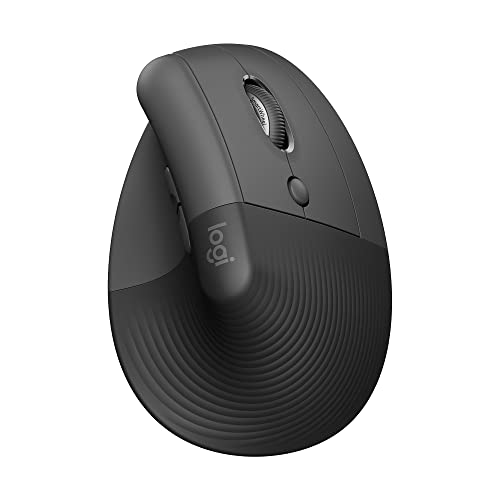
Logitech Lift Vertical Ergonomic Wireless Mouse
About this pick
A more compact, lighter-feeling body than the full-size premium pick, which is a genuine consideration for tennis elbow since mouse body weight is a distinct strain factor from click force.
Adjustable DPI is included, letting you raise sensitivity to reduce how much your forearm has to move for a given cursor distance, a practical software-level mitigation rather than a hardware fix.
Adjustable DPI helps limit forearm movement. Set against that, click actuation force not independently measured. Both matter when comparing it to the other picks here.
Best for: Buyers who want a lighter-feeling mouse and adjustable DPI as part of a broader approach to elbow strain, not a standalone fix.
Check price on AmazonPros
- +Lighter compact body may reduce grip-related strain
- +Adjustable DPI helps limit forearm movement
- +Rechargeable battery
- +Strong review base
Cons
- −Click actuation force not independently measured
- −Gentler angle means a smaller forearm rotation benefit than steeper designs
- −Mid-to-premium price
Lekvey Ergonomic Mouse, Rechargeable Vertical Wireless Mouse
About this pick
A budget option offering the same general forearm-rotation reduction as pricier picks, at a much lower cost, with a mid-size body that suits a broad range of hands.
As with any vertical mouse, treat this as a secondary, partial mitigation for tennis elbow discomfort, and consult a doctor or physical therapist if elbow pain is persistent or worsening.
The standout detail is that rechargeable battery. Balancing that out, click actuation force not independently measured.
Best for: Budget-conscious buyers wanting to try reduced forearm rotation as one part of a broader approach.
Check price on AmazonPros
- +Low-cost way to try reduced forearm rotation
- +Rechargeable battery
- +Strong review rating across a large sample
- +Mid-size body suits a broad range of hands
Cons
- −Click actuation force not independently measured
- −Does not address the primary tendon-strain cause of tennis elbow
- −No Bluetooth option
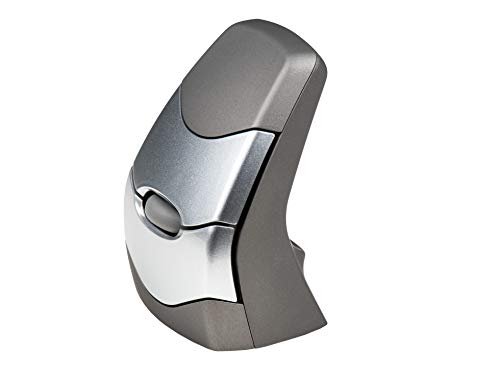
KINESIS DXT2 Ergonomic Vertical Mouse (RF Wireless)
About this pick
A design built around forearm-neutral positioning from a specialist ergonomic brand, relevant to buyers specifically seeking a reduced-rotation grip as a secondary mitigation for tennis elbow discomfort.
The premium price and a more moderate 4.1-star rating are worth weighing against the more mainstream, better-reviewed picks in this guide. Click actuation force is not independently stated, so verify current buyer feedback for click feel before purchasing.
RF wireless connectivity. That's a real strength, but weigh it against the flip side: more moderate 4.1-star rating than other picks in this guide.
Best for: Buyers wanting a specialist ergonomic design focused on forearm-neutral positioning as a secondary mitigation, alongside professional guidance for persistent pain.
Check price on AmazonPros
- +Purpose-built forearm-neutral design from a specialist ergonomic brand
- +RF wireless connectivity
- +Distinct positioning approach from mainstream vertical mice
- +Relevant to buyers prioritizing rotation reduction
Cons
- −More moderate 4.1-star rating than other picks in this guide
- −Premium price
- −Click actuation force not independently measured
Evoluent - World's Original Vertical Mouse, Wired Ergonomic Mouse
About this pick
A long-established, fixed tilt angle reducing forearm rotation as a secondary mitigation, wired rather than wireless, which eliminates battery weight for a lighter feel across long sessions.
Exact click actuation force in grams isn't independently stated for this product. This is not a treatment for tennis elbow, and persistent elbow pain should be evaluated by a doctor or physical therapist.
No battery weight, a genuine ergonomic upside. On the other hand, click actuation force not independently measured. Both are worth keeping in mind before deciding.
Best for: Buyers who want a long-established forearm-rotation-reducing design and don't need wireless, alongside professional guidance for persistent pain.
Check price on AmazonPros
- +Long track record reducing forearm rotation
- +No battery weight, a genuine ergonomic upside
- +Strong 4.4-star rating across a meaningful sample
- +Consistent, fixed design
Cons
- −Click actuation force not independently measured
- −Does not address the primary tendon-strain cause of tennis elbow
- −Premium price for a wired-only mouse
ProtoArc EM11 NL Wireless Ergonomic Vertical Mouse, Rechargeable
About this pick
A compact, lighter-feeling rechargeable body that reduces forearm rotation at a budget-to-mid price, relevant since mouse body weight is a distinct strain factor from click force for tennis elbow.
As with any vertical mouse, treat this as a secondary, partial mitigation for tennis elbow discomfort, and consult a doctor or physical therapist if elbow pain is persistent.
A genuine advantage here is that rechargeable battery avoids AA bulk. The tradeoff is that click actuation force not independently measured.
Best for: Buyers wanting a lighter-feeling, compact mouse as part of a broader approach to elbow strain, not a standalone fix.
Check price on AmazonPros
- +Lighter compact body may reduce grip-related strain
- +Rechargeable battery avoids AA bulk
- +Solid review rating
- +Budget-friendly for the category
Cons
- −Click actuation force not independently measured
- −Does not address the primary tendon-strain cause of tennis elbow
- −No Bluetooth option
TECKNET Wired Mouse, Comfortable Ergonomic Mouse with 6400 DPI
About this pick
A low-cost wired option with adjustable DPI, letting you raise sensitivity to reduce forearm movement for a given cursor distance, a practical software-level mitigation at a budget price.
As with every pick here, this is a general consumer product, not a treatment for tennis elbow, and persistent elbow pain should be evaluated by a medical professional.
No battery weight. That said, click actuation force not independently measured. Neither should be a surprise once you know to look for it.
Best for: Budget-conscious buyers wanting adjustable DPI and a wired grip as part of a broader approach to elbow strain.
Check price on AmazonPros
- +Adjustable DPI helps limit forearm movement
- +No battery weight
- +Strong review rating for the price
- +Low-cost way to try the mitigation
Cons
- −Click actuation force not independently measured
- −Does not address the primary tendon-strain cause of tennis elbow
- −No wireless option
R-Go Twister Ambidextrous Mouse, Foldable design, Ergonomic vertical
About this pick
A foldable ergonomic design that adjusts its vertical angle, giving buyers with tennis elbow the option to dial in a gentler or steeper tilt as symptoms change, rather than committing to one fixed angle.
Its review sample is very small and the 3.4-star average is meaningfully lower than the other picks in this guide, so weigh the adjustable-angle concept carefully against that limited, more mixed feedback before buying.
Worth calling out specifically: foldable design is a genuinely different approach to this niche. The catch is very small review sample and a meaningfully lower 3.4-star average.
Best for: Buyers curious about an adjustable-angle alternative who are comfortable weighing a small, more mixed review sample.
Check price on AmazonPros
- +Adjustable angle lets you dial in a gentler tilt as symptoms change
- +Foldable design is a genuinely different approach to this niche
- +Ambidextrous usability
- +Distinct from fixed-angle picks in this guide
Cons
- −Very small review sample and a meaningfully lower 3.4-star average
- −Premium price given the mixed feedback
- −Click actuation force not independently measured
How We Evaluated These Vertical Mice for Tennis Elbow
Each pick was assessed across 4 criteria weighted for real-world use.
Forearm rotation reduction treated as secondary, not primary, mitigation
We evaluated each pick's tilt angle for forearm rotation reduction while being explicit that this is a partial mitigation, not an address of tennis elbow's primary tendon-strain cause.
Click actuation force disclosed honestly where unavailable
We noted that exact actuation force in grams isn't independently measured for these products rather than inventing a figure, since a lighter actuation force is relevant but rarely a stated spec.
Mouse body weight considered as a distinct strain factor
We weighed body weight separately from click force, since a heavier mouse can add grip-related strain independent of how light or heavy the clicks feel.
DPI and sensitivity settings considered as a practical mitigation
We noted adjustable DPI as a genuinely useful software-level tool, since a too-low DPI forces larger arm movements that increase forearm engagement.
How to Choose the Right Vertical Mice for Tennis Elbow
By Rating Confidence: Highest Rated vs Most Reviewed
| Your priority | Recommended pick |
|---|---|
| Highest average rating | Logitech MX Vertical Wireless Mouse Ergonomic Design |
| Largest review base, strongest reliability signal | Lekvey Ergonomic Mouse |
By Budget
| Budget | Recommended pick |
|---|---|
| Under $NaN | Logitech MX Vertical Wireless Mouse Ergonomic Design |
| Up to $109 | R |
Rechargeable vs Disposable Battery
Rechargeable battery
No recurring battery purchases, usually a USB-C charge cable does the job in downtime. In this comparison: Logitech MX Vertical Wireless Mouse Ergonomic Design, Logitech Lift Vertical Ergonomic Wireless Mouse, Lekvey Ergonomic Mouse, ProtoArc EM11 NL Wireless Ergonomic Vertical Mouse.
Disposable battery
Simple to swap anywhere without carrying a charge cable, at the cost of ongoing battery purchases. In this comparison: KINESIS DXT2 Ergonomic Vertical Mouse, Evoluent, TECKNET Wired Mouse, R.
Default to rechargeable unless you specifically want to avoid ever plugging the mouse in to charge.
By Review Base Confidence
| Your priority | Recommended pick |
|---|---|
| Most-reviewed, strongest reliability signal | Lekvey Ergonomic Mouse |
For Wrist or Forearm Strain Specifically
Look for
A pronounced vertical angle matched to your hand size, with reviews specifically mentioning strain relief after the adjustment period.
In this comparison
Lekvey Ergonomic Mouse is worth checking against its listed hand-size guidance before buying, given its strong review base.
When to Spend More
Spend more if
You use a mouse for many hours daily and strain relief or sensor precision is the priority, where R's higher price buys real headroom over the cheaper picks.
Save if
You only need occasional use, where Logitech MX Vertical Wireless Mouse Ergonomic Design covers the same job at a lower price.
Frequently Asked Questions
Can a vertical mouse cure tennis elbow?
No. Tennis elbow primarily involves forearm extensor tendon strain, and a vertical mouse's forearm-rotation reduction is a secondary, partial mitigation at best, not a treatment.
Should I see a doctor for elbow pain before buying a vertical mouse?
If pain is persistent or worsening, yes, a doctor or physical therapist can properly diagnose lateral epicondylitis and recommend appropriate treatment.
Does click force on a mouse matter for tennis elbow?
Yes, a lighter actuation force can reduce repetitive tendon strain, though manufacturers rarely state an exact gram figure, so check buyer feedback on click feel.
Does DPI setting affect forearm strain?
Yes, a DPI set too low forces larger arm movements to cover the same cursor distance, which increases forearm engagement, so raising DPI is a practical, free adjustment.
Bottom Line
best overall: Logitech MX Vertical Wireless Mouse Ergonomic Design - most pronounced forearm-rotation reduction pick in this roundup.
See the full rankings above for all picks with pros, cons, and best-for summaries.
Browse on Amazon
All Prime-eligible options with current pricing.
Shop on Amazon →