
4 Best USB-C Portable SSDs in 2026
4 USB-C portable SSDs we evaluated, with a clear reminder that the connector shape alone never guarantees any particular speed tier.


At a Glance
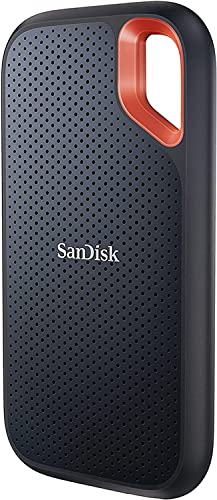
SANDISK 2TB Extreme Portable SSD (Old Model) - Up to 1050MB/s, USB-C, USB 3.2 Gen 2, IP65 Water and Dust Resistance, Updated Firmware - SDSSDE61-2T00-G25
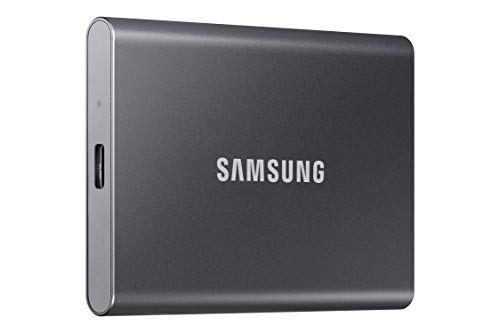
↓ See why we picked itSamsung T7 Portable SSD 1TB Titan Gray, USB 3.2 Gen 2, Up to 1,050MB/s
↓ See why we picked itSANDISK 1TB Extreme Portable SSD (New Model) - up to 2000MB/s Transfer speeds, USB Type-C connectivity - Black - SDSSDE70-1T00-G25
↓ See why we picked itSANDISK 1TB Portable SSD - Up to 800MB/s, USB-C, USB 3.2 Gen 2, Updated Firmware - SDSSDE30-1T00-G26
↓ See why we picked itA USB-C connector is just a physical shape, it does not by itself guarantee any particular speed tier, two USB-C drives can differ enormously in real throughput depending on what USB spec is actually implemented behind that connector.
Cable quality matters just as much as the drive and port, a cheap or non-compliant USB-C cable can bottleneck a fast drive down to a fraction of its rated speed regardless of how capable the drive and host port are.
5 Criteria to Look For Before Buying a USB-C Portable SSD
Key buying criteria so you get the right fit the first time.
Plan around real usable capacity, not the number printed on the box
Storage manufacturers advertise capacity in decimal gigabytes and terabytes (1 GB equals 1,000,000,000 bytes), but operating systems report free space in binary units (1 GB equals 1,073,741,824 bytes), and on top of that gap, formatting itself consumes a further slice of raw capacity for the file system's own bookkeeping.
Together these two factors mean a drive advertised as 1TB will typically show up as roughly 930GB in your file explorer, a genuinely predictable shortfall rather than a defect, but one that catches buyers off guard if they plan their storage needs around the advertised round number.
Before buying, mentally subtract roughly 7 percent from the advertised capacity to estimate real usable space, and size up a tier if your actual storage need is close to the advertised number rather than comfortably under it.
Check the NAND flash type where the manufacturer discloses it
NAND flash memory, the actual chip technology storing your data, comes in different types based on how many bits each memory cell stores, with TLC (three bits per cell) generally offering better sustained write speed and longer-term endurance than QLC (four bits per cell), which packs more capacity per chip but at the cost of slower performance once any built-in cache is exhausted.
This matters concretely because many drives use a small pool of faster cache memory to accelerate the beginning of a transfer, and once that cache fills during a large or sustained copy, the drive falls back to its native NAND speed, which is a much bigger drop on a QLC drive than a TLC one, sometimes cutting write speed by more than half.
Manufacturers don't always advertise NAND type prominently, so check the product listing's technical details or search the model number alongside "NAND type" before assuming a drive uses the faster TLC type.
Confirm your device's actual port and cable support the drive's rated speed
A portable SSD's rated speed, such as 1050MB/s or 2000MB/s, is the maximum the drive's own controller can achieve, but real-world speed is always capped by the slowest link in the chain: the drive itself, the cable connecting it, and the port on your computer or console, whichever of the three supports the lowest maximum speed.
This means a genuinely fast 2000MB/s-rated drive plugged into an older USB 3.0 port, or connected with a cable rated for a lower USB generation, will perform no better than a much cheaper drive rated for that lower speed, making the expensive drive's extra speed ceiling completely wasted money in that specific setup.
Check your computer, phone, or console's actual port specification (not just its connector shape, since USB-C and USB-A shapes don't indicate speed) and confirm any cable you use is rated for that same speed tier before expecting a fast drive's full rated performance.
Understand that a drive's speed rating reflects a burst, not sustained performance
The headline speed figure on a portable SSD's packaging is typically measured using a short benchmark that primarily tests the drive's fast cache memory, not its sustained real-world performance across a large, continuous file transfer that runs long enough to exhaust that cache.
This is the single most common reason a portable SSD feels slower in real use than its marketing suggests: copying a single large video file or a folder of thousands of photos can run well past the point where the cache empties, causing the transfer to visibly slow down partway through, something a short benchmark screenshot never reveals.
If your actual use case involves large sustained transfers, specifically look for reviews or listings that mention sustained write speed after cache exhaustion, not just the peak burst number on the box.
Compare warranty length as a genuine (if imperfect) signal of manufacturer confidence
A storage device's warranty length, commonly ranging from one to five years across different brands and models even at similar price points, reflects the manufacturer's own actuarial confidence in how long that specific NAND and controller combination will reliably hold data, since a company offering a longer warranty is accepting more financial risk on a component they presumably trust more.
This isn't a perfect signal on its own, a shorter warranty doesn't automatically mean an unreliable drive, but at a similar price point between two otherwise comparable drives, the one backed by a longer warranty is making a more concrete promise about its own longevity rather than just a marketing claim.
Check the stated warranty length directly in the listing or manufacturer's spec sheet, and weigh it alongside NAND type and brand reputation rather than treating any single signal as decisive on its own.
4 Best USB-C Portable SSDs in 2026
SANDISK 2TB Extreme Portable SSD (Old Model) - Up to 1050MB/s, USB-C, USB 3.2 Gen 2, IP65 Water and Dust Resistance, Updated Firmware - SDSSDE61-2T00-G25
About this pick
SanDisk's Extreme uses a genuine USB-C connector backed by USB 3.2 Gen 2 speed, rated up to 1050MB/s, with IP65 water and dust resistance layered on top.
It earns the top spot in this comparison over Samsung T7 Portable SSD 1TB Titan Gray for one main reason. Genuine USB 3.2 Gen 2 speed tier behind the USB-C connector. On price, it's actually priced above Samsung T7 Portable SSD 1TB Titan Gray, which is worth weighing if cost is your deciding factor between the two.
Worth knowing before you decide: IP65 rating adds real everyday durability. On the other side, Sustained speed can dip after cache exhaustion. That's the main tradeoff to weigh against everything above.
Best for: Buyers wanting a genuine high-speed USB-C drive with real durability
Check price on AmazonPros
- +Genuine USB 3.2 Gen 2 speed tier behind the USB-C connector
- +IP65 rating adds real everyday durability
- +Large 2TB capacity
- +Broad compatibility across modern devices
Cons
- −Rated speed still requires a matching USB 3.2 Gen 2 host port
- −Older model, verify current firmware
- −Sustained speed can dip after cache exhaustion
Samsung T7 Portable SSD 1TB Titan Gray, USB 3.2 Gen 2, Up to 1,050MB/s
About this pick
Samsung's T7 pairs USB-C with the same 1050MB/s USB 3.2 Gen 2 tier in a slim metal body.
One spot below SANDISK 2TB Extreme Portable SSD in this ranking, it's priced lower than SANDISK 2TB Extreme Portable SSD. The compromise here is straightforward: No official IP rating. What you gain in return: Confirmed real USB 3.2 Gen 2 speed tier. Whether that trade is worth it depends on which side matters more for your workflow.
Worth knowing before you decide: Slim, lightweight design. On the other side, Usable capacity reads below the advertised 1TB. That's the main tradeoff to weigh against everything above.
Best for: Buyers who want a slim, genuinely fast USB-C drive for daily use
Check price on AmazonPros
- +Confirmed real USB 3.2 Gen 2 speed tier
- +Slim, lightweight design
- +Reliable, widely reviewed platform
- +Comes in multiple colors
Cons
- −No official IP rating
- −1050MB/s ceiling is not the fastest USB-C tier available
- −Usable capacity reads below the advertised 1TB
SANDISK 1TB Extreme Portable SSD (New Model) - up to 2000MB/s Transfer speeds, USB Type-C connectivity - Black - SDSSDE70-1T00-G25
About this pick
SanDisk's newer Extreme model steps the USB-C implementation up to 2000MB/s, a genuinely faster tier than standard Gen 2, though it still requires a matching host port to deliver that number.
Sitting just under Samsung T7 Portable SSD 1TB Titan Gray, it costs more than Samsung T7 Portable SSD 1TB Titan Gray. Here's the honest tradeoff: Needs a genuinely fast USB-C host port to hit rated speed. And here's what it gets you instead: Genuinely faster USB-C speed tier than standard Gen 2. That's the real difference between the two picks, not just a ranking number.
Worth knowing before you decide: Compact, travel-friendly design. On the other side, Not every laptop's USB-C port supports this tier. That's the main tradeoff to weigh against everything above.
Best for: Buyers who want to confirm their fast USB-C port is put to real use
Check price on AmazonPros
- +Genuinely faster USB-C speed tier than standard Gen 2
- +Compact, travel-friendly design
- +Modern connector with broad device compatibility
- +Competitive price for the speed tier
Cons
- −Needs a genuinely fast USB-C host port to hit rated speed
- −Smaller review base as a newer listing
- −Not every laptop's USB-C port supports this tier
SANDISK 1TB Portable SSD - Up to 800MB/s, USB-C, USB 3.2 Gen 2, Updated Firmware - SDSSDE30-1T00-G26
About this pick
SanDisk's standard Portable SSD keeps the USB-C connector but implements a more modest USB 3.2 Gen 2 tier rated up to 800MB/s.
Ranked just behind SANDISK 1TB Extreme Portable SSD, it's priced lower than SANDISK 1TB Extreme Portable SSD. The real tradeoff against that pick: Lowest speed ceiling of this group despite the same connector. In exchange, it offers this instead: Genuine USB 3.2 Gen 2 speed at a budget price. That's the swap that decides whether this pick or the one above it is the better fit for your storage needs.
Worth knowing before you decide: Same USB-C connector as pricier drives. On the other side, Best suited to everyday files, not large video work. That's the main tradeoff to weigh against everything above.
Best for: Budget-conscious buyers who want confirmed real speed, not just the connector
Check price on AmazonPros
- +Genuine USB 3.2 Gen 2 speed at a budget price
- +Same USB-C connector as pricier drives
- +Compact and lightweight
- +Reliable brand with a large review base
Cons
- −Lowest speed ceiling of this group despite the same connector
- −No official IP rating
- −Best suited to everyday files, not large video work
How We Evaluated These USB-C Portable SSDs
Each pick was assessed across 4 criteria weighted for real-world use.
Verified actual speed tier behind USB-C
Checked the real USB spec, Gen 2, Gen 2x2, or faster, implemented behind each drive's USB-C connector rather than assuming speed from the connector shape.
Cable quality considerations
Noted that cable quality matters as much as port capability, a non-compliant cable can bottleneck even a fast USB-C drive.
Host port compatibility
Weighed whether a drive's rated speed genuinely requires a specific USB-C host port tier that not every laptop or console has.
Durability alongside speed
Compared IP ratings and build quality as a genuine complement to USB-C speed claims, not a substitute for verified performance.
How to Choose the Right USB-C Portable SSDs
By Capacity
| Your storage need | Recommended pick in this comparison |
|---|---|
| Lightest everyday storage needs | Samsung T7 Portable SSD 1TB Titan Gray |
| Large media libraries or video work | SANDISK 2TB Extreme Portable SSD |
By Budget
| Price range | Recommended pick |
|---|---|
| Under $165 | SANDISK 1TB Portable SSD |
| Mid-range | SANDISK 1TB Extreme Portable SSD |
| No firm budget ceiling, prioritizing speed or NAND quality | SANDISK 2TB Extreme Portable SSD |
TLC vs QLC NAND
TLC NAND
Better sustained write speed and longer-term endurance, especially once any onboard cache is exhausted during a large transfer. In this comparison: check each listing's specs directly, NAND type isn't always disclosed.
QLC NAND
More capacity per dollar, at the cost of a bigger sustained-speed drop once the cache fills on long transfers. In this comparison: none explicitly confirmed in this specific roundup, check the listing before assuming.
NAND type isn't explicitly confirmed for every pick here, check each specific listing's technical details if sustained speed matters to your workflow.
Rugged/Waterproof vs Standard Build
| What you're weighing | Recommended pick |
|---|---|
| Drop and water resistance for field use | SANDISK 2TB Extreme Portable SSD |
| Slimmest, lightest everyday carry | Samsung T7 Portable SSD 1TB Titan Gray |
For Large Sustained Transfers (Video Editing) Specifically
Look for
TLC NAND specifically, a stated sustained write speed (not just the peak burst number), and a USB generation on both drive and host that actually supports the rated speed.
In this comparison
SANDISK 1TB Extreme Portable SSD fits this specifically: Genuinely faster USB-C speed tier than standard Gen 2.
By Rating Confidence: Highest Rated vs Most Reviewed
| What you're weighing | Recommended pick |
|---|---|
| Highest star rating | Samsung T7 Portable SSD 1TB Titan Gray |
| Largest review base (more statistical confidence) | SANDISK 2TB Extreme Portable SSD |
Frequently Asked Questions
Does USB-C always mean fast transfer speeds?
No, USB-C is just a connector shape. The actual speed depends on the USB spec implemented behind it, which varies significantly between drives.
Can any USB-C cable work with any USB-C drive?
Physically yes, but a cheap or non-compliant cable can bottleneck a fast drive well below its rated speed. Use a cable rated for the same speed tier.
Why do two USB-C drives have such different prices?
Often due to different underlying USB speed tiers, durability features like IP ratings, or brand reputation, not the connector itself.
Bottom Line
best overall: SANDISK 2TB Extreme Portable SSD (Old Model) - Up to 1050MB/s, USB-C, USB 3.2 Gen 2, IP65 Water and Dust Resistance, Updated Firmware - SDSSDE61-2T00-G25 - best overall usb-c pick pick in this roundup.
See the full rankings above for all picks with pros, cons, and best-for summaries.
Browse on Amazon
All Prime-eligible options with current pricing.
Shop on Amazon →