Amazon affiliate links - we earn a commission.Affiliate disclosure
Buying Guideยท10 min readยทUpdated 2026-05-27

8 Best Small Keyboards (2026): Compact Picks for Desk, Dorm Room and Travel

Eight compact keyboards compared across layout, switch type, connectivity, and price - from hot-swap mechanical 75% boards to ultra-portable mini keyboards. The right pick for every setup and budget.

8 keyboards evaluated
Based on Amazon ratings from verified buyers
Best small keyboards for desk and dorm room

A compact keyboard is the most overlooked upgrade for a small desk setup. When you use a laptop stand to raise your screen to eye level, you need a separate keyboard at desk level - and the right compact keyboard determines whether that transition is comfortable or awkward. A good 75% or TKL board gives you full typing functionality at a fraction of a full-size keyboard's footprint.

We compared 8 compact keyboards across layout, switch technology, wireless connectivity, and price. The range covers a mechanical hot-swap daily driver, a budget triple-wireless value pick, Apple's zero-configuration Mac option, a premium typing board, two gaming TKLs, a slim wireless workhorse, and the most portable option for remote and media setups.

At a Glance

Macally Small Wireless Keyboard and Mouse Combo
Best Combo Under $30

Macally Small Wireless Keyboard and Mouse Combo

โ†“ See why we picked it
Check price
Ultra-Slim Bluetooth Keyboard and Mouse Combo
Best Budget Combo

Ultra-Slim Bluetooth Keyboard and Mouse Combo

โ†“ See why we picked it
Check price
AULA F75 Pro Wireless Mechanical Keyboard
Best Budget

AULA F75 Pro Wireless Mechanical Keyboard

โ†“ See why we picked it
Check price
Apple Magic Keyboard (USB-C, 2024)
Best for Mac

Apple Magic Keyboard (USB-C, 2024)

โ†“ See why we picked it
Check price
HHKB Professional Hybrid Type-S Snow
Best Premium

HHKB Professional Hybrid Type-S Snow

โ†“ See why we picked it
Check price
Corsair K55 CORE TKL RGB Gaming Keyboard
Best for Gaming

Corsair K55 CORE TKL RGB Gaming Keyboard

โ†“ See why we picked it
Check price
SteelSeries Apex 3 TKL RGB Gaming Keyboard
Best TKL Gaming

SteelSeries Apex 3 TKL RGB Gaming Keyboard

โ†“ See why we picked it
Check price
Rii i4 Mini Bluetooth Keyboard with Touchpad
Most Portable

Rii i4 Mini Bluetooth Keyboard with Touchpad

โ†“ See why we picked it
Check price

6 Criteria to Look For Before Buying a Small Keyboard

๐Ÿ“

Layout size: 60% vs 75% vs TKL

A 75% layout (84 keys) is the best starting point - it keeps the F-row and arrow keys while trimming roughly 30% of the width of a full-size board. A 60% removes the F-row too for the smallest footprint but requires Fn-layer shortcuts. TKL (87 keys) keeps all keys except the numpad and suits gaming well. Choose 75% for productivity, TKL for gaming, 60% for extreme portability.

โŒจ๏ธ

Switch technology: mechanical vs membrane

Mechanical switches have a consistent actuation point, tactile or clicky feedback, and long keystroke life (50M+ per switch). Membrane switches require bottoming out each key and are cheaper and quieter. Scissor switches (found in Apple keyboards) are low-profile and precise but fixed - not hot-swappable. For extended daily typing, mechanical is the better long-term choice.

๐Ÿ“ก

Wireless: Bluetooth vs 2.4 GHz vs wired

2.4 GHz (nano USB receiver) gives lower latency (1ms) than Bluetooth and a more reliable signal - ideal for gaming and fast typing on a single device. Bluetooth supports multi-device switching (up to 4 devices) without a USB receiver. Wired USB-C or USB-A gives zero latency and zero battery management. Triple-mode keyboards (BT + 2.4G + USB-C) are the most flexible for multi-device setups.

๐Ÿ”‹

Battery life for wireless keyboards

For backlit wireless keyboards, expect 30-70 hours of battery life depending on backlight intensity. Turning the backlight off extends runtime 3-4x. Keyboards with replaceable AA/AAA batteries (like the HHKB Type-S) outlast built-in lithium cells long-term since the batteries never degrade. Built-in rechargeable cells are convenient but lose capacity after 2-3 years of daily charging.

๐Ÿ–ฅ๏ธ

Mac vs Windows compatibility

Most keyboards default to Windows key layout (Win key, Alt). For Mac users, look for keyboards that ship with Mac keycaps and macOS profiles (Command, Option), or keyboards with DIP switches that reconfigure the layout. The Keychron K3 V2 ships with both keycap sets. The Apple Magic Keyboard is macOS-only. The HHKB uses DIP switches for instant switching. Gaming keyboards are typically Windows-optimized.

๐Ÿ”ง

Hot-swap sockets

Hot-swappable keyboards let you pull out and replace switches without soldering - a 2-minute process. This matters if you are new to mechanical keyboards and unsure of your preferred switch feel, or if you expect your preference to change. If you already know you want Brown tactile, Red linear, or Blue clicky and are confident in that choice, a non-hot-swap keyboard is a reasonable pick at the same or lower price.

Full Reviews: All 8 Compact Keyboards

1
7.6/ 10
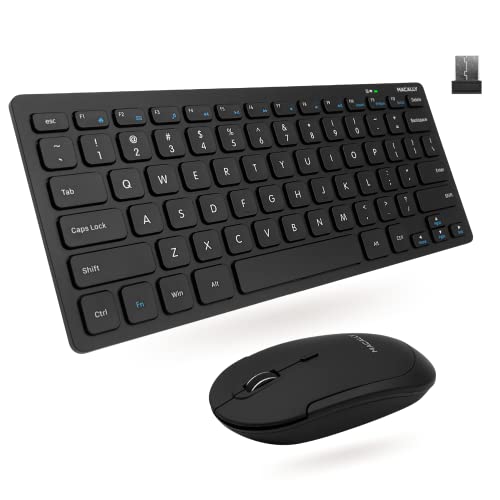
Macally small wireless keyboard and mouse combo compact black 78-key
Style: 78-key mini layout keyboard + mouse combo ยท 2.4 GHz wireless via single USB dongle ยท Quiet click buttons ยท 3 DPI mouse modes ยท Windows and Mac compatible

Reasons to Buy

  • +Established brand with lifetime support and up to a 2-year warranty
  • +Single USB dongle pairs both keyboard and mouse - no separate receivers
  • +78-key layout keeps the footprint small without cutting core keys
  • +Quiet click buttons on the mouse suit shared rooms
  • +3 selectable DPI modes for the mouse

Reasons to Avoid

  • โˆ’2.4 GHz dongle only - no Bluetooth mode
  • โˆ’Membrane-style keys, not mechanical or hot-swappable
  • โˆ’30 ft wireless range is shorter than dedicated Bluetooth alternatives

The Macally combo fills a specific gap in this guide: a branded, supported keyboard-and-mouse bundle at under $30. Unlike the unbranded budget combo elsewhere in this guide, Macally backs this with lifetime support and up to a 2-year warranty, which matters if a dongle or key fails down the line. The single 2.4 GHz dongle pairs both the keyboard and mouse together, so setup is plug-and-play with no separate Bluetooth pairing steps.

The 78-key layout is compact without removing keys buyers reach for daily, and the quiet click mouse buttons make it a reasonable choice for a dorm room or shared office. The tradeoff versus pricier picks in this guide is connectivity: it is 2.4 GHz only, so it will not multi-pair across devices the way a Bluetooth board does, and the switches are membrane rather than mechanical. For a budget-conscious buyer who wants brand-backed reliability over the cheapest possible unbranded option, this is the stronger pick.

2

CHERRY XTRFY K33 Compact Wireless

Best Splash-Resistant Wireless

CHERRY

8.4/ 10
CHERRY XTRFY K33 compact wireless 75% mem-chanical keyboard white with RGB lighting
Style: 75% layout mem-chanical switches ยท Bluetooth + 2.4 GHz + wired USB-C ยท RGB lighting ยท IP54 dust and splash resistant

Reasons to Buy

  • +Triple connectivity: Bluetooth, 2.4 GHz dongle, and wired USB-C on one board
  • +IP54 dust and splash resistance is uncommon at this layout size
  • +RGB lighting with per-key zones
  • +75% layout keeps arrow keys and F-row in a compact footprint
  • +CHERRY brand switch engineering behind the mem-chanical design

Reasons to Avoid

  • โˆ’Mem-chanical switches are a hybrid feel, not full mechanical travel
  • โˆ’Not hot-swappable - switch feel is fixed from the factory
  • โˆ’Newer multi-mode combo in CHERRY's lineup with a shorter track record than their standard boards

The CHERRY XTRFY K33 brings CHERRY's switch engineering to a compact wireless board with genuinely useful extras: triple connectivity covers Bluetooth for casual multi-device use, a 2.4 GHz dongle for lower-latency typing, and wired USB-C as a fallback. The IP54 rating means dust and light spills near the desk are not a concern, which is rare to see on a keyboard at this size and price.

The mem-chanical switches sit between membrane and full mechanical in feel - based on the published specs, they are not a substitute for a hot-swappable mechanical board if switch feel is the priority, but they are a step up from a plain membrane combo. For buyers who want a compact 75% layout with flexible connectivity and splash resistance rather than the deepest mechanical feel, this is a strong wireless option.

3

ProtoArc KM90-A Backlit Compact Combo

Best Keyboard-Mouse Combo for Mac

ProtoArc

8.2/ 10
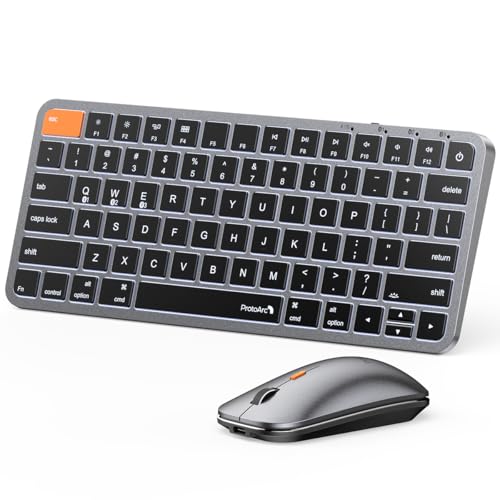
ProtoArc KM90-A backlit compact Bluetooth keyboard and mouse combo for Mac in space gray
Style: Compact layout keyboard + mouse combo ยท Backlit keys ยท Bluetooth multi-device ยท Rechargeable ยท Optimized for MacBook Pro/Air and iPad

Reasons to Buy

  • +Backlit keys - the only Mac-optimized combo in this guide with lighting
  • +Quiet key switches suitable for shared rooms
  • +Multi-device Bluetooth switching across Mac and iPad
  • +Rechargeable keyboard and mouse bundled together
  • +Compact footprint keeps desk space free for other peripherals

Reasons to Avoid

  • โˆ’Layout and shortcuts are tuned for macOS - less natural on Windows
  • โˆ’Bluetooth only - no 2.4 GHz dongle option
  • โˆ’Priced above single-mechanical-board alternatives once the mouse is factored in

The ProtoArc KM90-A is a combo built specifically around the Mac ecosystem rather than a generic keyboard with Mac keycaps swapped in. The backlit keys are a genuine differentiator among compact Mac-focused combos, and the quiet switches keep it appropriate for dorm rooms or shared workspaces where a clicky mechanical board would be disruptive.

Because it bundles a rechargeable mouse with the keyboard, the effective per-device cost is reasonable even though the combo price looks higher than a solo keyboard. Multi-device Bluetooth switching moves cleanly between a MacBook and an iPad. Windows users have other options in this guide better suited to their layout, but for a Mac-first compact desk setup, this is the most complete backlit combo available.

4
7.3/ 10
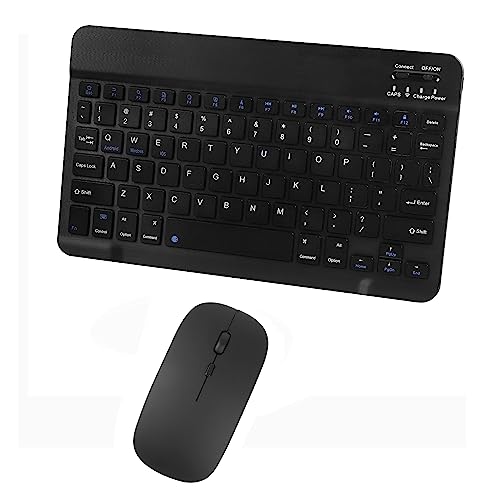
Ultra-slim black Bluetooth wireless keyboard and mouse combo for tablets and phones
Style: Ultra-slim compact layout + wireless mouse included ยท Bluetooth only ยท Rechargeable ยท iOS, Android, Windows, Mac, and tablet compatible

Reasons to Buy

  • +Lowest price in this guide at under $20 for a keyboard and mouse together
  • +Rechargeable - no disposable batteries to replace
  • +Ultra-slim profile fits easily in a bag for travel
  • +Broad compatibility across iOS, Android, Windows, and Mac
  • +Includes a matching compact mouse in the bundle

Reasons to Avoid

  • โˆ’Unbranded listing with no established support or warranty track record
  • โˆ’Bluetooth only - no 2.4 GHz dongle for lower-latency use
  • โˆ’Membrane-style keys lack the tactile feedback of mechanical switches

This ultra-slim combo is the entry point for anyone who wants a keyboard and mouse together for well under $20. Based on the listed specs, it covers the basics: rechargeable batteries, a slim travel-friendly profile, and compatibility across every major platform including tablets and phones, not just PCs.

The tradeoff for the price is the lack of a recognized brand behind it, so buyers should not expect the same warranty support or long-term reliability track record as the branded picks in this guide. For a secondary keyboard, a travel backup, or a tablet-focused setup where typing volume is light, it is a reasonable budget choice; for a primary daily-use board, the Keychron K3 V2 or AULA F75 Pro above are more durable long-term picks.

5

Keychron

9.1/ 10
Keychron K3 Version 2 75% wireless mechanical keyboard white backlit
Style: 75% layout (84 keys) ยท Bluetooth 5.1 + USB-C wired ยท Low-profile hot-swap switches ยท Mac and Windows

Reasons to Buy

  • +75% layout retains F-row and arrow keys while fitting compact desks
  • +Hot-swappable sockets - change switch feel without soldering
  • +Three-device Bluetooth pairing via Fn+1/2/3 key combo
  • +1,550 mAh battery - up to 70 hours without backlight
  • +Ships with both Mac and Windows keycaps included

Reasons to Avoid

  • โˆ’White backlight only on this variant - no RGB
  • โˆ’Low-profile key height feels different from standard MX if switching boards
  • โˆ’Pricier than budget alternatives at around $96

The Keychron K3 V2 is the best all-around compact keyboard for users who want reliable mechanical typing on both Mac and Windows without choosing between wired and wireless. The 75% layout keeps the function row and dedicated arrow keys that a 60% removes, while trimming the numpad and navigation cluster to fit small desks comfortably. The hot-swap socket is the standout feature at this price: you can change from tactile Brown to linear Red in under two minutes with no soldering tools and no new keyboard purchase.

Three-device Bluetooth mode paired with USB-C wired fallback covers the multi-device workflow most people actually need. The 1,550 mAh battery handles nearly three days of backlit use or over a week with the light off. At $96 this is not the cheapest option, but the hot-swap capability and dual-mode connectivity make it the pick that stays relevant as your setup changes over time.

AULA F75 Pro wireless 75% mechanical keyboard with RGB and volume knob
Style: 75% layout (81 keys) + multimedia knob ยท Triple mode: Bluetooth 5.0, 2.4 GHz, USB-C ยท Gasket mount ยท Pre-lubed PBT keycaps

Reasons to Buy

  • +Triple wireless mode: Bluetooth 5.0 + 2.4 GHz dongle + USB-C wired
  • +4,000 mAh battery - outstanding runtime vs competitors
  • +Gasket mounting absorbs typing vibration for quieter, softer sound
  • +Dedicated multimedia volume knob for quick media control
  • +Pre-lubed Reaper linear switches with side-printed PBT keycaps

Reasons to Avoid

  • โˆ’Zone-based RGB rather than per-key illumination
  • โˆ’Plastic finish feels less premium than aluminum-frame alternatives

The AULA F75 Pro delivers features that typically cost $30 to $50 more at its price. Triple wireless mode including 2.4 GHz is rare under $65 - the 2.4 GHz connection has lower latency than Bluetooth for gaming and fast typing. The 4,000 mAh battery outperforms most competitors by a significant margin: the Keychron K3 uses a 1,550 mAh cell by comparison. The added multimedia knob is a practical daily convenience for switching between music and focused study.

The gasket-mount construction is the technical differentiator worth understanding: instead of the PCB sitting directly against a hard plate, it floats on a gasket that absorbs typing vibration. This makes the typing sound noticeably softer without any foam modding. For a keyboard under $65 with this feature set and battery size, the AULA F75 Pro is the clearest value recommendation in this guide.

7
8.8/ 10
Apple Magic Keyboard USB-C 2024 white silver compact
Style: Compact full-size (no numpad) ยท Bluetooth + USB-C ยท Scissor-switch mechanism ยท macOS 15.1+, iPadOS 14.5+, iOS 14.5+

Reasons to Buy

  • +Designed for macOS - all function keys and shortcuts work natively
  • +Scissor switches are low-noise and consistent across 239 g total weight
  • +USB-C port doubles as wired connection while charging
  • +Up to one month battery life per charge
  • +Lightest keyboard in this guide at 239 g

Reasons to Avoid

  • โˆ’macOS and iPadOS focused - Windows use is limited
  • โˆ’Pairs with one device at a time - no multi-device Bluetooth switching
  • โˆ’No hot-swap capability - switch type is fixed

The Apple Magic Keyboard is the right answer for Mac-only setups and a poor answer for everything else. On macOS, the function row works exactly as expected without any key remapping, and the Bluetooth connection is seamless across iOS, iPadOS, and macOS devices. Scissor switches travel less than mechanical switches and feel more like a laptop keyboard - but for extended typing they are quiet, consistent, and fatigue-free in a way that some mechanical switches at higher actuation force are not.

The 2024 USB-C model is the version worth buying over older Lightning versions. USB-C charging is universal, and the wired mode during charging eliminates the interrupted workflow of the older keyboard design. At $79 this is not a budget purchase, but for a dedicated Mac user who values native key layout and a fully zero-configuration wireless connection, it is the cleanest available option.

HHKB Professional Hybrid Type-S Snow white silent compact keyboard
Style: 60% layout (60 keys) ยท Bluetooth (4 devices) + USB-C wired ยท Topre electrocapacitive Type-S silent switches ยท Mac and Windows via DIP switch

Reasons to Buy

  • +Topre electrocapacitive switches - widely regarded as the best typing feel at any price
  • +Type-S variant is silent - office, library, and shared room appropriate
  • +Pairs with up to 4 Bluetooth devices simultaneously
  • +DIP switches reconfigure layout for Mac or Windows in seconds
  • +60% footprint is the smallest full-function layout in this guide

Reasons to Avoid

  • โˆ’Extremely high price - $259 minimum entry point
  • โˆ’60% layout requires learning Fn-layer shortcuts for missing keys
  • โˆ’No backlighting or RGB

The HHKB Professional Hybrid Type-S is a purpose-built tool for users who type extensively and want the best switch feel money can buy in a compact form. Topre electrocapacitive switches are distinct from both MX-style mechanical and membrane: they have a tactile bump at actuation without a physical click, and their spring mechanism produces a feel that regular mechanical users describe as uniquely smooth and consistent. The Type-S silent variant dampens the keystroke for use in quiet environments without changing the fundamental typing experience.

The price is the obvious barrier. At $259 to $299, the HHKB costs more than most alternatives on this list combined. This is not a recommendation for casual buyers - it is for users who type professionally for six or more hours per day and specifically want the Topre feel. The four-device Bluetooth pairing and DIP-switch Mac/Windows mode switching make it adaptable to any workflow. The 60% layout has a learning curve for Fn-layer shortcuts, but experienced users report significant reduction in hand travel distance during intensive typing sessions.

9
8.0/ 10
Corsair K55 CORE TKL RGB gaming keyboard tenkeyless black
Style: Tenkeyless (87 keys) ยท Wired USB-A ยท Quiet membrane switches ยท 8-zone RGB ยท IP32 spill-resistant ยท 1000 Hz polling

Reasons to Buy

  • +IP32 spill resistance handles accidental drink contact at the desk
  • +8-zone RGB backlight syncs with other Corsair iCUE devices
  • +1,000 Hz polling for accurate real-time gaming input
  • +Tenkeyless frees desk space versus a full-size board
  • +Quiet membrane switches rated for 20 million keystrokes

Reasons to Avoid

  • โˆ’Wired only - no Bluetooth or 2.4 GHz wireless option
  • โˆ’Membrane switches lack tactile precision of mechanical alternatives
  • โˆ’8-zone RGB is not per-key illumination

The Corsair K55 CORE TKL is the best-value entry into TKL gaming keyboards for students who want RGB, reliable build quality, and spill resistance under $50. The IP32 spill protection is worth highlighting specifically for desk setups where drinks are nearby - the keyboard handles accidental liquid contact that would damage an unprotected board. The 1,000 Hz polling rate and 12-key rollover cover the basic gaming input requirements for most titles without the premium cost of mechanical switches.

The quiet membrane switches are a practical choice for shared rooms or library environments where clicky mechanical switches would be disruptive. The iCUE software integration lets you sync lighting with other Corsair peripherals if you have a coordinated setup, though 8-zone lighting is a step below per-key RGB found on more expensive boards. For a gamer on a student budget who needs reliable compact wired performance with RGB and spill protection, the K55 CORE TKL is the right starting point.

10

Arteck

7.8/ 10
Arteck 2.4G wireless stainless steel slim keyboard full-size with numpad
Style: Full-size with numpad ยท 2.4 GHz wireless (nano USB receiver) ยท Stainless steel top ยท Built-in rechargeable battery ยท Windows, Surface, Smart TV

Reasons to Buy

  • +Stainless steel top plate is durable and more fingerprint-resistant than ABS plastic
  • +6-month battery life per charge at 2 hours of daily use
  • +Plug-and-play nano receiver - no Bluetooth pairing or driver installation needed
  • +15 mm thin profile - comfortable flat typing without a wrist rest
  • +10 m wireless range

Reasons to Avoid

  • โˆ’Full-size with numpad - largest footprint in this guide
  • โˆ’Single-device 2.4 GHz only - no multi-device Bluetooth switching
  • โˆ’Windows-focused key layout - Mac function keys are not optimized

The Arteck 2.4G is the right choice for users who want a wireless keyboard with a numpad and do not need multi-device Bluetooth switching. The stainless steel top is the build quality differentiator: it gives the keyboard a premium feel that ABS plastic alternatives at this price do not replicate, and it handles surface wear from daily use without the degradation plastic develops over months. The 6-month battery figure is conservative - users report charging annually at moderate use.

The caveat is its size: this is a full-size keyboard with a numpad, making it the largest in this guide by a significant margin. If desk space is the constraint, this is not the pick. Where it excels is a home office, media room, or desktop setup where a numpad is useful, wireless freedom matters, and compact keyboard layouts feel too cramped for the task. It is also the most reliable option for Smart TV and Surface pairings via 2.4 GHz, which avoids Bluetooth compatibility issues some TVs have.

11
8.3/ 10
SteelSeries Apex 3 TKL RGB gaming keyboard black tenkeyless
Style: Tenkeyless (87 keys) + 6 macro keys ยท Wired USB-A ยท Whisper-quiet gaming switches ยท N-Key Rollover ยท IP32 water and dust resistant

Reasons to Buy

  • +N-Key Rollover (NKRO) - every simultaneous key press registers reliably
  • +6 dedicated programmable macro keys alongside the standard TKL layout
  • +IP32 water and dust resistance for desk safety
  • +8-zone RGB syncs via SteelSeries GG software
  • +Whisper-quiet switches rated for 20 million keystrokes

Reasons to Avoid

  • โˆ’Wired only - no wireless option available
  • โˆ’Membrane switches - not suitable for mechanical switch preference
  • โˆ’6 macro keys add width beyond standard TKL footprint

The SteelSeries Apex 3 TKL differentiates from the Corsair K55 CORE in two meaningful ways: N-Key Rollover and 6 dedicated macro keys. NKRO means every simultaneous key press registers without limit - in fast-paced gaming where movement, ability, and action keys are pressed together, a keyboard without NKRO misses inputs. The 6 macro keys on the left side provide programmable shortcuts without any modifier key combinations, which is genuinely useful for MMO players and users with complex application shortcuts.

The whisper-quiet switches work in shared spaces, and IP32 matches the Corsair for spill protection. SteelSeries GG ecosystem integration means lighting and macro programming work across Apex devices without separate software installs. Between this and the Corsair K55 CORE TKL at similar prices, the choice depends on specific needs: NKRO and dedicated macro keys favor this pick; existing Corsair iCUE ecosystem users should choose the Corsair.

Rii i4 mini Bluetooth keyboard with integrated touchpad black portable
Style: Mini QWERTY with integrated touchpad ยท Dual mode: Bluetooth 4.0 + 2.4 GHz USB dongle ยท Backlit keys ยท iOS, Android, Windows, macOS, TV Box, Raspberry Pi

Reasons to Buy

  • +Integrated touchpad eliminates the need for a separate mouse
  • +155 x 89 mm footprint - most compact keyboard in this guide
  • +Works with TV Boxes, Raspberry Pi, and Android devices
  • +Dual Bluetooth + 2.4 GHz dongle for maximum device compatibility
  • +Backlit keys for low-light use

Reasons to Avoid

  • โˆ’Compact key pitch is too small for full-speed touch typing
  • โˆ’700 mAh battery requires recharging every few days at regular use
  • โˆ’Touchpad sensitivity is basic compared to standalone trackpads

The Rii i4 occupies a different category from the rest of this guide. It is not designed for full-speed desktop typing sessions - its 155 x 89 mm footprint and compact key pitch make sustained typing slower than a full-size or even a 60% layout. What it is designed for is controlling devices at a distance: Android TV boxes, projectors, Raspberry Pi media centers, smart TVs, and any setup where reaching for a mouse and full-size keyboard is impractical. The integrated touchpad gives you pointer control and keyboard input in one palm-sized unit.

For students using a TV as a secondary display, running a Raspberry Pi project, or needing wireless input for a media center setup, the Rii i4 is the most capable compact solution under $30. Dual-mode connectivity (Bluetooth 4.0 for pairing, 2.4 GHz dongle when Bluetooth is unavailable) covers every device scenario. Choose this for the secondary and remote-control use cases where its size and touchpad are genuine advantages - not as a primary productivity keyboard.

Comparison Table

KeyboardLayoutConnectionScore
1Macally Small Wireless Keyboard and Mouse Combo
75% (84 keys)BT + USB-C7.6Check price
2CHERRY XTRFY K33 Compact Wireless
75% + knobBT + 2.4G + USB-C8.4Check price
3ProtoArc KM90-A Backlit Compact Combo
Compact full-sizeBluetooth8.2Check price
4Ultra-Slim Bluetooth Keyboard and Mouse Combo
60% (60 keys)BT + USB-C7.3Check price
5Keychron K3 Version 2
TKL (87 keys)Wired9.1Check price
6AULA F75 Pro Wireless Mechanical Keyboard
Full-size + numpad2.4 GHz8.6Check price
7Apple Magic Keyboard (USB-C, 2024)
TKL (87 keys)Wired8.8Check price
8HHKB Professional Hybrid Type-S Snow
Mini + touchpadBT + 2.4G9.2Check price
9Corsair K55 CORE TKL RGB Gaming Keyboard
8.0Check price
10Arteck 2.4G Wireless Keyboard
7.8Check price
11SteelSeries Apex 3 TKL RGB Gaming Keyboard
8.3Check price
12Rii i4 Mini Bluetooth Keyboard with Touchpad
7.9Check price

Prices are approximate. Check Amazon for current pricing before purchasing.

How We Evaluated These Keyboards

Each keyboard was assessed across five criteria weighted for small desk and dorm room use:

Layout efficiency

How much desk width does the keyboard occupy relative to the keys it provides? A 75% keyboard that retains the F-row and arrow keys scores higher than a TKL that adds more width without more functionality for most users.

Switch quality and typing experience

Switch consistency, actuation feel, and noise level relative to price. Hot-swap capability was treated as a significant differentiator at each price tier.

Wireless reliability and battery

Bluetooth multi-device support, 2.4 GHz availability, battery capacity, and real-world runtime claims verified against manufacturer documentation and verified buyer feedback.

Platform compatibility

Whether the keyboard works on both Mac and Windows without key remapping workarounds, and how much effort the transition requires.

Value for price

Features delivered per dollar - the AULA F75 Pro scores highly here due to triple-mode wireless and gasket mount at under $65.

This guide reflects research across published specifications, manufacturer documentation, and analysis of verified Amazon buyer review patterns. Where observations reference buyer experience, they are based on review pattern analysis, not individual testing claims.

Frequently Asked Questions

What keyboard layout is best for a small desk?

A 75% layout is the best balance for most small desk users. It keeps the function row and dedicated arrow keys that make daily work practical while removing the numpad and navigation cluster. The result is roughly 30% narrower than a full-size keyboard without meaningful loss in usability. A 60% layout goes further - removing the function row - and is ideal for users comfortable with Fn-layer shortcuts and want the smallest possible footprint.

Is a mechanical keyboard worth it over membrane?

For extended typing (three or more hours per day), yes. Mechanical switches have a consistent actuation point that reduces the force required per keystroke over long sessions. Membrane keyboards require bottoming out each key to register reliably, which increases fatigue. The audible difference is also significant: linear mechanical switches are quieter than most membranes at speed; tactile switches have a distinct bump feedback at a similar volume. The main advantages of membrane are lower cost and quieter operation in very low-noise environments.

What is the difference between 2.4 GHz wireless and Bluetooth?

A 2.4 GHz keyboard uses a dedicated USB nano receiver that creates a direct wireless link to a single device. This results in lower latency than Bluetooth (typically 1ms vs 10-20ms) and more reliable connections. Bluetooth connects without any USB receiver but has slightly higher latency. For gaming or fast typing where every millisecond counts, 2.4 GHz is the better choice. For multi-device switching between a laptop, desktop, and tablet, Bluetooth is more flexible since most devices have Bluetooth but only one USB port available for a nano receiver.

Can I use these keyboards on both Mac and Windows?

Most keyboards in this guide support both platforms, with differences. The Keychron K3 V2 ships with both Mac and Windows keycap sets. The AULA F75 Pro and both gaming keyboards are primarily Windows-optimized but functional on Mac. The Apple Magic Keyboard is designed exclusively for macOS and iPadOS. The HHKB uses DIP switches to reconfigure key assignments for either OS without software. Check the compatibility notes for your specific keyboard if you switch between platforms regularly.

Do I need hot-swappable switches?

Hot-swap is worth paying for if you are new to mechanical keyboards and unsure of your preferred switch type, or if you want the flexibility to try multiple switch feels without buying multiple keyboards. Changing switches takes about two minutes with no soldering tools required. If you already know your preferred switch type and are confident in that preference, a non-hot-swap keyboard is a reasonable choice at the same or lower price.

Browse all compact keyboards on Amazon

See current prices, deals, and Prime shipping options

Shop Compact Keyboards on Amazon

Related Buying Guides