
6 Best Silent Laptop Cooling Pads in 2026
6 quiet laptop cooling pads compared by actual dBA figures where available, not accepted marketing claims, with real cooling still weighed in.

New to Amazon Prime?
Get fast, free shipping on every pick in this guide, plus Prime Video and exclusive deals.
Try Prime Free



At a Glance
TECKNET Laptop Cooling Pad with Phone Stand, Laptop Cooler for 12-15.6 Inch
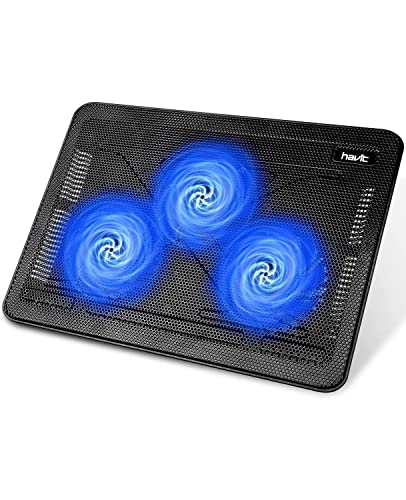
↓ See why we picked ithavit HV-F2056 15.6"-17" Laptop Cooler Cooling Pad, Slim Portable USB Powered (3 Fans)
↓ See why we picked itTECKNET Laptop Cooling Pad, Portable Slim Laptop Cooler for 12"-17" Laptops
↓ See why we picked itAIMIUZI Laptop Cooling Pad Laptop Cooler Stand, 5 Quiet Fans, 5 Angle Adjustable
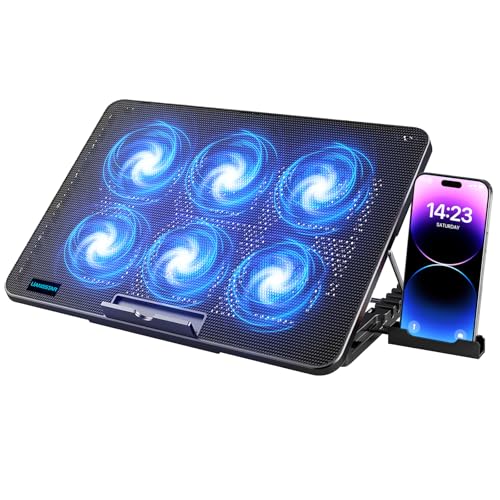
↓ See why we picked itLIANGSTAR Laptop Cooling Pad, Laptop Cooler with 6 Quiet Fans for 12-17 Inch Notebook
↓ See why we picked itCoolertek Portable Slim Quiet Laptop Notebook Cooler Cooling Pad Stand, Fits 11-14 Inch Laptop
↓ See why we picked itNearly every cooling pad on Amazon claims to be quiet, so a 'silent' label by itself tells you very little. A pad that states an actual noise figure, a specific dBA number under a specific fan count or speed, gives you something real to compare against competitors, while a listing with only the word 'quiet' and no number is functionally unverifiable.
The right target here isn't the lowest possible noise in isolation, it's meaningful cooling at that noise level. A whisper-quiet pad that provides no real thermal benefit isn't actually a better buy than a slightly louder one with a genuinely stronger result. This guide also distinguishes low-RPM active designs that still use a fan from truly fanless pads, which are a different category covered in our dedicated fanless and passive cooling pad guides.
5 Criteria to Look For Before Buying a Silent Laptop Cooling Pad
Key buying criteria so you get the right fit the first time.
Check the pad's stated compatible size range against your laptop's real footprint, not its screen size
A laptop's advertised screen size, like 13 or 15.6 inches, describes the diagonal measurement of the display panel, not the physical width and depth of the laptop's base that actually sits on top of a cooling pad, and two laptops with the identical screen size can have meaningfully different base dimensions depending on bezel thickness and chassis design.
Cooling pad listings state a compatible size range in inches specifically because they're describing what base footprint fits their surface and fan layout, so treating the screen-size number alone as a fit guarantee is a genuine buying mistake, not just an imprecise shortcut.
Measure your laptop's actual width and depth, or find those dimensions in its own spec sheet, and compare that against the pad's stated range rather than matching screen-size numbers.
Understand that a wider-range pad isn't automatically better for a smaller laptop
Cooling pads spread their fans across the surface in a fixed layout designed around the middle of their stated compatible range, so a pad rated for 12 to 17 inches has its fans positioned to reach a wide variety of vent locations across that whole span, while a laptop toward the small end of that range may not sit directly over as many of those fans as it would on a pad sized more tightly around its own dimensions.
This matters because the cooling benefit of a pad comes specifically from airflow reaching the laptop's actual intake vents, not from the pad's overall surface area, so a smaller laptop on an oversized pad can genuinely get less effective cooling than the same laptop on a proportionally sized pad, despite technically fitting within the stated range.
When your laptop sits toward one end of a pad's stated range rather than the middle, check user photos or reviews specifically describing that size laptop's fit before assuming the airflow lines up well.
Confirm your laptop's actual vent location and design, especially for thin ultrabooks and MacBooks
Most cooling pads are designed around bottom-vented laptops, where intake vents sit on the underside of the chassis directly facing the pad's fans, but some laptops, most notably many MacBook models, use a fully sealed or fanless internal design where the chassis itself acts as a heat sink rather than relying on active airflow from underneath.
This is a genuine compatibility gap that a cooling pad's stated inch-range compatibility says nothing about, since a pad can physically fit a MacBook's exact footprint while providing essentially no cooling benefit if that specific model has no bottom vents for the fans to blow into.
Check your specific laptop model's actual cooling design (vented bottom panel versus sealed unibody) before assuming a cooling pad will meaningfully lower its temperature, and treat this as a separate question from simple physical size fit.
Weigh fan count and noise level together, not fan count alone
A pad's fan count, commonly ranging from a single central fan up to five or six smaller fans, is often marketed as a straightforward better-is-more spec, but more fans spinning simultaneously generally means more total noise output, and a pad with independently controllable fan zones lets you balance airflow against noise rather than forcing an all-or-nothing choice.
This is a real everyday tradeoff for anyone using a laptop in a quiet room or on a video call, since a cooling pad running at full multi-fan speed can become audible enough to be distracting, undermining the benefit if you end up turning it off to avoid the noise.
Check whether the listing states selectable fan modes or independently controlled fan zones, not just the total fan count, if noise control matters to your specific environment.
Confirm the power source and port type match your laptop before assuming plug-and-play compatibility
Nearly all cooling pads draw power over a USB cable rather than a separate power adapter, which keeps setup simple, but the cable end that plugs into your laptop is typically USB-A, and a laptop with only USB-C ports (common on newer ultrabooks and MacBooks) will need a separate USB-C adapter or hub to actually power the pad, an extra cost and cable that isn't obvious from the listing photos alone.
This matters because a cooling pad that can't be powered defeats its entire purpose regardless of how well it otherwise fits your laptop's size and vent layout, so it's a genuine prerequisite to check, not an afterthought.
Check the listing's stated cable connector type and confirm it matches an available port on your specific laptop, or budget for an adapter if it doesn't.
6 Best Silent Laptop Cooling Pads in 2026
TECKNET Laptop Cooling Pad with Phone Stand, Laptop Cooler for 12-15.6 Inch
About this pick
This is the strongest pick in this guide because it pairs a specific stated noise ceiling, under 40dB, with real cooling capacity, nine fans running stepless speed control up to 2600 RPM for 360 degree airflow. That combination is exactly what a genuinely useful silent pad should offer, a documented figure rather than a vague claim, without sacrificing the fan count that actually moves air.
It earns the top spot in this comparison over havit HV-F2056 15.6"-17" Laptop Cooler Cooling Pad for one main reason. Specific documented noise figure, not a vague claim. On price, it's actually priced above havit HV-F2056 15.6"-17" Laptop Cooler Cooling Pad, which is worth weighing if cost is your deciding factor between the two.
Worth knowing before you decide: High fan count for real cooling despite the low noise ceiling. On the other side, Stepless dial lacks marked presets. That's the main tradeoff to weigh against everything above.
Best for: Buyers who want a specific, verifiable noise figure combined with genuine fan-driven cooling.
Check price on AmazonPros
- +Specific documented noise figure, not a vague claim
- +High fan count for real cooling despite the low noise ceiling
- +Dual USB ports preserve a free connection
- +LED speed indicator built in
Cons
- −No documented sustained-load temperature figure alongside the noise spec
- −12-15.6 inch range excludes larger laptops
- −Stepless dial lacks marked presets
havit HV-F2056 15.6"-17" Laptop Cooler Cooling Pad, Slim Portable USB Powered (3 Fans)
About this pick
Three fans are explicitly marketed as ultra-quiet, and while the listing doesn't provide a specific dBA figure, the design intent, fewer fans at a moderate speed rather than a high-count, high-RPM setup, is consistent with genuinely lower noise output. A metal mesh surface gives a stable, scratch-resistant platform.
One spot below TECKNET Laptop Cooling Pad with Phone Stand in this ranking, it's priced lower than TECKNET Laptop Cooling Pad with Phone Stand. The compromise here is straightforward: No specific dBA figure stated in the listing. What you gain in return: Design intent favors lower fan count over high-RPM output. Whether that trade is worth it depends on which side matters more for your setup.
Worth knowing before you decide: Metal mesh surface adds stability. On the other side, Only 2 height settings. That's the main tradeoff to weigh against everything above.
Best for: Buyers who want a design built around quiet operation even without a specific stated dBA figure.
Check price on AmazonPros
- +Design intent favors lower fan count over high-RPM output
- +Metal mesh surface adds stability
- +Slim and travel-friendly
- +Reasonable price
Cons
- −No specific dBA figure stated in the listing
- −Lower fan count means less total cooling capacity
- −Only 2 height settings
TECKNET Laptop Cooling Pad, Portable Slim Laptop Cooler for 12"-17" Laptops
About this pick
Three 110mm fans run at a fixed, moderate 1200 RPM, which the listing describes as operating quietly, though again without a specific dBA figure. A single USB power draw with no external adapter keeps the design simple, and a pass-through port avoids losing a connection.
Sitting just under havit HV-F2056 15.6"-17" Laptop Cooler Cooling Pad, it's priced lower than havit HV-F2056 15.6"-17" Laptop Cooler Cooling Pad. Here's the honest tradeoff: No specific dBA figure in the listing. And here's what it gets you instead: Fixed moderate RPM avoids the noisiest high-speed settings. That's the real difference between the two picks, not just a ranking number.
Worth knowing before you decide: Simple single-port USB power draw. On the other side, Fixed speed with no adjustment. That's the main tradeoff to weigh against everything above.
Best for: Budget buyers who want a simple, moderately quiet pad without paying for a documented noise spec.
Check price on AmazonPros
- +Fixed moderate RPM avoids the noisiest high-speed settings
- +Simple single-port USB power draw
- +Affordable price
- +Slim, travel-friendly profile
Cons
- −No specific dBA figure in the listing
- −Only 2 height settings
- −Fixed speed with no adjustment
AIMIUZI Laptop Cooling Pad Laptop Cooler Stand, 5 Quiet Fans, 5 Angle Adjustable
About this pick
Five low-noise fans, mixed in size with one small central fan and four larger ones, are marketed as quiet without a specific dBA figure, but the mixed-size approach lets the design use lower individual fan speeds while still moving meaningful air. A switch wheel controls power, and five height settings give real ergonomic range.
Ranked just behind TECKNET Laptop Cooling Pad, it's priced lower than TECKNET Laptop Cooling Pad. The real tradeoff against that pick: No specific dBA figure stated. In exchange, it offers this instead: Mixed fan sizing balances airflow and noise. That's the swap that decides whether this pick or the one above it is the better fit for your laptop.
Worth knowing before you decide: 5 height settings for ergonomic range. On the other side, Switch wheel offers less granular control than a stepless dial. That's the main tradeoff to weigh against everything above.
Best for: Buyers who want more fan-driven airflow than a minimal design while staying in a reasonably quiet range.
Check price on AmazonPros
- +Mixed fan sizing balances airflow and noise
- +5 height settings for ergonomic range
- +Budget-friendly price for a 5-fan design
- +Honeycomb mesh aids airflow
Cons
- −No specific dBA figure stated
- −12-15.6 inch range excludes larger laptops
- −Switch wheel offers less granular control than a stepless dial
LIANGSTAR Laptop Cooling Pad, Laptop Cooler with 6 Quiet Fans for 12-17 Inch Notebook
About this pick
Independent control over two 3-fan zones lets you run only the fans you actually need, a practical way to keep noise down without disabling cooling entirely. Marketed as quiet without a specific dBA figure, the independent zone control is a genuine noise-management feature rather than just a marketing word.
One spot below AIMIUZI Laptop Cooling Pad Laptop Cooler Stand in this ranking, it costs more than AIMIUZI Laptop Cooling Pad Laptop Cooler Stand. The compromise here is straightforward: No specific dBA figure stated. What you gain in return: Independent zone control lets you scale down to reduce noise. Whether that trade is worth it depends on which side matters more for your setup.
Worth knowing before you decide: Widest height-adjustment range in this guide. On the other side, Two-zone control requires understanding your laptop's heat pattern to use effectively. That's the main tradeoff to weigh against everything above.
Best for: Buyers who want the option to run a partial, lower-noise fan configuration rather than all fans at once.
Check price on AmazonPros
- +Independent zone control lets you scale down to reduce noise
- +Widest height-adjustment range in this guide
- +Budget-friendly price
- +Diamond-groove mesh for genuine heat dissipation
Cons
- −No specific dBA figure stated
- −Running both zones together is louder than the simpler picks here
- −Two-zone control requires understanding your laptop's heat pattern to use effectively
Coolertek Portable Slim Quiet Laptop Notebook Cooler Cooling Pad Stand, Fits 11-14 Inch Laptop
About this pick
Two fans is the lowest count in this guide, which naturally keeps output and noise both minimal, marketed as ultra-quiet without a stated dBA figure. This is the tradeoff explicitly worth naming, the quietest-feeling design here also has the least cooling ceiling, so it suits light workloads rather than sustained heavy use.
Sitting just under LIANGSTAR Laptop Cooling Pad, it costs more than LIANGSTAR Laptop Cooling Pad. Here's the honest tradeoff: No specific dBA figure stated. And here's what it gets you instead: Lowest fan count keeps output and likely noise minimal. That's the real difference between the two picks, not just a ranking number.
Worth knowing before you decide: Slim and lightweight for travel. On the other side, Only 2 height settings. That's the main tradeoff to weigh against everything above.
Best for: Buyers with light workloads who want the quietest-feeling design and don't need strong sustained cooling.
Check price on AmazonPros
- +Lowest fan count keeps output and likely noise minimal
- +Slim and lightweight for travel
- +Affordable price
- +Simple, straightforward design
Cons
- −No specific dBA figure stated
- −Lowest cooling ceiling in this guide due to fan count
- −Only 2 height settings
How We Evaluated These Silent Laptop Cooling Pads
Each pick was assessed across 4 criteria weighted for real-world use.
Demand a real dBA figure where available
We prioritized listings with a specific stated noise ceiling over vague 'quiet' or 'ultra-quiet' marketing language with no supporting number.
Cooling capacity at the stated noise level
We weighed each pick's fan count and speed against its noise claim, since the goal is meaningful cooling at low noise, not just the lowest possible noise in isolation.
Active low-RPM vs genuinely fanless design
We distinguished pads that use fewer or slower fans from truly fanless designs, which are a separate category covered in our fanless and passive cooling pad guides.
Practical noise-management features
We noted features like independent fan zones that let a buyer actively reduce noise rather than relying on a single fixed loud or quiet setting.
How to Choose the Right Silent Laptop Cooling Pads
By Laptop Size Fit
| Your priority | Recommended pick in this comparison |
|---|---|
| Tightest size match for your laptop | Coolertek Portable Slim Quiet Laptop Notebook Cooler Cooling Pad Stand |
| Widest range, flexible for future upgrades | LIANGSTAR Laptop Cooling Pad |
By Budget
| Price range | Recommended pick |
|---|---|
| Under $21 | AIMIUZI Laptop Cooling Pad Laptop Cooler Stand |
| Mid-range | TECKNET Laptop Cooling Pad |
| No firm budget ceiling, prioritizing fan count or extras | TECKNET Laptop Cooling Pad with Phone Stand |
Slim/Fewer Fans vs Multi-Fan High Airflow
Slim, Fewer Fans
Lighter and more portable with less total noise, at the cost of a smaller cooled surface area. In this comparison: Coolertek Portable Slim Quiet Laptop Notebook Cooler Cooling Pad Stand.
Multi-Fan, High Airflow
More total cooling surface and airflow, at the cost of extra bulk and more potential noise at full speed. In this comparison: TECKNET Laptop Cooling Pad with Phone Stand.
Most buyers should default to a slim pick like Coolertek Portable Slim Quiet Laptop Notebook Cooler Cooling Pad Stand for everyday portability, and only step up to TECKNET Laptop Cooling Pad with Phone Stand's fan count if you're running genuinely demanding workloads that generate real sustained heat.
By Height Adjustment Range
| What you're weighing | Recommended pick |
|---|---|
| Most ergonomic height adjustment range | LIANGSTAR Laptop Cooling Pad |
| Simplest setup, fewer adjustments to fuss with | AIMIUZI Laptop Cooling Pad Laptop Cooler Stand |
For a Fanless or Sealed-Chassis Laptop (Like MacBook) Specifically
Look for
Explicit confirmation that your specific laptop model has bottom-panel intake vents, since a cooling pad provides little benefit on a fully sealed, fanless unibody design regardless of physical fit.
In this comparison
Every pick here is designed around a vented-bottom laptop; if you're on a fanless MacBook specifically, check our dedicated MacBook Air cooling pad guide for that honesty caveat before buying any pad in this comparison.
When to Spend More
Spend more if
You want what TECKNET Laptop Cooling Pad with Phone Stand offers: Specific documented noise figure, not a vague claim. That's a real functional upgrade over the budget picks here, not just a brand markup.
Save if
AIMIUZI Laptop Cooling Pad Laptop Cooler Stand already covers the essentials: Mixed fan sizing balances airflow and noise. The main thing you'd be paying extra for elsewhere in this list is fan count or height range you may not need.
Frequently Asked Questions
How do I know if a 'silent' cooling pad is actually quiet?
Look for a specific stated dBA figure. A listing that only says 'quiet' or 'ultra-quiet' without a number is not independently verifiable and should be treated as a design intent signal, not proof.
Is the quietest cooling pad always the best choice?
Not necessarily. The goal is meaningful cooling at a given noise level, not the lowest possible noise in isolation. A slightly louder pad with genuinely stronger cooling can be the better buy for a heavier workload.
What's the difference between a silent pad and a fanless pad?
A silent or quiet pad typically still has a fan, just running at lower speed or fewer fans active. A genuinely fanless pad has no fan mechanism at all and relies purely on elevation and material for cooling, a different category covered in our fanless and passive guides.
Do fewer fans always mean quieter operation?
Generally yes, fewer or slower fans reduce noise, but they also reduce cooling capacity. Match fan count to your actual workload rather than choosing the lowest fan count purely to minimize noise.
Can I reduce noise on a multi-fan cooling pad without buying a different product?
Some pads offer independent fan-zone control or stepless speed dials that let you run fewer fans or lower speeds on demand, giving you flexibility to reduce noise without sacrificing all cooling.
Bottom Line
best overall: TECKNET Laptop Cooling Pad with Phone Stand, Laptop Cooler for 12-15.6 Inch - best documented noise figure pick in this roundup.
See the full rankings above for all picks with pros, cons, and best-for summaries.
Browse on Amazon
All Prime-eligible options with current pricing.
Shop on Amazon →