
8 Best Optoma Projectors in 2026
We compared optoma projector models by verified specs and real-world tradeoffs, not marketing claims alone. Every pick is checked against a real usage floor.

New to Amazon Prime?
Get fast, free shipping on every pick in this guide, plus Prime Video and exclusive deals.
Try Prime Free





At a Glance
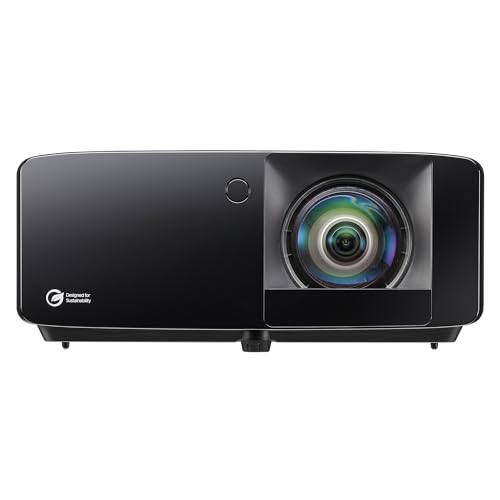
Optoma GT2000HDR Ultra-Compact Short Throw Full HD Home Laser Projector
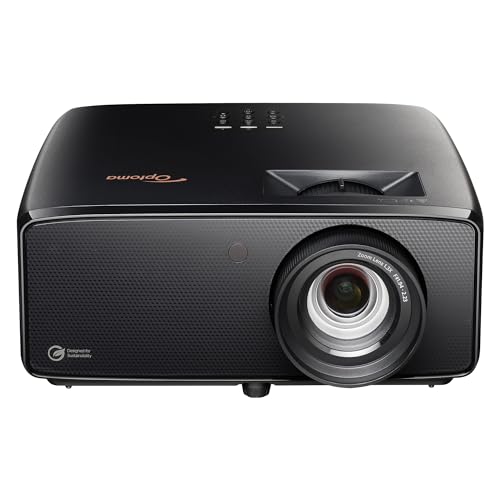
↓ See why we picked itOptoma GT2100HDR Compact Short Throw Laser Home Theater and Gaming Projector
↓ See why we picked itBest Optoma Projectors differ once you check the numbers, which is exactly why the real story is in the numbers.
We compared this lineup on documented brightness and throw ratio, since marketing copy tends to obscure this.
5 Criteria to Look For Before Buying a Optoma Projector
Key buying criteria so you get the right fit the first time.
ANSI Lumens vs Marketing Lumens
A lumens figure with no standard attached tells you almost nothing reliable about how bright a projector will actually look on your wall. Manufacturers are free to measure and report brightness however they choose unless they explicitly cite ANSI or ISO methodology, which is why the same real projector can appear to have wildly different brightness claims across different listings. Look for 'ANSI lumens' specifically in the spec sheet or product description before trusting any brightness number for comparison shopping.
Throw Ratio and Room Distance
Throw ratio describes how far the projector needs to sit from the screen to produce a given image size, expressed as distance divided by image width; a 1.2:1 ratio means 12 feet of distance produces a 10-foot-wide image. Buying a projector with the wrong throw ratio for your room means either a much smaller image than expected or one that overflows the screen and needs to sit further back than the room allows. Measure your actual projector-to-wall distance first, then check that figure against the specific throw-ratio range listed for the model.
Native Contrast Ratio, Not Dynamic
A contrast ratio in the hundreds of thousands sounds impressive, but it almost always describes 'dynamic contrast', a figure achieved by the projector's software dimming and brightening the lamp scene to scene rather than a genuine optical measurement of how deep black actually looks on screen. Native contrast, the honest on/off measurement, is usually a much smaller number and the one that actually predicts real picture depth. Treat any unqualified contrast figure over roughly 50,000:1 as a dynamic-mode number, not a real optical spec.
Native Resolution vs Pixel-Shifting 4K
The gap between a native 4K projector and a pixel-shifting one that's marketed as '4K' is mostly invisible at typical living-room viewing distances, but it does matter on larger screens or in a dedicated theater setup where you sit closer to the image. Since the price difference between the two technologies is often substantial, it's worth checking the spec sheet for the specific phrase 'native 4K' rather than assuming any 4K label means an identical panel.
Light Source Type and Total Ownership Cost
A projector's light source is either a traditional lamp, a replaceable bulb rated for roughly 2,000 to 5,000 hours, or a laser diode rated for tens of thousands of hours with no bulb to replace. A lamp-based projector costs less upfront but adds a real recurring expense, often $150 to $300 per replacement bulb, that buyers frequently forget to budget for when comparing sticker prices. Calculate the total cost of ownership over your expected years of use before assuming the cheaper listed price is actually the better value.
8 Best Optoma Projectors in 2026
Optoma HD146X 1080P Full HD Vibrant Home Theater Projector
About this pick
Optoma HD146X 1080P Full HD Vibrant Home Theater Projector is the top pick in this comparison.
Set next to Optoma HD30LV 1080p Full HD Home Projector, the two land close enough on paper that it's worth comparing both listings directly on the spec that matters most for your setup.
This one is the right call if you want the strongest all-around pick in this comparison and would rather not keep shopping around. Marketed lumens and true ANSI lumens are often two different numbers, so confirm which one is quoted before comparing brightness.
Best for: buyers who want the strongest all-around pick in this comparison and would rather not keep shopping around
Check price on AmazonPros
- +Home cinema experience
- +Game display mode
- +Easy installation
Cons
- −Marketed lumens and true ANSI lumens often differ
- −Throw ratio needs checking against your room distance
Optoma HD30LV 1080p Full HD Home Projector
About this pick
Optoma HD30LV 1080p Full HD Home Projector is a strong alternative worth comparing directly against the top pick. 4,500 lumens for lights on viewing.
Optoma HD146X 1080P Full HD Vibrant Home Theater Projector is a reasonable point of comparison here, close enough that the actual listing details are worth checking before deciding between them.
Choose this if you want a genuine alternative to the top pick with a different tradeoff worth comparing directly. Throw ratio determines the usable image size at your actual room distance, so measure your space before assuming any listed screen size fits.
Best for: buyers who want a genuine alternative to the top pick with a different tradeoff worth comparing directly
Check price on AmazonPros
- +4,500 lumens for lights on viewing
- +And HDR compatible
- +Portable and lightweight
Cons
- −Throw ratio needs checking against your room distance
- −Marketed lumens and true ANSI lumens often differ
Optoma GT2000HDR Ultra-Compact Short Throw Full HD Home Laser Projector
About this pick
Optoma GT2000HDR Ultra-Compact Short Throw Full HD Home Laser Projector is a strong alternative worth comparing directly against the top pick.
Against Optoma HD146X 1080P Full HD Vibrant Home Theater Projector, neither pick has an obvious edge on paper, so the deciding factor comes down to whichever spec matters most for your specific use case.
This fits best if you want a genuine alternative to the top pick with a different tradeoff worth comparing directly. Marketed lumens and true ANSI lumens are often two different numbers, so confirm which one is quoted before comparing brightness.
Best for: buyers who want a genuine alternative to the top pick with a different tradeoff worth comparing directly
Check price on AmazonPros
- +Eco-friendly design
- +Bright 3500 lumens
- +External power supply
Cons
- −Marketed lumens and true ANSI lumens often differ
- −Throw ratio needs checking against your room distance
Optoma GT2400HDR
About this pick
Optoma GT2400HDR is a strong alternative worth comparing directly against the top pick. Brightness of 4200 iso lumens. Ip6x-rated dust protection.
30,000-hour duracore laser light source, which is the main thing that distinguishes this pick from Optoma HD146X 1080P Full HD Vibrant Home Theater Projector.
This fits best if you want a genuine alternative to the top pick with a different tradeoff worth comparing directly. Throw ratio determines the usable image size at your actual room distance, so measure your space before assuming any listed screen size fits.
Best for: buyers who want a genuine alternative to the top pick with a different tradeoff worth comparing directly
Check price on AmazonPros
- +Brightness of 4200 iso lumens
- +Ip6x-rated dust protection
- +30,000-hour duracore laser light source
Cons
- −Throw ratio needs checking against your room distance
- −Marketed lumens and true ANSI lumens often differ
Optoma UHD38x Bright
About this pick
Optoma UHD38x Bright is a strong alternative worth comparing directly against the top pick.
Set next to Optoma HD146X 1080P Full HD Vibrant Home Theater Projector, the two land close enough on paper that it's worth comparing both listings directly on the spec that matters most for your setup.
Go with this pick if you want a genuine alternative to the top pick with a different tradeoff worth comparing directly. Marketed lumens and true ANSI lumens are often two different numbers, so confirm which one is quoted before comparing brightness.
Best for: buyers who want a genuine alternative to the top pick with a different tradeoff worth comparing directly
Check price on AmazonPros
- +True 4K ultra HD
- +HDR & hlg compatible
- +Straightforward setup based on the listed specs
Cons
- −Marketed lumens and true ANSI lumens often differ
- −Throw ratio needs checking against your room distance
Optoma UHZ36 4K UHD Laser HDR Home Theater Projector
About this pick
Optoma UHZ36 4K UHD Laser HDR Home Theater Projector is the priciest pick in this lineup. See the difference 4K uhd makes. Preserves the directors original vision.
Against Optoma HD146X 1080P Full HD Vibrant Home Theater Projector, neither pick has an obvious edge on paper, so the deciding factor comes down to whichever spec matters most for your specific use case.
This fits best if you are willing to spend the most in this comparison for the fuller feature set that comes with it. Throw ratio determines the usable image size at your actual room distance, so measure your space before assuming any listed screen size fits.
Best for: buyers who are willing to spend the most in this comparison for the fuller feature set that comes with it
Check price on AmazonPros
- +See the difference 4K uhd makes
- +See it all in HDR
- +Preserves the directors original vision
Cons
- −Throw ratio needs checking against your room distance
- −Marketed lumens and true ANSI lumens often differ
Optoma GT2100HDR Compact Short Throw Laser Home Theater and Gaming Projector
About this pick
Optoma GT2100HDR Compact Short Throw Laser Home Theater and Gaming Projector is a strong alternative worth comparing directly against the top pick.
Optoma HD146X 1080P Full HD Vibrant Home Theater Projector is a reasonable point of comparison here, close enough that the actual listing details are worth checking before deciding between them.
Go with this pick if you want a genuine alternative to the top pick with a different tradeoff worth comparing directly. Marketed lumens and true ANSI lumens are often two different numbers, so confirm which one is quoted before comparing brightness.
Best for: buyers who want a genuine alternative to the top pick with a different tradeoff worth comparing directly
Check price on AmazonPros
- +Eco-friendly design
- +Bright 4200 lumens
- +External power supply
Cons
- −Marketed lumens and true ANSI lumens often differ
- −Throw ratio needs checking against your room distance
Optoma PK31 Photon Life 4K UHD Compact Home Entertainment Projector
About this pick
Optoma PK31 Photon Life 4K UHD Compact Home Entertainment Projector is the most affordable pick here that still clears the capability floor for this category.
Against Optoma HD146X 1080P Full HD Vibrant Home Theater Projector, neither pick has an obvious edge on paper, so the deciding factor comes down to whichever spec matters most for your specific use case.
Choose this if you want a genuinely capable pick without paying for headroom you won't use. Throw ratio determines the usable image size at your actual room distance, so measure your space before assuming any listed screen size fits.
Best for: buyers who want a genuinely capable pick without paying for headroom you won't use
Check price on AmazonPros
- +Stunning 4K uhd image
- +Innovative design
- +Straightforward setup based on the listed specs
Cons
- −Throw ratio needs checking against your room distance
- −Marketed lumens and true ANSI lumens often differ
How We Evaluated These Optoma Projectors
Each pick was assessed across 5 criteria weighted for real-world use.
ANSI Lumens vs Marketing Lumens
A lumens figure with no standard attached tells you almost nothing reliable about how bright a projector will actually look on your wall.
Throw Ratio and Room Distance
Throw ratio describes how far the projector needs to sit from the screen to produce a given image size, expressed as distance divided by image width; a 1.2:1 ratio means 12 feet of distance produces a 10-foot-wide image.
Native Contrast Ratio, Not Dynamic
A contrast ratio in the hundreds of thousands sounds impressive, but it almost always describes 'dynamic contrast', a figure achieved by the projector's software dimming and brightening the lamp scene to scene rather than a genuine optical measurement of how deep black actually looks on screen.
Native Resolution vs Pixel-Shifting 4K
The gap between a native 4K projector and a pixel-shifting one that's marketed as '4K' is mostly invisible at typical living-room viewing distances, but it does matter on larger screens or in a dedicated theater setup where you sit closer to the image.
Light Source Type and Total Ownership Cost
A projector's light source is either a traditional lamp, a replaceable bulb rated for roughly 2,000 to 5,000 hours, or a laser diode rated for tens of thousands of hours with no bulb to replace.
How to Choose the Right Optoma Projectors
By Room Brightness
| Your room | Recommended pick |
|---|---|
| Fully dark, dedicated room | Optoma HD146X 1080P Full HD Vibrant Home Theater Projector |
| Some ambient light | Optoma HD30LV 1080p Full HD Home Projector |
| Bright room or daytime use | Optoma UHZ36 4K UHD Laser HDR Home Theater Projector |
By Budget
| Budget | Recommended pick |
|---|---|
| Lowest price in this lineup | Optoma PK31 Photon Life 4K UHD Compact Home Entertainment Projector |
| Mid-range pick | Optoma HD30LV 1080p Full HD Home Projector |
| Higher budget | Optoma UHZ36 4K UHD Laser HDR Home Theater Projector |
Laser vs Lamp-Based Light Source
Laser-lit models (e.g. Optoma UHZ36 4K UHD Laser HDR Home Theater Projector)
No bulb to replace and instant full brightness, at a higher upfront price that pays off mainly under frequent, heavy use.
Lamp-based models (e.g. Optoma PK31 Photon Life 4K UHD Compact Home Entertainment Projector)
Lower purchase price, but the bulb dims over time and eventually needs replacing, an added cost most buyers forget to budget for.
Most casual, weekly-use buyers should default to a lamp-based pick unless they'll run it daily, where laser's near-zero maintenance pays for itself over a few years.
By Throw Distance
| Priority | Recommended pick |
|---|---|
| Standard room, 8-12 feet to the wall | Optoma HD146X 1080P Full HD Vibrant Home Theater Projector |
| Verify your exact throw ratio before buying any model | Check the listing's throw-ratio spec against your actual room distance |
For a Dedicated Dark-Room Setup Specifically
Look for
Native (on/off) contrast ratio, not a 'dynamic contrast' number, since dynamic figures are inflated and don't reflect real black-level detail.
In this comparison
Optoma HD146X 1080P Full HD Vibrant Home Theater Projector is worth checking against its documented native contrast figures before assuming any headline contrast number tells the real story.
When to Spend More
Spend more if
You want laser reliability and top-tier brightness, where Optoma UHZ36 4K UHD Laser HDR Home Theater Projector justifies the jump.
Save if
You mainly want casual, occasional use, where Optoma PK31 Photon Life 4K UHD Compact Home Entertainment Projector already covers the job at the lowest price here.
Frequently Asked Questions
What's the difference between ANSI lumens and regular lumens on a projector?
ANSI lumens is a standardized brightness measurement using a specific testing protocol, while an unqualified 'lumens' figure can be measured any way the manufacturer chooses. Always compare projectors using their ANSI or ISO lumens rating specifically, since two projectors both claiming the same lumens number can differ dramatically in real brightness if only one is ANSI-rated.
How many lumens do I need for my room?
Roughly 1,500+ ANSI lumens works for a fully dark room, 2,500+ ANSI lumens handles some ambient light, and 3,500+ ANSI lumens is needed for a bright room or daytime viewing. These figures assume a standard matte white screen; a higher-gain screen can let you get away with somewhat less brightness.
Is a laser projector worth the extra cost over a lamp-based model?
It depends on usage: laser projectors eliminate bulb replacement costs and reach full brightness instantly, which matters most for daily or heavy use, but casual viewers watching a few hours a week may never need to replace a lamp-based projector's bulb during its useful lifetime anyway.
Does a higher contrast ratio always mean a better picture?
Only if it's a native contrast figure. A 'dynamic contrast' number in the hundreds of thousands is achieved by the projector adjusting its own lamp brightness scene to scene, not by genuine optical black-level performance, so it doesn't reliably predict real picture quality.
Can I mount any projector on the ceiling?
Most projectors support ceiling mounting, but check the specific throw ratio and lens-shift range first, since ceiling placement changes the projector's distance and angle to the screen compared to a shelf or table placement.
Bottom Line
best overall: Optoma HD146X 1080P Full HD Vibrant Home Theater Projector - best overall pick in this roundup.
See the full rankings above for all picks with pros, cons, and best-for summaries.
Browse on Amazon
All Prime-eligible options with current pricing.
Shop on Amazon →