
4 Best Goal Zero Portable Power Stations in 2026
We compared goal zero portable power stations by measured usable energy, continuous output, and safety documentation rather than ranking by headline wattage alone.

New to Amazon Prime?
Get fast, free shipping on every pick in this guide, plus Prime Video and exclusive deals.
Try Prime Free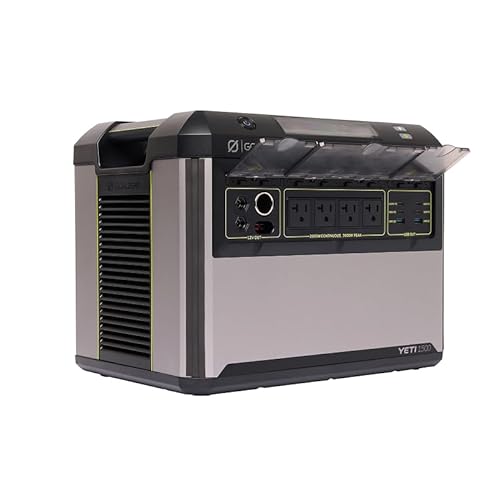


At a Glance
Goal Zero Yeti 1500 Power Station + Nomad 200 Solar Panel (6th Gen)
↓ See why we picked itRanking goal zero portable power stations fairly means putting mapping Goal Zero's current model lineup instead of assuming every listing is a current product ahead of anything the listing photos suggest.
We leaned on measured usable energy and safety documentation plus mapping Goal Zero's current model lineup instead of assuming every listing is a current product to separate genuinely capable stations from well-marketed ones.
5 Criteria to Look For Before Buying a Goal Zero Portable Power Station
Key buying criteria so you get the right fit the first time.
Build a Current Model Map First
Confirm which goal models are currently sold rather than assuming an older listing reflects the current lineup, since capacity and features change between generations.
Publish Rated Wh and Continuous W by Model
Verify exact rated capacity, continuous output, and battery chemistry for the specific model, not the brand's range in general.
Verify AC/Solar/Car Charging Input
Check documented charging input limits and current app or firmware requirements before assuming fast-charge claims apply automatically.
Compare Cycle-Life Claims and Warranty
Compare cycle-life test conditions, warranty length, and documented safety certification by exact model.
Separate Current Generation From Older Listings
Check regional availability and support status, since older generation products often stay heavily indexed after being succeeded.
4 Best Goal Zero Portable Power Stations in 2026
Goal Zero Yeti 1500 Portable Power Station (6th Gen), 1505Wh
About this pick
A 2000-watt inverter with 3600-watt surge delivers genuine home-outlet-equivalent power anywhere, running multiple power-hungry devices without issue. Ultra-fast recharging is documented 10x faster than previous Yeti models, hitting 0-80% from the wall in under an hour.
Rugged aluminum casing, rubber bumpers, and an IPX4 weatherproof rating with port shields make this genuinely prepared for off-grid and rough-road use, backed by vibration testing. A 4000-cycle battery translates to 10+ years of daily use, and connectivity spans 4 AC outlets, 6 USB outlets including a best-in-class 140W USB-C port, an HPP output for custom installs, and 2 6mm outlets for Goal Zero accessories.
Best for: buyers prioritizing 1505wh, 2000w (3600w surge)
Check price on AmazonPros
- +10x faster recharging than previous Yeti generations is genuine progress
- +IPX4 rating plus aluminum casing is genuinely rugged construction
- +Best-in-class 140W USB-C port charges laptops at real speed
Cons
- −Premium Goal Zero pricing over comparable-capacity competitors
- −Aluminum casing adds real weight versus plastic-bodied rivals
Goal Zero Yeti 700 Portable Power Station, 677Wh
About this pick
Documented enough to run power tools, portable fridges, and pellet grills, this delivers 600W AC power with 1000W surge capability from a 677Wh capacity. Upgraded LiFePO4 battery technology backs 4000+ rated cycles for over 10 years of daily use.
High-speed charging mode gets a forgotten-to-charge Yeti ready in about 2 hours, genuinely convenient before a last-minute trip. This compact station passes both particulate testing and UL2743 requirements with an IPX4 water-resistance rating handling extreme temperatures, and a dedicated solar charging port turns it into a genuine off-grid renewable energy source.
Best for: buyers prioritizing 677wh, 600w (1000w surge)
Check price on AmazonPros
- +UL2743 certification is a real, independently verified safety standard
- +High-speed mode gets a dead unit ready in about 2 hours
- +IPX4 rating handles extreme temperatures for genuine outdoor use
Cons
- −600W output is modest for higher-demand appliances
- −Premium Goal Zero pricing over comparable-capacity rivals
Goal Zero Yeti 300 Portable Power Station, 297Wh
About this pick
This compact entry point in the Yeti line runs air pumps, recharges phones and laptops, and powers the Goal Zero Skylight accessory at 350W AC output with 600W surge capability. The same upgraded LiFePO4 chemistry backs 4000+ rated cycles for over 10 years of daily use even at this smaller capacity.
High-speed charging mode completes a full 0-100% charge in about 50 minutes, genuinely fast for last-minute trip prep. This unit passes the same particulate and UL2743 testing as larger Yeti models with an IPX4 water-resistance rating, and the dedicated solar charging port turns it into a real off-grid renewable power source at a smaller, more portable scale.
Best for: buyers prioritizing 297wh, 350w (600w surge)
Check price on AmazonPros
- +50-minute full charge is genuinely fast for this compact size
- +UL2743 certification carries over even at this smaller capacity
- +IPX4 rating gives real durability at the entry-level price point
Cons
- −297Wh capacity limits use to light, portable device charging
- −350W output can't run larger household appliances
Goal Zero Yeti 1500 Power Station + Nomad 200 Solar Panel (6th Gen)
About this pick
This bundles the same 2000W inverter, 3600W surge, 1505Wh Yeti 1500 station with a genuine Nomad 200 solar panel included, real bundled value versus buying separately. The same rugged aluminum casing, rubber bumpers, and IPX4 weatherproof rating apply, backed by vibration testing for rough-road durability.
With the included Nomad 200 panel specifically, a full 0-100% solar recharge takes 9-18 hours depending on sun conditions, and adding more panels speeds this up further. The same 4 AC outlets, 6 USB outlets including the 140W USB-C port, HPP output, and Goal Zero accessory outlets carry over from the base Yeti 1500 model.
Best for: buyers prioritizing 1505wh, includes nomad 200 solar panel
Check price on AmazonPros
- +Bundles a genuine Nomad 200 panel for real off-grid solar charging
- +Same rugged IPX4 and aluminum build as the standalone Yeti 1500
- +Adding more panels genuinely speeds up the solar recharge time
Cons
- −9-18 hour solar recharge is slow without additional panels
- −Bundle price is meaningfully higher than the station alone
How We Evaluated These Goal Zero Portable Power Stations
Each pick was assessed across 5 criteria weighted for real-world use.
Rated Wh Verified Against Usable Energy
Checked documented battery capacity separately from continuous AC output, since a high wattage rating doesn't guarantee enough stored energy to run a device for long.
Continuous Output vs Surge Separated
Compared continuous inverter rating against surge or boost mode claims, since many listings blend the two into one headline number.
Charging Speed and Path Documented
Verified AC, solar, and car charging times from official specs, noting where fastest speeds require specific modes, apps, or additional hardware.
Safety and Certification Evidence Checked
Looked for UL, UL2743, or other documented safety certification and battery chemistry evidence rather than trusting a safety claim alone.
Real Ownership Costs Included
Weighed included cables, solar panel bundling, warranty length, and app requirements as part of the real cost and usability of each pick.
How to Choose the Right Goal Zero Portable Power Stations
Build a Current Model Map First
Confirm which goal models are currently sold rather than assuming an older listing reflects the current lineup, since capacity and features change between generations.
Publish Rated Wh and Continuous W by Model
Verify exact rated capacity, continuous output, and battery chemistry for the specific model, not the brand's range in general.
Verify AC/Solar/Car Charging Input
Check documented charging input limits and current app or firmware requirements before assuming fast-charge claims apply automatically.
Compare Cycle-Life Claims and Warranty
Compare cycle-life test conditions, warranty length, and documented safety certification by exact model.
Separate Current Generation From Older Listings
Check regional availability and support status, since older generation products often stay heavily indexed after being succeeded.
Frequently Asked Questions
Are all goal models currently sold, or does the lineup include discontinued products?
Check current first-party store pages directly, since older portable power stations often stay heavily indexed in search results long after being succeeded by newer generations.
Does buying goal guarantee the same battery chemistry across every model?
No. A brand's lineup can span different battery chemistries and generations, so verify the exact model's documented chemistry and cycle-life rather than assuming brand consistency.
What's the real difference between watts and watt-hours for a power station?
Watts (W) measure how much power the station can deliver at once, essentially how many devices it can run simultaneously, while watt-hours (Wh) measure total stored energy, essentially how long it can run those devices. A station with high W but low Wh can power a lot at once but only briefly.
Does a surge or peak wattage rating mean the station can run appliances at that power level?
No. Surge or peak ratings describe a brief burst the inverter can handle, typically for a compressor or motor startup, not a sustained output level. Always check the continuous or rated wattage figure for what the station can actually run for extended periods.
Is LiFePO4 battery chemistry actually safer than standard lithium-ion?
LiFePO4 (LFP) cells are generally considered more thermally stable than standard lithium-ion or lithium-polymer cells, with a lower risk of thermal runaway, and most current portable power stations have shifted to LFP for this reason. Still, verify UL or UL2743 safety certification directly rather than assuming chemistry alone guarantees safety.
Bottom Line
best overall: Goal Zero Yeti 1500 Portable Power Station (6th Gen), 1505Wh - best overall pick in this roundup.
See the full rankings above for all picks with pros, cons, and best-for summaries.
Browse on Amazon
All Prime-eligible options with current pricing.
Shop on Amazon →