
4 Best Drawing Tablets for 3d Modeling in 2026
We compared drawing tablets for 3d modeling by tablet architecture, pen behavior, and driver support rather than ranking by pressure-level count alone.

New to Amazon Prime?
Get fast, free shipping on every pick in this guide, plus Prime Video and exclusive deals.
Try Prime Free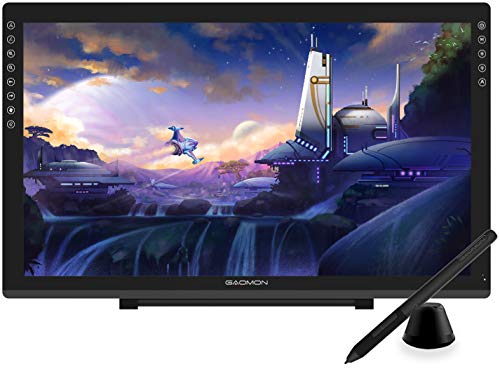


At a Glance
GAOMON PD2200 Drawing Tablet with Screen, 21.5", Full-Laminated, 130% sRGB
↓ See why we picked itXPPen Deco 01 V3 10x6 Drawing Tablet, 16K Battery-Free Stylus, 8 Keys
↓ See why we picked itHUION Inspiroy H1060P Graphics Drawing Tablet, 10 x 6.25 in, 12+16 Hot Keys
↓ See why we picked itBefore ranking any pick for drawing tablets for 3d modeling, the real work is checking shortcut-key mapping and pen precision inside the actual target application.
Documented pen behavior and driver support plus checking shortcut-key mapping and pen precision inside the actual target application decided this ranking far more than star counts did.
5 Criteria to Look For Before Buying a Drawing Tablets for 3d Modeling
Key buying criteria so you get the right fit the first time.
Test the Target App's Actual Shortcuts
Confirm drawing tablets for 3d modeling's express keys map cleanly to shortcuts used in your specific target application's actual workflow.
Map Viewport and Navigation Controls
Check dial or Quick Key mapping for viewport navigation, since 3D and animation apps rely heavily on this.
Evaluate Precision During Detail Work
Test pen precision during masking, sculpting, or frame-by-frame cleanup relevant to the specific workflow.
Verify Color Workflow for Production Use
For displays, confirm color space support matches your specific production pipeline's requirements.
Check Long-Session Posture Support
Verify stand angle and hand-travel comfort across the active area for extended production sessions.
4 Best Drawing Tablets for 3d Modeling in 2026
GAOMON PD2200 Drawing Tablet with Screen, 21.5", Full-Laminated, 130% sRGB
About this pick
A full-glass design with 8 touch keys eliminates the PVC frame on three sides, and the 130% sRGB (92% NTSC) full-laminated screen genuinely reduces parallax versus non-laminated displays at this size. An anti-glare film ships pre-applied at the factory to avoid bubbling.
The battery-free AP32 pen delivers 8192 pressure levels with tilt support, and eight replacement nibs live in the included pen holder. A 1000:1 contrast ratio sharpens image clarity, and the OSD menu (accessed via a 6-second menu button hold) lets you adjust color, hue, and saturation directly on the display.
Best for: buyers prioritizing 21.5in full-laminated, 130% srgb
Check price on AmazonPros
- +Anti-glare film ships pre-applied in a dust-free factory
- +Full-glass design eliminates PVC framing on three sides
- +OSD menu gives direct on-screen color adjustment
Cons
- −Requires a connected computer, not standalone
- −Large 21.5in size needs significant desk depth
XPPen Deco 01 V3 10x6 Drawing Tablet, 16K Battery-Free Stylus, 8 Keys
About this pick
The stylus here runs a genuine 16,384 pressure levels, double the 8192 still common at this price point, with 60 degrees of tilt and no battery or charging required. Eight customizable shortcut keys sit on both sides for right- and left-handed layouts.
Android support specifically targets version 10.0 and above through the XPPen Tools app, which adapts to different phone aspect ratios automatically. At just 8mm thin, it packs into a bag easily, and the box includes a stand, glove, and both USB-C and USB-A cables for broad host compatibility.
Best for: buyers prioritizing 16,384 pressure levels, 60° tilt
Check price on AmazonPros
- +16K pressure levels doubles the common 8192 standard
- +Android 10.0+ support with automatic aspect-ratio mapping
- +Complete kit ships with stand, glove, and both cable types
Cons
- −No screen, so it maps to a separate monitor
- −8 keys is modest next to higher-tier XPPen models
UGEE M708 Drawing Tablet, 10x6 inch Large Space for Digital Drawing
About this pick
The V3 revision keeps the 10x6 inch papery-textured active area with 16384-level passive stylus technology, a genuinely more affordable pressure system that still scales line weight with pen pressure accurately. Eight customizable express keys handle eraser, zoom, and undo shortcuts.
Compatibility spans Windows 11 through 7, Mac OS X 10.10+, Android 10.0+, Chrome OS 88+, and Linux, working with Photoshop, Illustrator, ZBrush, and other major creative software. USB to USB-C connectivity with included adapters keeps setup straightforward for laptops, desktops, Chromebooks, and tablets alike.
Best for: buyers prioritizing 10x6in area, 16384-level passive stylus
Check price on AmazonPros
- +16384-level stylus at a genuinely affordable price point
- +USB to USB-C adapters simplify multi-device setup
- +Ambidextrous design suits left and right-handed users equally
Cons
- −Not standalone, requires a connected host device
- −Papery-texture surface wears pen nibs faster over time
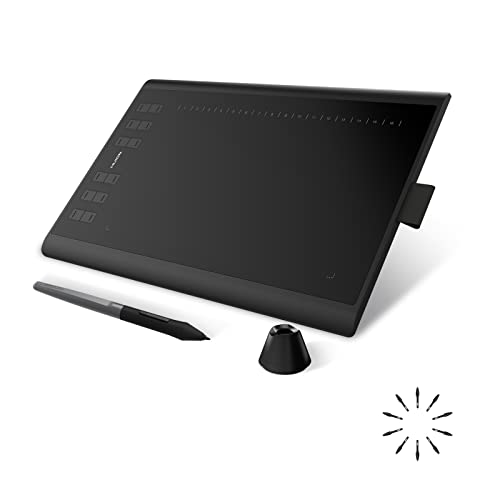
HUION Inspiroy H1060P Graphics Drawing Tablet, 10 x 6.25 in, 12+16 Hot Keys
About this pick
A 10 x 6.25 inch working area gives real room to work in, and the battery-free PW100 stylus supports plus-or-minus 60 degrees of tilt for genuine shading gestures, not just line weight. Twelve programmable press keys plus sixteen soft keys is an unusually deep shortcut set for this price tier.
The symmetrical design genuinely supports left-handed use via a 180-degree driver rotation, and phones connect over OTG (though iPhone/iPad are not supported, and Samsung Galaxy S-series cursor display has a known limitation). Compatible with Windows, macOS, Android, and Linux via Xorg specifically, not Wayland.
Best for: buyers prioritizing 10x6.25in area, 12+16 hot keys
Check price on AmazonPros
- +28 total programmable keys is deep for this price
- +±60° tilt support enables real shading gestures
- +True 180° rotation for left-handed users
Cons
- −Samsung Galaxy S-series has a known cursor display issue
- −Linux support requires Xorg specifically, not Wayland
How We Evaluated These Drawing Tablets for 3d Modeling
Each pick was assessed across 5 criteria weighted for real-world use.
Architecture Classified First
Sorted each product into screenless pen tablet, computer-dependent pen display, or true standalone before comparing specs, since these solve genuinely different problems.
Pen Behavior Verified
Checked activation force, pressure-level count, tilt support, and parallax evidence directly from documentation rather than trusting a headline pressure number alone.
Active Area vs Chassis Size
Compared documented active drawing area separately from display diagonal or overall chassis size, since these numbers are often conflated in marketing.
Driver and OS Compatibility Checked
Verified current Windows/macOS/Linux/Android compatibility by exact model, since older tablets can lose driver support over time.
Real Ownership Costs Included
Weighed included pen, nibs, stand, and cables against what needs to be bought separately, plus warranty length and driver update history.
How to Choose the Right Drawing Tablets for 3d Modeling
Test the Target App's Actual Shortcuts
Confirm drawing tablets for 3d modeling's express keys map cleanly to shortcuts used in your specific target application's actual workflow.
Map Viewport and Navigation Controls
Check dial or Quick Key mapping for viewport navigation, since 3D and animation apps rely heavily on this.
Evaluate Precision During Detail Work
Test pen precision during masking, sculpting, or frame-by-frame cleanup relevant to the specific workflow.
Verify Color Workflow for Production Use
For displays, confirm color space support matches your specific production pipeline's requirements.
Check Long-Session Posture Support
Verify stand angle and hand-travel comfort across the active area for extended production sessions.
Frequently Asked Questions
What's the biggest mistake buyers make shopping for drawing tablets for 3d modeling?
Judging quality by pressure-level count alone. Activation force, tilt behavior, and driver stability matter more for real drawing feel than a high number on the spec sheet.
Should I prioritize price or pen quality when choosing drawing tablets for 3d modeling?
Pen quality first, since a tablet with a poor-feeling stylus won't become more enjoyable to use for being cheaper. Narrow the field by real pen behavior, then compare price among finalists.
Do more pressure levels always mean a better drawing experience?
Not by itself. Pressure-level count matters less than initial activation force, line stability, and tilt behavior, since a tablet with fewer levels but low activation force and no wobble can feel better than one with a higher spec sheet number.
What's the real difference between a standalone tablet and a pen display?
A standalone tablet runs its own operating system and apps with no computer needed, while a pen display has a screen but still requires a connected computer or laptop to function, they solve different problems despite both having a visible screen.
Is a screenless pen tablet harder to learn than one with a screen?
There's a real adjustment period since you're looking at a monitor while drawing on a separate surface, but most users adapt within a few sessions, and screenless tablets cost meaningfully less while offering the same pen precision.
Bottom Line
best overall: GAOMON PD2200 Drawing Tablet with Screen, 21.5", Full-Laminated, 130% sRGB - best overall pick in this roundup.
See the full rankings above for all picks with pros, cons, and best-for summaries.
Browse on Amazon
All Prime-eligible options with current pricing.
Shop on Amazon →