
4 Best Desktop CNC Machines With Tool Changer in 2026
We compared desktop cnc machines with tool changer by documented rigidity, spindle evidence, and real cutting capability rather than ranking by spindle wattage or price alone.

New to Amazon Prime?
Get fast, free shipping on every pick in this guide, plus Prime Video and exclusive deals.
Try Prime Free

At a Glance
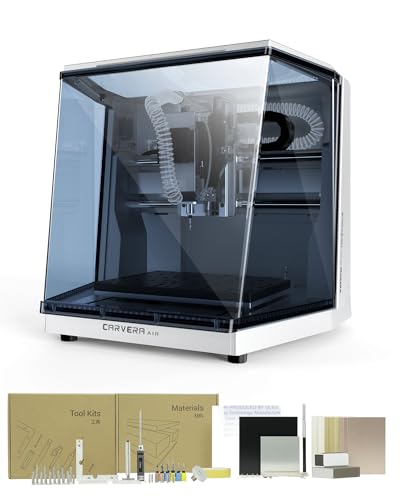
Carvera Air Desktop CNC with 4th Axis & PCB Kit, MAKERA Enclosed Mini Mill
↓ See why we picked itXmachine XM-100 Desktop 5 Axis CNC Milling Machine with Automatic Tool Changer
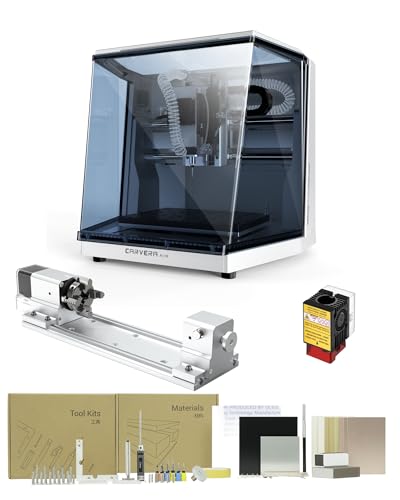
↓ See why we picked itCarvera Air Desktop CNC with 4th Axis Rotary & Add-on, MAKERA Enclosed Mill
↓ See why we picked itMost desktop cnc machines with tool changer buyers skip straight to price, when the more useful first step is requiring genuine controller-triggered tool changes, not manual quick-swap systems.
What separates these picks is documented rigidity and spindle evidence plus requiring genuine controller-triggered tool changes, not manual quick-swap systems, checked model by model.
5 Criteria to Look For Before Buying a Desktop CNC Machines With Tool Changer
Key buying criteria so you get the right fit the first time.
Require Controller-Triggered Changes
Confirm desktop cnc machines with tool changer changes tools automatically via controller or G-code command, not a manual quick-swap system marketed as automatic.
Check Tool Capacity and Size Limits
Verify tool capacity and maximum tool diameter or length restrictions before assuming a given tool set fits.
Verify the Toolholder Ecosystem Cost
Check the collet or toolholder ecosystem and recurring cost, since automatic tool changers often require matched holders.
Confirm Tool-Length Probing
Verify the machine documents an automatic tool-length probing and offset workflow, not manual measurement between changes.
Check Reliability Under Repeated Changes
Look for evidence of reliable unattended tool changes over a real job, not just a single demonstration swap.
4 Best Desktop CNC Machines With Tool Changer in 2026
Carvera Air Desktop CNC with 4th Axis & PCB Kit, MAKERA Enclosed Mini Mill
About this pick
This bundles the 4th axis rotary module in from the start, giving a 3.6 in diameter by 7.9 in rotary work area for true simultaneous 4-axis machining, not just an indexed add-on. The same quick tool changer and auto probing carry over from the base Carvera Air.
Closed-loop spindle control runs 0 to 13,000 RPM with runout under 0.01mm, and the included PCB fabrication pack means it's ready for circuit board milling out of the box rather than needing a separate accessory order later.
Best for: buyers prioritizing 4th axis: 3.6in dia x 7.9in rotary work area
Check price on AmazonPros
- +4th axis ships included, not a later add-on purchase
- +PCB fabrication pack is bundled in from the start
- +Closed-loop spindle control holds runout under 0.01mm
Cons
- −Higher cost than the base Carvera Air without 4th axis
- −Rotary work area is still compact for larger cylindrical parts
Carvera Air Desktop CNC by MAKERA, Enclosed Mini Mill with CAM
About this pick
Carvera Air packs a genuinely enclosed footprint (19.7 x 17.7 x 17.7 in) around a compact 11.8 x 7.9 x 5.1 in work area, with automatic tool changing that swaps bits in about 10 seconds instead of stopping the job to swap manually. Auto probing and surface leveling calibrate the workpiece before each cut, which matters more than raw spindle speed on uneven stock.
Spindle runout under 0.0004 in and motor resolution of 0.0002 in are real, documented figures rather than a vague accuracy claim. Makera's own CAM software runs on Mac and Windows, and the controller also works across iOS, Android, and Linux, with Fusion 360 and VCarve Pro support for anyone who outgrows the bundled app.
Best for: buyers prioritizing 11.8 x 7.9 x 5.1 in work area, enclosed
Check price on AmazonPros
- +Automatic tool changer swaps bits in about 10 seconds
- +Auto probing calibrates uneven stock before cutting
- +Enclosed design contains chips and cuts noise
Cons
- −Work area is compact relative to open-frame routers
- −4th axis and laser are separate add-on purchases
Xmachine XM-100 Desktop 5 Axis CNC Milling Machine with Automatic Tool Changer
About this pick
True 5-axis linkage lets all five axes move simultaneously, enabling curved surfaces and angled cuts that a 3-axis or indexed 4th-axis machine genuinely cannot produce in one setup. A built-in automatic tool changer supports multiple tools and switches between milling, drilling, and tapping without manual intervention.
A high-precision automatic probing system handles workpiece measurement and centering, improving consistency across parts. The electric spindle uses a permanent magnet synchronous motor with low rotational inertia and high torque density, paired with efficient cooling and precision encoders for stable performance.
Best for: buyers prioritizing true 5-axis simultaneous linkage
Check price on AmazonPros
- +Genuine 5-axis simultaneous linkage, not indexed rotation
- +Automatic tool changer switches milling, drilling, tapping
- +Auto probing improves consistency across multiple parts
Cons
- −Compact footprint means a smaller usable work envelope
- −5-axis CAM workflow has a real learning curve
Carvera Air Desktop CNC with 4th Axis Rotary & Add-on, MAKERA Enclosed Mill
About this pick
This is the 4th axis version of Carvera Air with an additional add-on kit bundled in, keeping the same 11.8 x 7.9 x 5.1 in work area and 19.7 in cube enclosed footprint as the base machine. The quick tool changer still swaps bits in about 10 seconds.
Auto probing and leveling calibrate uneven stock automatically, with spindle runout under 0.0004 in and motor resolution of 0.0002 in carried over unchanged. The extra add-on kit is the differentiator versus the plain 4th-axis SKU, worth confirming exactly what's included before choosing between the two.
Best for: buyers prioritizing 4th axis + add-on kit bundled
Check price on AmazonPros
- +Add-on kit is bundled in rather than a separate purchase
- +Same sub-0.0004in spindle runout as the base machine
- +Quick tool changer still swaps bits in about 10 seconds
Cons
- −Costs more than the base 4th-axis SKU without the add-on kit
- −Work area stays compact despite the added kit
How We Evaluated These Desktop CNC Machines With Tool Changer
Each pick was assessed across 5 criteria weighted for real-world use.
Architecture Classified Before Comparison
Sorted each machine into router, mill, lathe, laser hybrid, or waterjet before ranking, since desktop CNC spans genuinely different cutting architectures that don't compare fairly on one scale.
Usable Travel Over Nominal Axis Size
Compared usable XYZ travel after vise, clamps, and tool stick-out rather than nominal axis travel alone, since fixtures and tooling eat into the advertised work envelope.
Spindle and Rigidity Evidence
Checked documented spindle speed, torque, and runout figures alongside frame and rail rigidity, since motor wattage alone doesn't predict real cut quality.
Software and Workholding Verified
Checked CAM/postprocessor support, probing, workholding, and dust or chip control as part of daily usability, not just the headline spec sheet.
Ownership Details: Setup, Power, and Maintenance
Weighed assembly time, footprint, power requirements, and maintenance workflow, since a CNC machine is a long-term shop investment, not a one-time purchase.
How to Choose the Right Desktop CNC Machines With Tool Changer
Require Controller-Triggered Changes
Confirm desktop cnc machines with tool changer changes tools automatically via controller or G-code command, not a manual quick-swap system marketed as automatic.
Check Tool Capacity and Size Limits
Verify tool capacity and maximum tool diameter or length restrictions before assuming a given tool set fits.
Verify the Toolholder Ecosystem Cost
Check the collet or toolholder ecosystem and recurring cost, since automatic tool changers often require matched holders.
Confirm Tool-Length Probing
Verify the machine documents an automatic tool-length probing and offset workflow, not manual measurement between changes.
Check Reliability Under Repeated Changes
Look for evidence of reliable unattended tool changes over a real job, not just a single demonstration swap.
Frequently Asked Questions
Does desktop cnc machines with tool changer save real time over manually swapping bits?
Yes, meaningfully, for multi-tool jobs, since automatic tool changes typically take seconds versus the minutes needed to manually swap and re-zero a tool by hand.
Are automatic tool changers reliable long-term?
Generally yes on well-documented systems, but verify the toolholder ecosystem cost and check for evidence of reliable performance over many cycles, not just a single demo change.
Is GRBL control harder to use than a proprietary CNC app?
GRBL has a steeper initial learning curve since it relies on separate CAM software and a G-code sender, but it's open-source with extensive community support and works across many machines. Proprietary apps trade some of that flexibility for a more guided, beginner-friendly workflow.
Does a machine's motor resolution figure tell me its real cutting accuracy?
Not directly. Motor or controller resolution describes the smallest theoretical step size, while real part accuracy also depends on frame rigidity, backlash, and tool deflection under load. A repeatable test cut is a better accuracy indicator than a resolution spec alone.
Can a desktop CNC router genuinely cut metal, or just engrave it?
This depends heavily on spindle torque, rigidity, and tooling. Many desktop routers can engrave or lightly cut soft metals like aluminum and brass with the right bits and shallow passes, but cutting steel or deep aluminum passes generally needs a genuinely rigid, higher-torque machine.
Bottom Line
best overall: Carvera Air Desktop CNC with 4th Axis & PCB Kit, MAKERA Enclosed Mini Mill - best overall pick in this roundup.
See the full rankings above for all picks with pros, cons, and best-for summaries.
Browse on Amazon
All Prime-eligible options with current pricing.
Shop on Amazon →