
8 Best 400W Portable Power Stations in 2026
We compared 400w portable power stations by measured usable energy, continuous output, and safety documentation rather than ranking by headline wattage alone.

New to Amazon Prime?
Get fast, free shipping on every pick in this guide, plus Prime Video and exclusive deals.
Try Prime Free



At a Glance
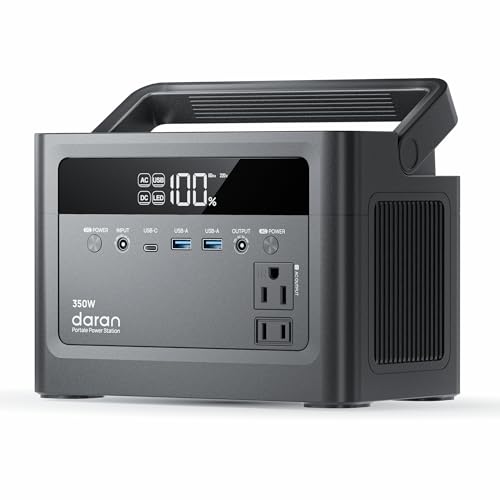
CUBUS 350M Portable Power Station, 350W (700W Surge), 230.4Wh
↓ See why we picked itA quick scan of 400w portable power stations listings rarely settles the question of requiring documented continuous AC output close to the target watt figure, not surge-mode marketing, so that's where we started.
We compared this lineup on measured usable energy and safety documentation plus requiring documented continuous AC output close to the target watt figure, not surge-mode marketing, since rated capacity alone regularly overstates real-world runtime.
5 Criteria to Look For Before Buying a 400W Portable Power Station
Key buying criteria so you get the right fit the first time.
Require Documented Continuous Output
Confirm 400w portable power stations reaches the target wattage as continuous output, not only through a brief surge or boost mode.
Publish Surge Duration Separately
Check the surge rating and its time limit separately, and verify how the station handles a representative startup load.
Compare Battery Wh at the Same Output
Compare battery Wh across finalists so two stations with the same inverter watts aren't treated as equal-runtime products.
Measure Efficiency at Partial Load
Check documented efficiency and fan noise at roughly 25%, 50%, and 80% of the target output, not just at maximum.
Verify Port and Recharge Limits
Confirm port current limits, thermal derating, and recharge speed appropriate to this specific output class.
8 Best 400W Portable Power Stations in 2026
AFERIY Nomad400 Portable Power Station, 256Wh, 400W
About this pick
A built-in bidirectional inverter eliminates bulky external power adapters entirely, supporting up to 300W wall charging, genuinely 6 times faster than ordinary adapters and complete in just 45 minutes. The 256Wh (80,000mAh) capacity powers laptops, phones, tablets, cameras, drones, fans, and car appliances across six simultaneous devices.
400W rated AC output plus a 100W PD USB-C output meet daily camping needs, and an extra 12V cigarette lighter port supports more DC devices directly. A 3500+ cycle LiFePO4 battery pack with advanced BMS sits in rugged ABS material for all-round safety, and at just 8.8 lbs with an ergonomic handle, three lighting variations, a 10ms UPS, and an LCD screen round out a genuinely complete feature set backed by a 2+5 year repair card.
Best for: buyers prioritizing 256wh, 400w, 8.8 lbs
Check price on AmazonPros
- +Bidirectional inverter is documented genuinely 6x faster than standard adapters
- +2+5 year repair card is genuinely generous coverage
- +8.8 lbs makes this genuinely lightweight for off-grid trips
Cons
- −400W output limits use to lighter devices and appliances
- −256Wh capacity is modest for extended runtime needs
Westinghouse iGen400s Portable Power Station, 400W, 183Wh
About this pick
This lightweight lithium battery generator delivers quiet, fume-free power at 400W peak and 200W running from a compact 183Wh capacity, genuinely built for indoor or outdoor use with a top handle and weather-resistant shell. Nine outlets cover 2 120V AC outlets, three 30W USB-C ports, dual USB-A, one 100W USB-C port, and a 12V DC port, with a car charger adapter included.
Charging to 80% takes 2 hours from a 120V outlet using the included USB-C cable and a fast 100W AC adapter (not included). Solar panel readiness supports off-grid use, and protections against overcharging, overloading, overheating, and low voltage back reliable long-term operation, with a tri-mode flashlight and flasher for emergencies plus a 2-year limited warranty and lifetime Westinghouse technical support.
Best for: buyers prioritizing 183wh, 400w peak/200w running
Check price on AmazonPros
- +Lifetime Westinghouse technical support backs the 2-year warranty
- +9 outlets is genuinely comprehensive for this compact capacity
- +Solar panel ready for genuine off-grid charging expansion
Cons
- −200W running output is modest for anything beyond small electronics
- −Fast 100W AC adapter for quickest charging is sold separately
EGO POWER+ Portable Inverter PAD5000, 400W
About this pick
This is genuinely distinct from a standalone power station: it's a battery inverter that runs entirely on EGO's own 56V ARC Lithium batteries (sold separately), converting that battery power into 400W continuous, 800W peak clean pure sine wave AC output. Three USB-compatible devices charge simultaneously via USB-C, USB-C PD, and USB-A ports.
A 100W USB-C PD in/out port both powers devices and charges compatible EGO 56V batteries, and pass-through charging genuinely lets a battery charge via the 100W port while simultaneously powering connected devices. Built-in LED lights provide ambient lighting during outages, making this a real fit specifically for households already invested in the EGO 56V tool ecosystem.
Best for: buyers prioritizing 400w (800w peak), requires ego 56v arc battery
Check price on AmazonPros
- +Directly leverages EGO 56V batteries you may already own for tools
- +Pass-through charging lets you charge and power devices simultaneously
- +Built-in LED lights add genuine ambient lighting during outages
Cons
- −Battery and charger are explicitly sold separately, not included
- −Only useful if already invested in the EGO 56V ecosystem
CUBUS 350M Portable Power Station, 350W (700W Surge), 230.4Wh
About this pick
At just 6.9 lbs, this is documented as the most lightweight LiFePO4 station among similar specifications, with dual AC pure sine wave outlets covering laptops, cameras, mini-fridges, and small household appliances. The compact 9x5.4x6.2 inch body with a foldable handle genuinely suits outdoor camping and emergency backup alike.
A LiFePO4 battery rated for over 3500 charge-discharge cycles backs a documented 10+ year service life, with intelligent BMS preventing overcharging, overheating, and short circuits. Three recharge paths (AC adapter, car socket, or compatible solar panel) reach 0-80% in a genuinely fast 2.8 hours, and a built-in LED light provides convenient illumination at campsites or during emergencies.
Best for: buyers prioritizing 230.4wh, 350w (700w surge), 6.9 lbs
Check price on AmazonPros
- +6.9 lbs is documented the lightest LiFePO4 station in its spec class
- +10+ year documented service life from the 3500+ cycle rating
- +2.8-hour 0-80% charge is genuinely fast for this capacity
Cons
- −350W rated output limits use to lighter appliances only
- −230.4Wh capacity is modest for extended runtime needs
CUBUS 350L Portable Power Station, 700W Surge, 288Wh
About this pick
288Wh combined with 350W AC (700W surge) provides stable, clean pure sine wave power specifically safeguarding sensitive electronics like laptops, CPAP machines, and Starlink equipment. Six devices connect simultaneously via 2 AC outlets, a 45W USB-C PD port, dual 18W USB-A QC ports, and dual DC5221 ports.
A 3500+ cycle LiFePO4 battery with integrated Smart BMS protects against overcharging, overheating, and short circuits. Three recharge methods (AC wall outlet, car socket, or solar sold separately) with a built-in MPPT controller reach 0-80% in as little as 3.2 hours under optimal conditions, and at just 7.17 lbs in a 9x5.9x6.2 inch footprint, this stays genuinely easy to transport for camping essentials.
Best for: buyers prioritizing 288wh, 350w (700w surge), 7.17 lbs
Check price on AmazonPros
- +Specifically documented to support Starlink equipment directly
- +7.17 lbs keeps this genuinely lightweight for outdoor transport
- +45W USB-C PD port covers most modern device charging needs
Cons
- −Solar panel for fastest charging is sold separately
- −350W rated output limits use to lighter appliances only
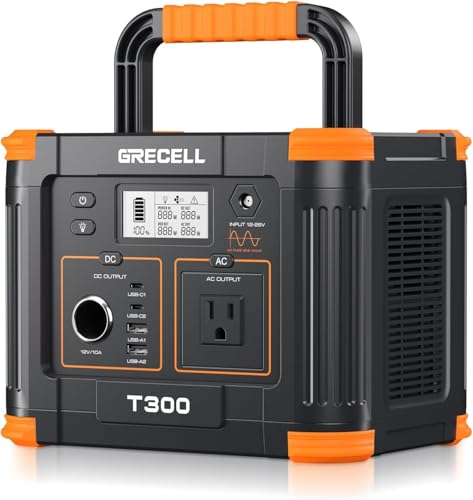
GRECELL Portable Power Station 330W, 230.88Wh
About this pick
330W pure sine wave output (600W surge) from 230.88Wh capacity supports laptops, tablets, CPAP devices, and mini-refrigerators safely. GRECELL specifically states its commitment to quality lithium batteries over lower-quality alternatives that pose real safety risk, backed by an upgraded BMS with overload, overcharge, and short-circuit protection.
Six devices connect at once via AC outlet, dual USB-C PD (60W and 18W), dual USB-A QC, and a car port, with PD60W fast charging documented more than twice as fast as standard USB-C output. Dual built-in silent cooling fans keep station temperature safe, and built-in MPPT maximizes solar energy extraction across three flexible recharge sources.
Best for: buyers prioritizing 230.88wh, 330w (600w surge)
Check price on AmazonPros
- +PD60W fast charging is documented over twice as fast as standard
- +Dual cooling fans keep station temperature genuinely stable
- +GRECELL explicitly commits to quality cells over risky alternatives
Cons
- −330W output is modest for higher-draw appliances
- −230.88Wh capacity limits sustained runtime
ALLPOWERS VOLIX P300 Portable Power Station, 256Wh 300W
About this pick
300W pure sine wave AC output (600W surge) from a 256Wh LiFePO4 battery covers laptops, CPAP machines, mini refrigerators, and drones without noise, fumes, or fuel. A genuine 2-hour 0-100% AC fast charge pairs with up to 110W MPPT solar charging and car charging support for flexible recharging on the road.
Five devices connect at once across a pure sine wave AC outlet, 100W USB-C PD, dual USB-A fast charging, and a 12V car socket. Premium LiFePO4 technology rates for over 4000 life cycles, and under-20ms UPS automatically switches to backup during outages to protect desktop computers, WiFi routers, and NAS systems, all in a 7.87 lb frame backed by a genuine 6-year warranty.
Best for: buyers prioritizing 256wh, 300w (600w surge), 7.87 lbs
Check price on AmazonPros
- +6-year warranty is genuinely long for this compact capacity class
- +2-hour full charge is genuinely fast for a 300W-class station
- +Under-20ms UPS specifically protects NAS systems, not just basics
Cons
- −300W output limits higher-draw appliance use
- −110W solar input is modest next to higher-wattage rivals
Jackery Explorer 300 Portable Power Station, 292Wh
About this pick
At just 7.5 lbs, this is documented 17% lighter than the industry average for its class, with an integrated handle genuinely built for long hikes. Six devices connect at once across 2 AC outlets, a 100W USB-C PD port, 2 USB-A ports, and a 120W car port, with 300W rated output and 600W peak surge.
Premium LiFePO4 chemistry delivers over 4000 charge cycles before dropping to 70% capacity, a documented 11-plus year service life. Solar charging with a 100W panel reaches 80% in about 2.8 hours, or a portable 40W panel gets there in 7.5 hours, genuinely flexible for different outdoor setups.
Best for: buyers prioritizing 292wh, 300w (600w surge), 7.5 lbs
Check price on AmazonPros
- +7.5 lbs is documented 17% lighter than the industry average
- +11+ year service life is genuinely long for this capacity
- +USB-C PD 100W charges devices without a separate adapter
Cons
- −300W rated output limits higher-draw appliances
- −No included solar panel for the documented charge times
How We Evaluated These 400W Portable Power Stations
Each pick was assessed across 5 criteria weighted for real-world use.
Rated Wh Verified Against Usable Energy
Checked documented battery capacity separately from continuous AC output, since a high wattage rating doesn't guarantee enough stored energy to run a device for long.
Continuous Output vs Surge Separated
Compared continuous inverter rating against surge or boost mode claims, since many listings blend the two into one headline number.
Charging Speed and Path Documented
Verified AC, solar, and car charging times from official specs, noting where fastest speeds require specific modes, apps, or additional hardware.
Safety and Certification Evidence Checked
Looked for UL, UL2743, or other documented safety certification and battery chemistry evidence rather than trusting a safety claim alone.
Real Ownership Costs Included
Weighed included cables, solar panel bundling, warranty length, and app requirements as part of the real cost and usability of each pick.
How to Choose the Right 400W Portable Power Stations
Require Documented Continuous Output
Confirm 400w portable power stations reaches the target wattage as continuous output, not only through a brief surge or boost mode.
Publish Surge Duration Separately
Check the surge rating and its time limit separately, and verify how the station handles a representative startup load.
Compare Battery Wh at the Same Output
Compare battery Wh across finalists so two stations with the same inverter watts aren't treated as equal-runtime products.
Measure Efficiency at Partial Load
Check documented efficiency and fan noise at roughly 25%, 50%, and 80% of the target output, not just at maximum.
Verify Port and Recharge Limits
Confirm port current limits, thermal derating, and recharge speed appropriate to this specific output class.
Frequently Asked Questions
Does the 400w portable power stations wattage figure always mean continuous output?
Not always. Some listings blend surge or boost mode figures into the headline wattage number, so verify the continuous, sustained rating separately before assuming a station can run a device at that power level indefinitely.
Can two stations with the same wattage rating have very different runtimes?
Yes, significantly. Wattage describes how much power a station can deliver at once, while watt-hours describe how long it can sustain that delivery, so always check battery capacity alongside the wattage rating.
What's the real difference between watts and watt-hours for a power station?
Watts (W) measure how much power the station can deliver at once, essentially how many devices it can run simultaneously, while watt-hours (Wh) measure total stored energy, essentially how long it can run those devices. A station with high W but low Wh can power a lot at once but only briefly.
Is LiFePO4 battery chemistry actually safer than standard lithium-ion?
LiFePO4 (LFP) cells are generally considered more thermally stable than standard lithium-ion or lithium-polymer cells, with a lower risk of thermal runaway, and most current portable power stations have shifted to LFP for this reason. Still, verify UL or UL2743 safety certification directly rather than assuming chemistry alone guarantees safety.
Can I use any solar panel with a portable power station?
Not always. Some manufacturers restrict compatibility to their own branded panels or require a specific voltage and connector type, so check the station's documented solar input specs and connector type before assuming a third-party panel will work.
Bottom Line
best overall: AFERIY Nomad400 Portable Power Station, 256Wh, 400W - best overall pick in this roundup.
See the full rankings above for all picks with pros, cons, and best-for summaries.
Browse on Amazon
All Prime-eligible options with current pricing.
Shop on Amazon →